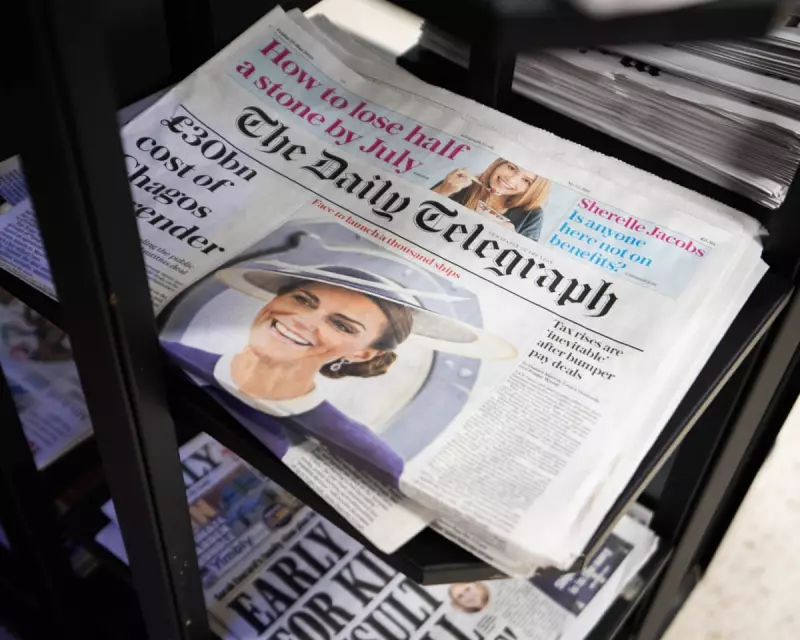
The future of The Telegraph Media Group has been plunged into fresh uncertainty after a consortium led by RedBird Capital abruptly withdrew its £500 million takeover bid.
This sudden collapse marks the latest chapter in a saga that has dragged on for over two years, leaving the prestigious newspaper titles in limbo and raising serious questions about the sellers' refusal to lower their eye-watering asking price, which had already driven away other potential buyers.
The Deal That Fell Apart
On Friday, the RedBird consortium, which also included the UAE's International Media Investments (IMI), the owner of the Daily Mail, and billionaire Sir Leonard Blavatnik, dropped its bid without explanation.

The bid had been under intense scrutiny and faced a fierce internal campaign. The Telegraph's own newsroom, supported by allies like former editor Charles Moore, published a series of articles calling for an investigation into RedBird's alleged links to China.
Culture Secretary Lisa Nandy was poised to announce whether the bid could proceed or should be subject to an in-depth investigation by media regulator Ofcom and the Competition and Markets Authority.
The Telegraph is currently controlled by RedBird IMI, a joint venture that was forced to sell the titles due to new government legislation banning UK newspaper ownership by foreign states. The consortium had been attempting to structure a deal that would reduce IMI's stake to a permissible 15%.
Internal Warfare and a Newsroom Revolt
Relations between the would-be owners and the newspaper's senior staff soured dramatically in recent weeks. A blistering opinion piece by former editor Charles Moore alleged that RedBird founder Gerry Cardinale had threatened to "go to war with our entire newsroom."
Following this, editor Chris Evans marshalled senior journalists to publish a string of incendiary pieces. One 3,000-word article pushed a narrative that the deal would lead to Chinese state influence, prominently featuring a picture of RedBird's chair, John Thornton, with a suspected Chinese spy.
RedBird has repeatedly denied any Chinese influence or investment. However, the internal crusade proved effective in scuppering the deal, though not all staff were supportive.
"We're sick of being the story," lamented one frustrated member of the newsroom. "This sorry saga has dragged on for more than two years now and most of us just want to see the back of it."
What Comes Next for The Telegraph?
The collapse means the sales process must begin anew, a prospect described by media analyst Alex DeGroote as "elongated and destabilising." He emphasised that "the Telegraph is clearly not worth £500m" and that a market recalibration of its value is necessary.
This new sale process is likely to revive interest from previous suitors who were frozen out by the high price tag. These include:
- Sir Paul Marshall, a GB News investor who recently acquired The Spectator for £100m.
- The consortium of Lord Saatchi and Lynn Forester de Rothschild, who tabled a £350m bid last August.
- Lord Rothermere, the Daily Mail proprietor, whose involvement in the RedBird bid indicates his keen interest in any future consortium.
The fundamental sticking point remains the valuation. While most media analysts believe the titles are worth around £350m, RedBird IMI has insisted on £500m to recoup the £600m loan it provided to the Barclay family, from whom Lloyds Bank seized control of the media group.
For the nearly 800 journalists at The Telegraph, this latest development means a prolonged period of uncertainty, as the quest for a new owner and a realistic price begins all over again.