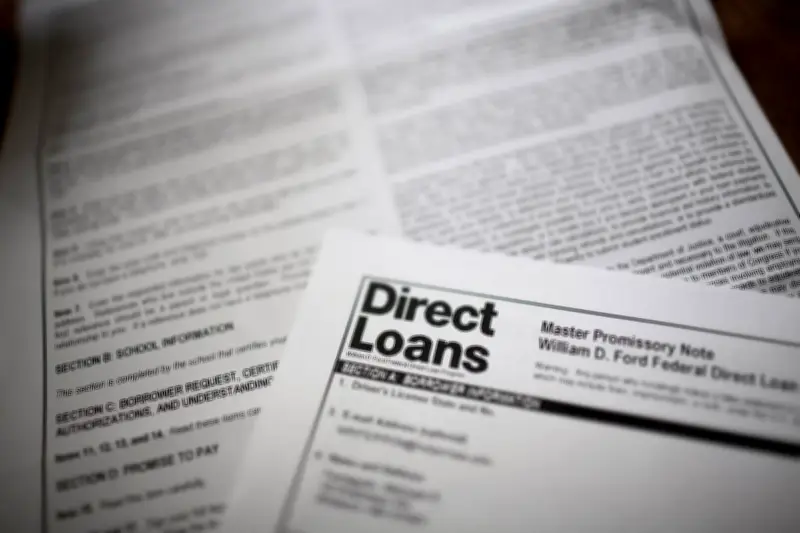
Strict new caps on federal student loans, set to take effect July 1, are causing prospective physician assistants to reconsider their training, according to groups representing the profession. The caps limit annual federal loans for physician assistant (PA) students to $20,500—less than half the median annual cost of a PA program.
Loan overhaul and legal challenges
The changes stem from the Republican-led One Big Beautiful Bill Act (OBBBA), which ends the Grad Plus federal loan program, caps graduate loans at $20,000 per year, and caps professional education loans at $50,000 per year. The Department of Education (DOE) classified most PA programs as “graduate,” not “professional,” triggering the lower cap. On Thursday, a district court judge in Washington DC granted a preliminary injunction to groups representing PAs, who argue they meet OBBBA criteria for professional status. The lawsuit is one of at least three legal challenges to the rules.
“My credit score was a 400,” said Todd Pickard, president of the American Academy of Physician Associates (AAPA), which represents over 200,000 PAs. “There was nobody privately that was going to give me a dime. And my parents are not rich people, so they weren’t going to say, ‘Here’s $100,000 – take it.’” Pickard graduated in 1997.
Cost of PA training
The median cost of PA training is $103,000 for up to 27 months, according to Sara Fletcher, executive director of the PA Education Association (PAEA). For example, the State University of New York (SUNY) Downstate charges over $58,000 for in-state students and $113,000 for out-of-state. PA students typically rely on loans for living expenses, as training demands 60-80 hours per week.
A coalition of 24 Democratic attorneys general, one non-partisan attorney general, and two governors sued the administration in May seeking a permanent injunction. In June, nursing associations, AAPA, and PAEA followed suit. “We got swept up in this big net without any real analysis and decision-making,” Pickard said. “I think they decided they wanted to get out of the loan business.” A decision on the emergency injunction is expected soon.
Impact on rural healthcare
Physician assistants can prescribe medication, conduct exams, interpret tests, and perform procedures. About a quarter work in rural settings, where they fill shortages in family medicine. The same law that overhauled student loans—OBBBA—cut nearly $1 trillion from Medicaid and established the $50 billion Rural Health Transformation Program, which relies on expanding PA scope of practice to bolster rural healthcare. Ten Republican-led states now employ more PAs than doctors, according to Becker’s Hospital Review. Even Donald Trump’s government physician is a PA: Col James Jones, the first PA in that role.
“On the one hand, the Trump administration says we need more PAs and we need them to be doing good work,” Pickard said. “But then on the other hand, the DOE says, ‘Well, we don’t want to invest in the full cost of PAs.’ Those two things don’t jibe.”
Loan cap debate
Education Secretary Linda McMahon has argued that capping loans will lower tuition, but critics see little evidence. “Tuition costs are set by institutions,” Fletcher said. “It’s a bigger system issue than just a PA program.” Students will now need private loans, which have rates from 3% to 17.95%, compared to federal graduate loans averaging 8%. Private lenders require extensive underwriting, making it harder for borrowers with low credit. Pickard noted he has tried to discuss the issue with the administration but has been unsuccessful. “I’d love to sit down and talk to Donald Trump,” he said.