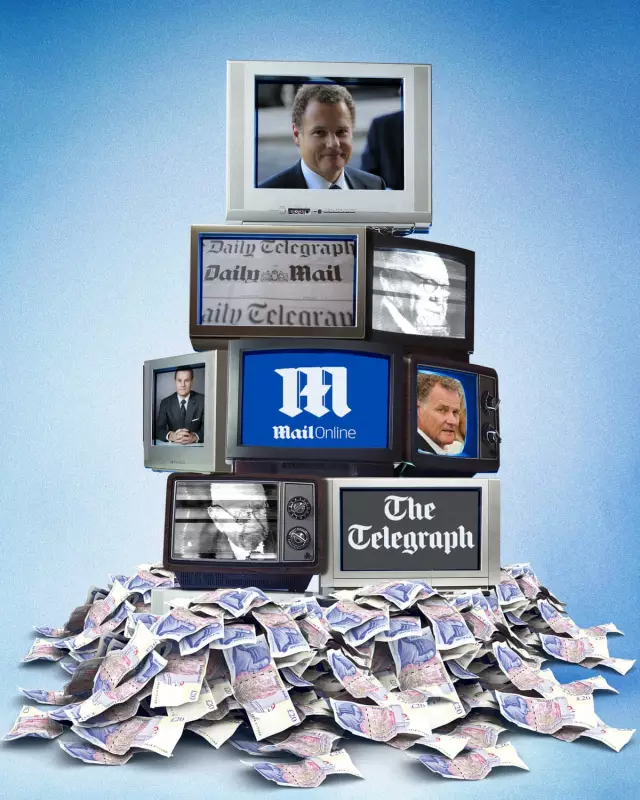
Lord Rothermere's two-decade ambition to create a dominant conservative media powerhouse has been dramatically reignited with his latest bid for the Telegraph titles, potentially positioning the Daily Mail owner as Britain's most influential media mogul.
The Long Game: A 20-Year Pursuit
The Rothermere family, known for their generational thinking in business strategy, first attempted to acquire the Daily Telegraph and Sunday Telegraph back in the summer of 2004. Jonathan Harold Esmond Vere Harmsworth, the 4th Viscount Rothermere, saw his initial bid fail, a development that reportedly delighted rival media titan Rupert Murdoch at the time.
According to media analysts, Murdoch recognised that a successful acquisition would have created a stable of rightwing newspapers powerful enough to challenge the political leverage of his own media empire, which then included the Times, Sunday Times, the Sun and News of the World.

Now aged 57, Rothermere has maintained what industry insiders describe as a genuine passion for journalism rather than purely sharp business motives. Alex DeGroote, a media analyst with previous experience working closely with Daily Mail and General Trust (DMGT), noted: "This sounds a bit cheesy, but he's genuinely passionate about journalism. I suspect internally, they've wanted to unite media businesses that serve centre-right audiences for decades."
Family Legacy and Editorial Independence
The Rothermere media acquisitions represent a family affair spanning more than a century. A portrait of Alfred Harmsworth, his great-great-uncle who founded the Daily Mail in 1896, dominates Rothermere's office, symbolising the deep-rooted connection to British newspapers.
Rothermere himself gained early exposure to the industry, with childhood memories of visiting hot-metal newspaper presses with his father and participating in discussions about the difficult launch of the Mail on Sunday in 1982. He later gained practical experience working as a subeditor and reporter on the Sunday Mail in Scotland before transitioning to the business side of the family enterprise.
Perhaps most significantly, the Rothermere approach to media ownership has been characterised by editorial independence for their publications. Paul Dacre, the uncompromising former Mail editor who worked with both Rothermere and his father, emphasised this principle in comments to the Guardian.
"It's a sacred principle for them that editors are given total editorial autonomy, with the brutally clear understanding that they are dismissed if they produce poor papers," Dacre stated, noting that this hands-off approach sometimes came at personal cost to Rothermere when the Mail's positions contradicted his own gentler, more pro-European conservatism.
Political Implications and Regulatory Hurdles
With British politics appearing to shift rightward, the potential unification of the Mail and Telegraph titles raises significant political concerns. Both publications have recently increased coverage of Nigel Farage's Reform UK party, with many liberal politicians noting what they perceive as an increasingly abrasive style in both outlets.
Anna Sabine, the Liberal Democrat culture spokesperson, expressed concern that "concentrating so much agenda-setting power in the hands of so few would set a deeply concerning precedent." Even former Conservative cabinet minister David Davis has voiced opposition to the potential merger.
Substantial obstacles remain before DMGT can secure the Telegraph titles. The proposed deal faces scrutiny over competition and media plurality concerns, alongside questions about how Rothermere will finance the reported £500 million valuation. Most media analysts believe a more realistic price tag would be around £350 million, suggesting Rothermere is willing to pay a significant premium.
The company has explicitly stated there will be "no foreign state investment or capital" in the deal, aiming to preempt potential investigation under new laws limiting foreign state ownership. This assurance comes despite Rothermere's previous consideration of Qatari backers for a 2023 bid and his developing connections in the Middle East, where his events business performs strongly.

Digital Strategy and Future Prospects
Rothermere's team plans to argue to regulators that the combined media group would compete not with other newspapers but with digital giants like Meta and Google. This positioning reflects the dramatic changes in media consumption since his initial Telegraph bid twenty years ago.
The prospective owner sees growth opportunities for both titles in the United States, where he believes the Wall Street Journal faces limited competition as a national centre-right publication. Additionally, the Mail could learn from the Telegraph's more subscription-based revenue model, while the Telegraph might benefit from the Mail's strong advertising and newsstand performance.
Becket McGrath, a partner at Euclid Law, noted changing regulatory attitudes: "Go back five or 10 years and a Mail/Telegraph deal would have been unlikely to go through... But deals that historically would not have got through are being done. The CMA is still having a close look, but it is being more flexible with remedies and solutions."
Rothermere has committed to maintaining editorial separation between the Telegraph and Mail titles, viewing them as serving distinct audiences - broadsheet and mid-market respectively. However, concerns persist within both organisations about potential cost-cutting measures given the challenging state of the newspaper industry.
As Culture Secretary Lisa Nandy has requested that DMGT and RedBird IMI submit the proposed deal to the government within three weeks, the saga appears set to continue well into next year. Meanwhile, Rothermere's eldest son Vere, 31, is being groomed to eventually take control of the family empire, potentially including stewardship of the Telegraph titles - the next chapter in the Rothermere media dynasty.