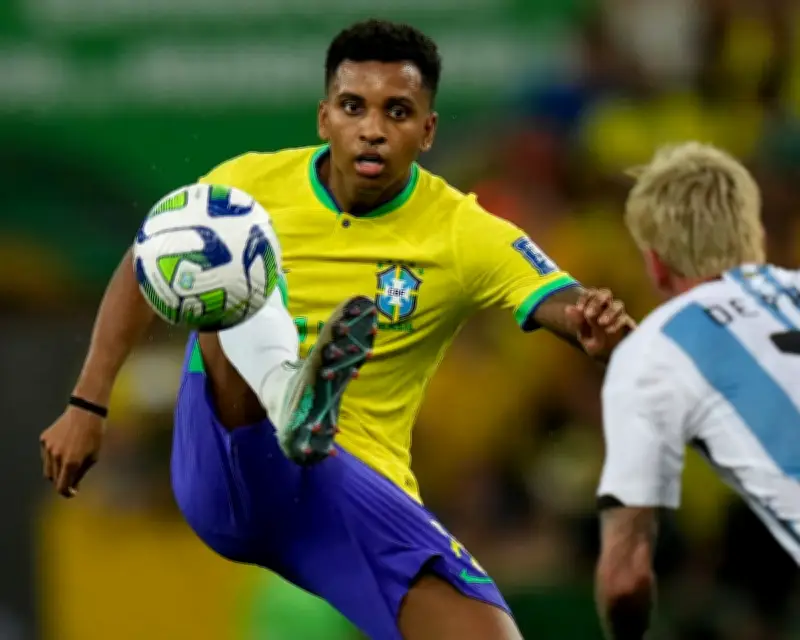
Brazilian forward Rodrygo has opened up about the gruelling daily schedule that players endure during a World Cup, describing it as a privilege that requires total dedication. The Real Madrid star, who missed the 2026 tournament in North America due to a knee ligament injury, shared his insights in a first-person account.
World Cup routine: a test of discipline
Rodrygo detailed a typical World Cup day: breakfast at a set time with nutritionist-controlled buffet options, personalised lunch based on body composition, on-field training in the morning, gym sessions and recovery massages in the afternoon, plus team meetings and video analysis. Evenings feature relaxed dinners with cards, pool or dominoes, followed by a final snack before sleep. The cycle repeats daily.
“The World Cup demands every ounce of dedication and focus a person has to offer,” Rodrygo wrote. “With that schedule of commitments, it is not always easy to feel the ‘World Cup atmosphere’.”
Memories of 2022 and the injury setback
Rodrygo savoured his experience at the 2022 World Cup in Qatar, where Brazil reached the quarter-finals. He described the trips to airports, drives to stadiums, and hours near fans as moments that shape a player’s perception of the tournament’s magnitude. Social media also shows scenes of citizens gathering to support the team.
“Establishing oneself at the required level demands a daily victory over the urge for extended rest and relaxation,” he said. “If the body leans that way, the mind must pull us back. If the mind insists on straying, the body must hold firm.”
US World Cup atmosphere: bubbles of excitement
Observing the 2026 World Cup from the sidelines while rehabilitating his right knee, Rodrygo noted that football excitement in the United States is confined to specific zones. “Engagement with the matches is confined to bubbles of excitement: lively celebrations inside the stadiums, a buzz in the immediate vicinity, and visiting fans frequenting the most famous tourist spots,” he wrote.
He added that outside these hubs, life continues as usual for Americans, with shops and museums maintaining normal hours. “There is no widespread fervour surrounding the World Cup,” Rodrygo said, contrasting this with Brazil, where the tournament is a major celebration and affirmation of identity.
Human side of the player
Rodrygo emphasised that players are human and social media comments reach them, but focus must remain on the pitch. He acknowledged the privilege of representing Brazil while stressing the effort required to sustain that privilege.
The 2024 Copa América and 2025 Club World Cup were held in the US, and the 2028 Olympic Games will also take place there. However, Rodrygo noted that the frequency of events does not necessarily translate into football occupying a larger space within American culture.