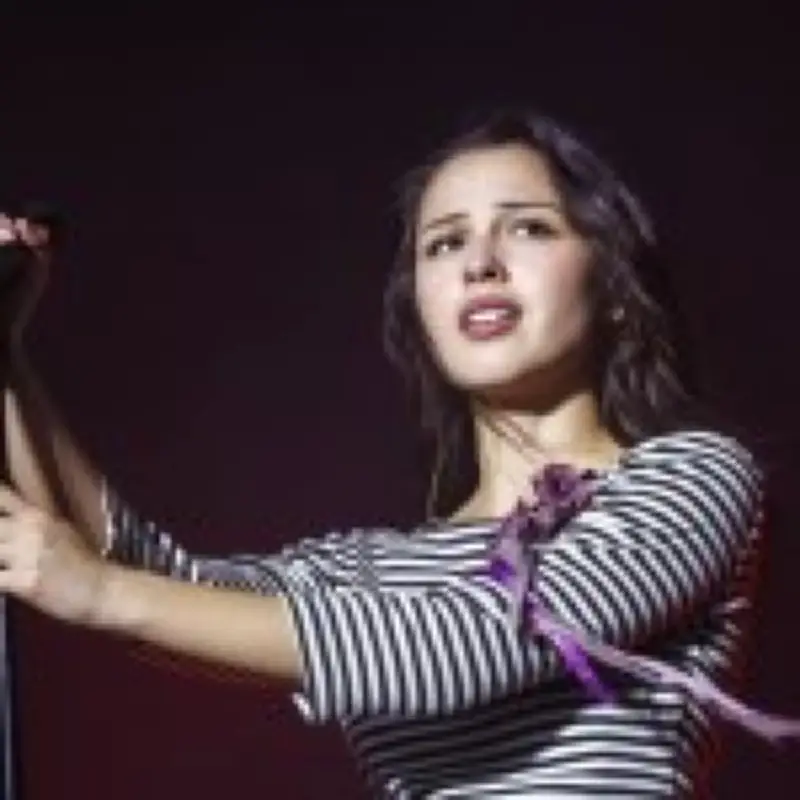
Olivia Rodrigo can smell her fans’ nappies, and frankly, we’ve all gone too far. There are many indignities I would willingly endure for Olivia Rodrigo. I would spend an irresponsible amount of money on tickets and even stand in a queue for several hours. I would even happily suffer through the uniquely modern experience of attending a concert where half the audience appears to be watching the entire thing through their own phone screens. What I would not do is poop my pants, and then just stand in it for hours. Unfortunately, Rodrigo has now revealed that some people absolutely would go to those lengths to get close to her.
While promoting her new album, You Seem Pretty Sad for a Girl So in Love, the pop star appeared on KISS Radio, where she was asked about the strangest place she’d ever had to use the toilet. Rodrigo, 23, couldn’t think of an answer for herself, but she did reveal that she has encountered fans at concerts and festivals who wear nappies so they can remain at the front barrier all day without needing to leave. As a performer, she explained, this is something she has not only witnessed but also smelled wafting up from the front row at her shows. ‘I think about it kind of often,’ she admitted, a haunted look in her eyes, as if she could smell shadows of the odor even then.
Is This Devotion or Competition?
Frankly, if I thought these people were unlearning basic toilet training because they were so overwhelmed by their love of Olivia Rodrigo’s music that they simply couldn’t bear to miss a second of the performance, I’d be tempted to call it admirable devotion. Disgusting devotion, certainly, but devotion nonetheless. I might even be persuaded there was something faintly rock ‘n’ roll about loving an artist that much. What makes the whole thing so depressing is that it’s not about the love of music – it’s that it’s about competition. The diaper isn’t helping anyone get closer to the music. What it’s doing is helping them get closer to the stage, which increasingly seems like a different thing entirely.
The Evolution of Concert Culture
Over the last decade or so, concerts have gradually transformed from shared cultural experiences into strange hybrid events that function simultaneously as entertainment, competition, endurance sport and status symbol. The music is still there, obviously, but wrapped around it is an entire economy of access and exclusivity that seems to grow larger every year. You can see it in the way people talk about concerts now. Conversations revolve around who got barricade, how quickly tickets sold out, whether somebody secured a VIP package, whether the artist made eye contact or whether they were lucky enough to witness a surprise song. Attending is only part of the achievement; what really matters is securing the most desirable version of the experience when it’s viewed from the outside. The fact that you spent hours, miserable and uncomfortable, standing in your own waste in a dirty nappy matters surprisingly little when all your friends see your Instagram story and feel jealous.
Part of this is undoubtedly down to the way live music has become more difficult and more expensive to access. If you compare concert culture now to even the 1990s, the difference is staggering. Tickets for major artists routinely disappear on online retailers within minutes, dynamic pricing can send costs soaring, and resellers hoover up inventory and relist it at eye-watering markups. All of that adds up to mean that actually getting into the venue can feel like a competitive achievement in itself, and once something becomes scarce, people inevitably start attaching status to it.
The Taylor Swift Effect
The Taylor Swift Eras Tour was perhaps the clearest example of this phenomenon. At some point, attending the tour came to function as a cultural signifier in its own right, and just being at one of her shows communicated something about your access, your resources, or your social connections. The endless celebrity attendance lists became part of the spectacle, and people who could barely name three songs suddenly seemed desperate to secure tickets and be seen there. Of course, some of this isn’t new, as we all know fans have been camping outside venues, screaming themselves hoarse and making questionable decisions in the name of celebrity worship for decades. And it makes sense that the sheer monetary cost of concerts would put people under crushing pressure to get the absolute best experience out of a night that costs as much as their monthly rent.
The Online Amplification
What’s different now is that every one of those experiences exists simultaneously online. The concert no longer ends when you leave the stadium; it continues on TikTok, Instagram and X, where the experience can be displayed, measured, and compared against everybody else’s. Rodrigo’s story suggests we’ve quietly accepted a version of concert culture in which enjoying the show is no longer enough, or even the point. Increasingly, the goal seems to be winning by proving you had the best seat, the best view, and the closest possible proximity to the artist. Nobody can smell the nappy through a phone screen, they can only envy the view, so who cares if you were miserable the whole time? It only matters that it looked like you had a blast in your coveted front row seat.