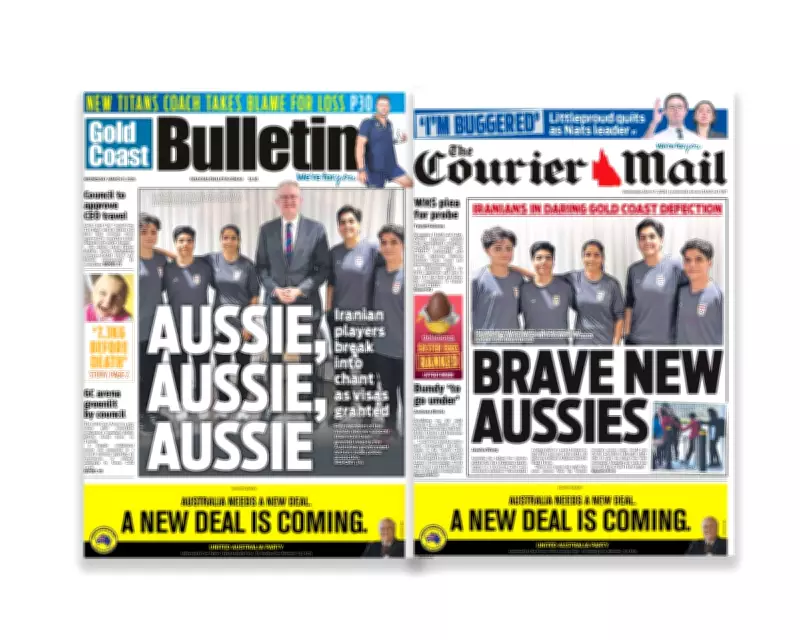
News Corp Tabloid Under Fire for Digitally Erasing Labor MP Tony Burke from Image
The Courier-Mail, a prominent News Corp tabloid in Australia, has ignited a significant controversy after it was discovered that the publication digitally altered an image to remove Labor MP Tony Burke. This incident, which occurred in a recent edition, has raised serious questions about media integrity and the ethical boundaries of editorial practices in the highly competitive world of tabloid journalism.
Details of the Altered Image and Public Backlash
According to reports, the original photograph featured Tony Burke alongside other political figures at a public event. However, in the version published by The Courier-Mail, Burke was conspicuously absent, with evidence suggesting the use of photo-editing software to erase him from the scene. The alteration was quickly spotted by sharp-eyed readers and political commentators, who shared comparisons on social media, leading to widespread condemnation.
Critics argue that this act represents a blatant attempt to manipulate public perception by omitting a key political figure, potentially to downplay his presence or influence. The backlash has been swift, with many accusing News Corp of engaging in politically motivated censorship, a charge that strikes at the heart of journalistic standards in Australia.

Broader Implications for Media Ethics and Political Reporting
This incident is not an isolated one but part of a larger pattern of concerns regarding media bias and ethical lapses in the industry. In recent years, there have been multiple instances where media outlets, particularly tabloids, have been accused of altering content to suit editorial agendas. The erasure of Tony Burke highlights how such practices can undermine trust in the media and distort the democratic process by presenting a skewed version of events.
Experts in media ethics emphasize that transparency and accuracy are fundamental principles of journalism. When publications engage in digital manipulation without disclosure, they risk eroding public confidence and fueling accusations of partisanship. This case has sparked calls for stricter guidelines and oversight to prevent similar occurrences in the future.
Response from News Corp and Political Reactions
As of now, News Corp has not issued a formal statement addressing the allegations, though sources within the company suggest internal reviews may be underway. Tony Burke and the Labor Party have expressed outrage, labeling the act as "unacceptable" and demanding accountability. Burke himself stated that such actions reflect a troubling trend in media where factual representation is sacrificed for political narratives.
Other political figures and media watchdogs have joined the chorus of criticism, urging for a reevaluation of ethical standards in journalism. The incident has also reignited debates about the concentration of media ownership in Australia, with News Corp holding a dominant position that critics argue allows for unchecked editorial discretion.
Conclusion: A Call for Greater Media Accountability
The controversy surrounding The Courier-Mail's altered image serves as a stark reminder of the power and responsibility held by media organizations. In an era where misinformation and digital manipulation are rampant, maintaining ethical rigor is more crucial than ever. This case underscores the need for robust mechanisms to ensure that journalism upholds its duty to inform the public truthfully and impartially, without succumbing to political or commercial pressures.