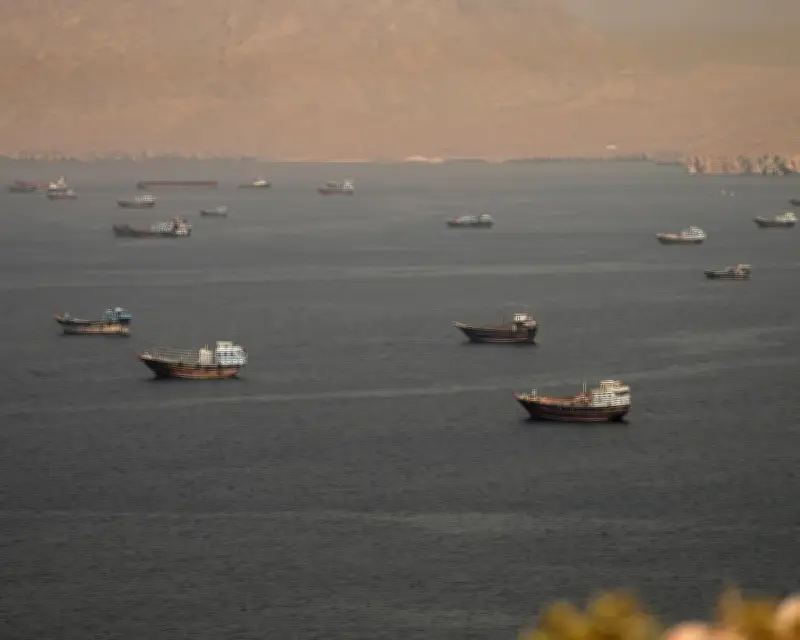
Iran has announced plans to introduce a system of maritime fees in the Strait of Hormuz, set to take effect after a 60-day negotiation period triggered by the signing of a memorandum of understanding with the United States. Tehran claims a historic victory over the US and asserts control over the strategic waterway, while rejecting a European proposal for a naval mission to escort ships through the strait.
Netanyahu Comments on Security Zone and Iran
The warning came as Israeli Prime Minister Benjamin Netanyahu stated that Israel will maintain its security zone in south Lebanon as long as security needs require it, referring to the over 600 square kilometers of Lebanese territory occupied by Israeli troops along the border. Regarding Iran, Netanyahu emphasized that Israel will continue to adhere to the supreme objective of preventing Tehran from acquiring nuclear weapons. Iran insists that the deal concerning Lebanon's territorial integrity requires a full Israeli withdrawal, holding Donald Trump accountable for the withdrawal.
Continued Hostilities and Hezbollah Attacks
Further Israeli drone attacks and artillery shelling continued on Thursday morning. Hezbollah claimed responsibility for a series of attacks against Israeli forces in the Kfar Tebnit-Ali al-Taher area in recent days.
Formal Ceremony Cancelled
Threats to the agreement emerged as the planned formal ceremony marking the signing of the memorandum of understanding between the US and Iran on Friday was cancelled. Donald Trump and Iranian President Masoud Pezeshkian had already personally signed the document, translated into English and Farsi. The cancellation means Pakistan's chief mediator, Prime Minister Shehbaz Sharif, will not travel to Switzerland, a blow to Pakistan's hopes for global recognition as a mediator.
US Vice President’s Plans and Technical Talks
US Vice President JD Vance said he still intended to travel to Switzerland but admitted uncertainty about what would happen. Iran stated that technical-level talks between the two sides would proceed at the luxurious Qatari-owned Bürgenstock mountain resort by Lake Lucerne. These talks, the first direct meeting since April 12 in Islamabad, will focus on implementing the 14-clause memorandum, including lifting sanctions on Iran's oil exports and ensuring free commercial traffic through the Strait of Hormuz.
US Lifts Blockade, Troops to Draw Down
At a White House briefing, Vance announced that orders had been issued to lift the blockade on Iranian ports, allowing more than a dozen ships to travel to Iran. US troops would be drawn down to prewar levels within 30 days, and copies of the memorandum had been sent to Congress.
Iran’s Proposed Fee and Gulf Reactions
Iran's chief negotiator, Mohammad Bagher Ghalibaf, stated that the strait needs management, which would come at a cost. However, Saudi Foreign Minister Prince Faisal bin Farhan Al Saud challenged the Iranian plan, arguing that the strait's management was functioning well before the conflict, with ships navigating freely and no safety or environmental issues. He rejected any novel arrangement imposed as a result of the conflict.
Muath Alwari, the UAE's director of policy planning, noted that the UAE was the recipient of most Iranian strikes during the war, targeting hotels, tourist sites, and civilian infrastructure. He added that the UAE's relationship with Israel strengthened during the war, with Israel proving to be a solid defense partner, and that engagement with Israel would deepen post-war, unchanged by the Abraham Accords.
Iran Seeks to Repair Gulf Relations
The statements from key Gulf figures came as Iran's foreign ministry began repairing relations with Gulf allies. Iran hopes the Gulf will contribute substantially to a planned $350 billion Iran construction fund, established with US agreement to attract private sector investors. Iran's economic minister, Seyed Ali Madanizadeh, said the US waiver on Iran's oil exports would not produce an economic bonanza, as the war led to a significant decrease in revenues and a drastic drop in oil income, intensifying the budget imbalance. He cautioned that everything will not simply return to normal.