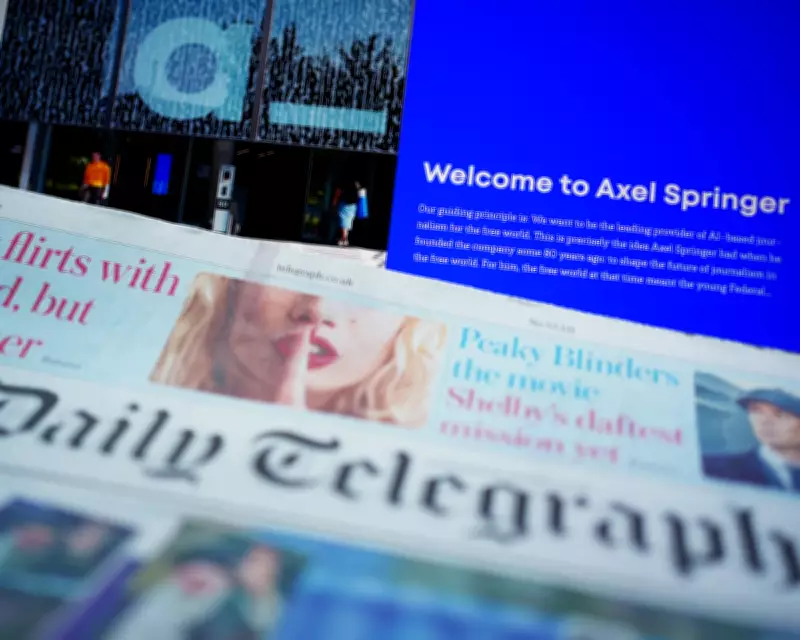
German Media Powerhouse Axel Springer Disrupts Telegraph Sale Process
In a stunning development that has sent shockwaves through the British media industry, German publishing giant Axel Springer has emerged as a formidable contender in the auction for The Daily Telegraph. This unexpected move has effectively shattered the long-held ambitions of Lord Rothermere, chairman of DMGT, who had been widely viewed as the frontrunner to acquire the prestigious newspaper.
Rothermere's Acquisition Strategy Faces Unexpected Obstacle
Lord Rothermere, whose family has controlled the Daily Mail and General Trust for generations, had been meticulously positioning himself to add The Telegraph to his media portfolio. Industry analysts had speculated that his deep pockets and established presence in UK media would give him a decisive advantage in the bidding process. However, the entry of Axel Springer, Europe's largest digital publishing house with substantial financial resources, has dramatically altered the competitive landscape.
The German company's interest represents more than just another bidder entering the fray – it signifies a potential transformation in the ownership structure of one of Britain's most influential newspapers. Axel Springer, which owns prominent publications like Bild and Die Welt, brings not only significant capital but also extensive digital publishing expertise that could reshape The Telegraph's future direction.

Strategic Implications for UK Media Landscape
The auction for The Telegraph has become a focal point for broader discussions about media ownership and influence in post-Brexit Britain. With Axel Springer's intervention, several critical questions have emerged:
- How will foreign ownership affect The Telegraph's editorial independence and political alignment?
- What digital transformation strategies might Axel Springer implement if successful?
- How will this development impact competition among UK newspaper publishers?
The timing of this development is particularly significant, coming at a moment when traditional newspaper business models face unprecedented challenges from digital disruption and changing reader habits. Both Axel Springer and DMGT have invested heavily in digital transitions, making their approaches to The Telegraph's future particularly noteworthy.
Financial and Regulatory Considerations
The bidding war that has now developed between the German media conglomerate and the British publishing heir promises to drive up the acquisition price substantially. Market observers suggest that Axel Springer's involvement could push the final sale figure well beyond initial estimates, testing the financial limits of all interested parties.
Furthermore, any successful bid by Axel Springer would likely face rigorous regulatory scrutiny from both UK and European authorities. Media ownership rules, competition concerns, and questions about foreign influence over British media would all become part of the approval process, potentially creating additional hurdles for the German bidder.
Broader Context of Media Consolidation Trends
This development occurs against a backdrop of increasing consolidation in the global media industry. As traditional publishers seek scale to compete with tech giants like Google and Facebook, strategic acquisitions have become increasingly common. The Telegraph auction represents a particularly high-profile example of this trend, with implications that extend far beyond the newspaper itself.
The outcome will not only determine who controls one of Britain's most storied newspapers but may also signal broader shifts in how media properties are valued and acquired in the digital age. For Lord Rothermere, the Axel Springer intervention represents a significant setback in his expansion plans, while for the German company, it offers a potential gateway to greater influence in the English-language media market.