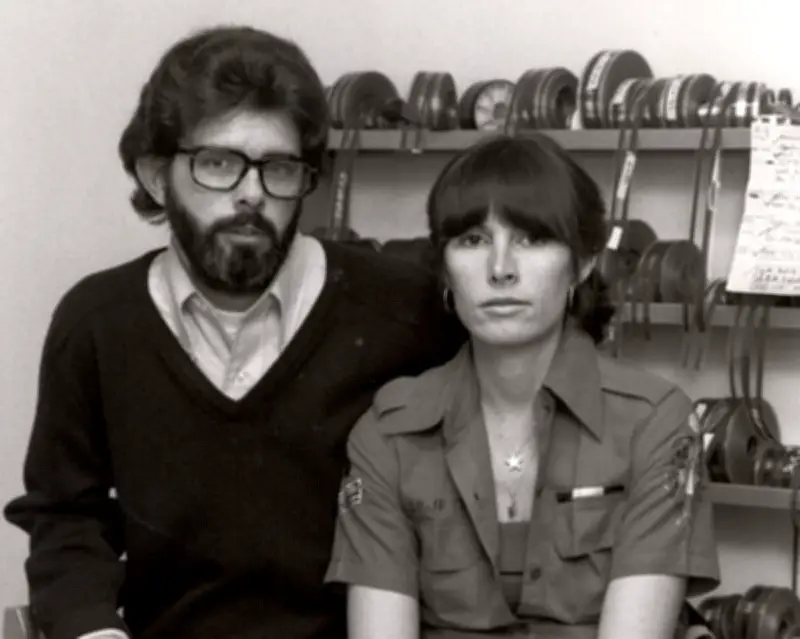
Behind every great director, to coin a phrase, is a great editor – and as the tributes paid earlier this month to the late Marcia Lucas, Oscar-winning editor of Star Wars: Episodes IV to VI, and former wife of creator George Lucas, reminded us, that editor is often a woman. In a historically male-dominated industry, this familiar Hollywood dynamic is a phenomenon that is worth investigating.
Historical Context
It goes back decades. During the supermacho Hollywood new wave era, Dede Allen worked with Arthur Penn (Bonnie and Clyde) and Sidney Lumet (Dog Day Afternoon), and Thelma Schoonmaker edited Raging Bull, The King of Comedy and GoodFellas for Martin Scorsese (and much else besides). David Lean’s Lawrence of Arabia may have contained no female speaking characters, but it won Anne V Coates an editing Oscar. Anne Bauchens was nominated for Cleopatra in 1934, when the Oscars’ editing category was created, and became its first female winner in 1940 for Cecil B DeMille’s North West Mounted Police.
Misconceptions About Editing
The received wisdom is that women came to occupy the editing suite while being excluded from other creative roles as it was assumed that editing was monotonous, unskilled labour and, as the male-dominated studio system emerged, editors were subordinate to the producer and director.
This, however, may not be the full story. “During the studio system, editing was not considered unskilled labour,” says JE Smyth, professor of history at the University of Warwick. “Women were the best editors in the studio system; many had musical backgrounds which helped them with finding a flow.
“They were well paid, in senior positions and editors would often be on the set and watch for directors’ mistakes. Barbara McLean [20th Century Fox’s head of editing] would shoot closeups on a production after the director had left the picture. Usually producers would listen to the editor’s perspective for the final cut.”
Creative Influence
Editors could exert significant creative influence over the end result. “Viola Lawrence saved The Lady from Shanghai,” says Smyth, “and, without McLean, All About Eve would have been a mess because director Joseph L Mankiewicz was too sentimental. McLean said he was naive.”
Partnerships and Trust
The partnership between a director and editor is often vital to long-term creative success. Justine Wright, editor of The Last King of Scotland and The Iron Lady, says it’s down to “trust and a shared vision”. “It’s about being open to suggestions and honest in your opinion while being sensitive to each other’s vulnerabilities. Because we are a step removed from the script stage and turmoil of a shoot, the editor can see things a director can’t, but a director has to be able to stand up and defend their film. Because of the many hours you sit together, it’s pretty important to like the vibe of each other.”
Personal and Creative Partnerships
As Marcia and George Lucas demonstrate, creative partnerships can also be personal ones. Mary Sweeney, editor of Lost Highway and Mulholland Drive, was briefly married to director and collaborator David Lynch. She tells me: “David was the only person with whom I had a simultaneous personal and professional relationship. We worked together for several years before it became personal. Working together, living together, growing a family when our son was born, was a synchronised dream for two decades. It was a very productive professional relationship. We were lucky, but I’m not sure mixing professional and personal lives always is.”
Gender Perceptions
The key question is whether female editors are viewed through a gendered lens? Have they been hired in the stereotypical belief that they are more accommodating or to passively execute the visions of “genius” male directors? Schoonmaker has modestly said that she “works with a lot of geniuses” and laughs at the idea of overruling Scorsese, stressing that she would “never show (him) anything other than what he originally planned”. She further suggested that women may have enjoyed greater success breaking into editing than directing because they “are better maybe at collaborating with directors”. Quentin Tarantino, meanwhile has spoken of his late editor Sally Menke in maternal terms, explaining he felt a woman would be “more nurturing to the movie” and to him, not “trying to shove their agenda or win their battles”.
Sweeney pushes back at this, saying, “I wouldn’t describe her contributions as nurturing”, instead defining Menke as a “great editor” characterised by a “powerful understanding of character and continuity, a rock-solid sense of musical rhythm and timing, and boot-camp dedication to the work”. (In Tarantino’s defence, he did also call Menke his “number one collaborator”).
Current Challenges
“What continues to frustrate me is the imbalance in creative leadership,” says film and TV editor Mariana Moraes. “When we look at Bafta or Academy Award nominations, department heads are still overwhelmingly men. I recently worked on a production where every assistant in post-production was a woman, while the editor, post producer, composer, sound designer, VFX supervisor and VFX editor were all men. At times, it felt like a playground where ‘the boys’ were allowed to take part in the most exciting aspects of film-making.”
But the women I spoke to resisted the label of frustrated creatives, emphasising their dedication to the craft in its own right. Sweeney says: “I fell instantly in love with editing. It spoke to both sides of my brain – the physical, tactile, haptic-packed skills, and the ability to paint, sculpt and dream a story in images with visual metaphor.”
Sweeney sums it up romantically: “Editing is the final rewrite, where the poetry is written in cinema language. The film is made or broken in the editing room.”