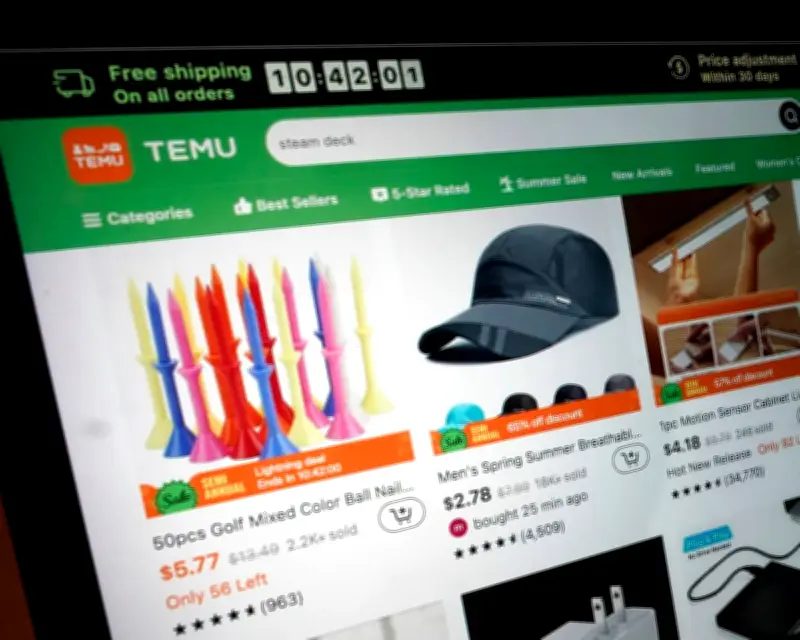
The European Commission has said it hopes to prevent the “desertification” of Europe’s high streets, as it prepares to introduce a customs tax on small parcels in an attempt to curb cheap Chinese imports.
End of the de minimis exemption
Consumers have been able to buy up to €150 (£129) worth of goods, including fast fashion, cosmetics and toys, without any customs charges as part of a “de minimis” exemption, a tariff break meaning too small to matter. From Wednesday, small parcels under that value will be subject to a new €3 customs charge and officials are hoping the end of de minimis will slow the rapid rise in imports from China.
They said on Monday that the number of low value parcels coming into the bloc had more than quadrupled, from 1.3bn in 2022 to 5.9bn in 2025. About 90% of the parcels are coming from China, with competition from online platforms including Shein and Temu hitting European retailers hard.
Impact on European retail and safety concerns
Online shopping had “contributed to the decline of traditional retail and the desertification of cities, affecting local jobs and community life”, a senior official said on Monday. Last year civil society consumer groups said EU cities and towns were facing “an avalanche of cheap imports shipped by Temu, Shein and other third-country e-commerce platforms”, which were threatening to devastate the European economy and forcing businesses to close.
The EU justice commissioner, Michael McGrath, also expressed “shock” at the dangers of some of the items entering the EU through the de minimis route. EU research disclosed on Monday showed that 60% of online products imported from outside the bloc were not compliant with EU law, potentially endangering consumers. Cosmetics and toys raised the most concerns about safety, with 65% of imports in both categories failing EU standards. Online shoppers opting for non-EU food supplements were also endangering themselves, with 63% of those products failing strict health and public safety tests. Professional personal protective equipment ranging from hard hats to reinforced shoes from outside the bloc were also a high-risk purchase, with 60% not compliant with EU law.
Regulatory actions and business adjustments
Last month, EU regulators fined Temu €200m for failing to stop the sale of illegal and dangerous products. EU officials hope the €3 tax will make some consumers think twice, especially when buying very low-value items. They also believe the removal of the threshold for “de minimis” duty-free parcels will have a deterrent effect for non-EU retailers as they will be forced into making sometimes-complicated customs declarations for all packages. But the main hope is to reintroduce a level playing field for Europe’s small businesses and retailers.
Shein is already looking at restructuring its business model. It has opened pop-up stores in Hungary and last year tried to open its first permanent store in Paris, which closed after a backlash. In December it opened a massive distribution centre in Poland which may allow it to circumvent the tax.
Northern Ireland and UK implications
The new customs charges will also apply in Northern Ireland, under Brexit trading arrangements, but all proceeds will go to the UK Treasury. In the UK, the Treasury has said it will start charging import duties on small parcels worth less than £135 from October 2028, earlier than an original date of March 2029 but still years later than British retailers had hoped. Temu and Shein have been approached for comment.