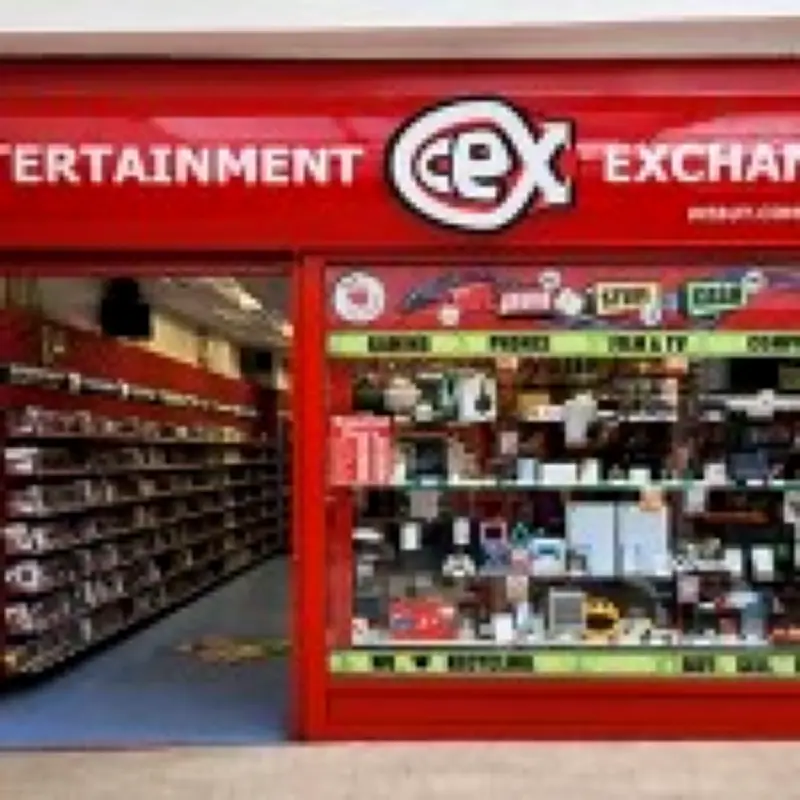
Sony's announcement that it will cease production of PlayStation game discs after next year has sparked significant backlash, but analysts warn the move could devastate the thriving second-hand games market. The global used game market was valued at $7.2 billion (£5.4 billion) in 2025, according to Dataintelo, with console games accounting for 42.3% of that revenue. However, with Sony's shift to digital-only distribution, retailers like CeX—which operates over 380 stores across the UK—face an uncertain future.
Second-hand market under threat
Michael Pachter, managing director of strategic planning at Wedbush Securities, told CNBC: 'Realistically, at least one third of games have been sold historically as used, and the games that were sold used also provided currency to the gamer who traded them in as cash to pay for new games. Bricks and mortar game retail is doomed.' The Dataintelo report projected the second-hand market would reach $13.8 billion (£10 billion) by 2034, but that forecast was made before Sony's announcement. The report highlighted that the driving force behind the second-hand market is the widening gap between new game prices and consumer willingness to pay, exacerbated by inflationary pressures on household budgets.
Regional and retailer impacts
North America leads the second-hand market with 36.8% of global revenue, supported by retailers like GameStop, eBay, Decluttr, and Amazon. Europe holds 28.3%, largely due to CeX, while Asia Pacific accounts for 24.6%. Kazunori Ito, director of equity research at Morningstar, expects the second-hand market to 'keep shrinking and eventually disappear.' He added: 'There is an important difference between players accepting that shift because they see value in it, and having it effectively forced on them by taking away the alternative. Most would prefer to make that transition in their own way and at their own pace, rather than having it driven by the end of physical discs.'

Short-term survival and console dynamics
Stores like CeX may survive in the short term through circulation of current and previous-generation games, particularly if the transition is gradual, similar to the shift from PlayStation 4 to PlayStation 5. However, if the PlayStation 6 is widely adopted, the second-hand market could struggle beyond retro rarities. The response of Xbox and Nintendo will also be crucial. Xbox might follow suit with its Project Helix, but Nintendo, which sees the highest physical game sales, is likely to be the last to go digital-only.