Eddy Shah: The Newspaper Pioneer Who Transformed British Media
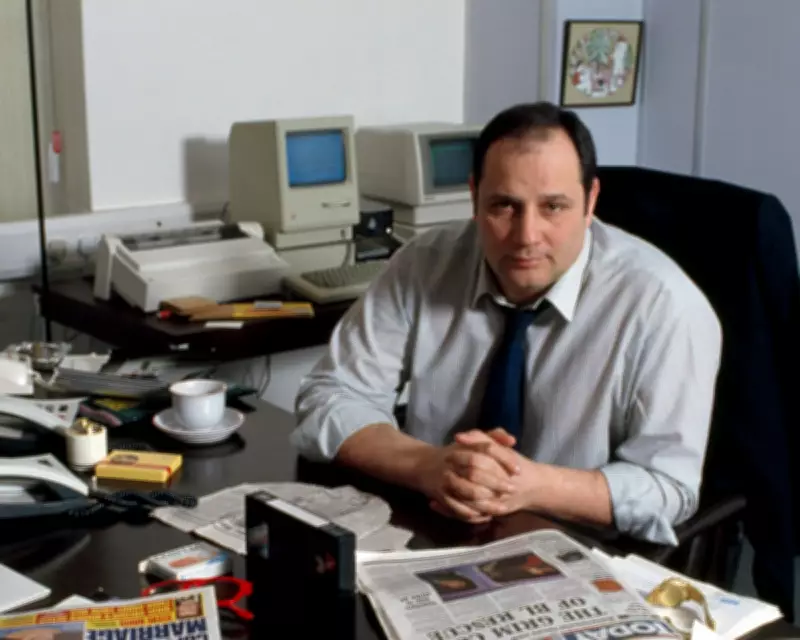
The modern history of British newspapers will forever include the name of Eddy Shah, a revolutionary figure who fundamentally changed the industry by challenging the print unions and introducing groundbreaking computer-based technology to national publications. Shah, who has died at the age of 81, may not have become a lasting media magnate himself, but his actions created the conditions that allowed the entire newspaper landscape to evolve dramatically.
The Man Who Started a Revolution
Shah owned a group of small free newspapers based in Warrington, Cheshire, but his impact would reach far beyond local journalism. In 1986, he launched Today, Britain's first full-colour daily newspaper, followed by the Post in 1988. These ventures came after he successfully won a bitter strike battle against the previously all-powerful National Graphical Association print union.
Although Shah quickly lost control of Today and saw the Post close within just a month, his actions sparked changes that broke the unions' stranglehold on the industry. This allowed for the introduction of new printing methods that were subsequently exploited by Rupert Murdoch and every other major newspaper group, including the Guardian.

From Grey Pages to Colour Revolution
The transformation Shah initiated moved newspapers from the grey, inky pages and grainy black-and-white photographs of the 1970s and early 80s into an era of colour reproduction, innovative designs, and speedier, uninterrupted print and circulation runs. This revolution came just in time for the internet age that would eventually make traditional paper printing less dominant.
Shah himself reflected on his legacy: "It wasn't a failure because our innovations benefited the rest of the industry, especially bringing in new technology. I made it happen and everyone remembers the guy who did it first."
Early Life and Career Beginnings
Born Selim Shah in Cambridge to an English mother and Iranian father, Shah was raised mainly by his grandparents in India before being sent to Gordonstoun, the prestigious Scottish public school, at age 11. After being suspended twice, he completed his education in state schools in Sussex, finishing at a crammer in Brighton with seven O-levels.
Leaving home following an argument with his mother, Shah took various jobs including stagehand (where he acquired the nickname Eddy), floor manager at the BBC, and positions at Granada Television in Manchester. It was there he met his future wife, actor Jennifer White, in 1968; they married soon after, though his parents chose not to attend the ceremony.
The Messenger Group and Union Confrontation
In 1976, after redundancy from an advertising job with the Manchester Evening News, the couple sold their house to launch a string of free newspapers in the northwest. This grew into the Messenger group, eventually reaching about 60 titles.
When print union representatives approached Shah to unionise his printing plant, he agreed to put it to a vote. Six staff members voted against unionisation, and when the unions demanded their dismissal, Shah refused. The response was immediate and brutal: the unions threatened to close him down.
The confrontation escalated dramatically with union tactics including sending coffins to the family home, mass picketing of printworks, and harassment of non-union employees. Shah was particularly aggrieved that this intimidation occurred while his wife was undergoing radiotherapy for cervical cancer.
A Pivotal Industrial Battle
Police were called to accompany distribution vans during a seven-week siege before Shah could deploy the Thatcher government's new labour legislation, leading to fines and injunctions against the union. In November 1983, a mass picket of 4,000 workers turned violent and was broken up by police using tactics that would become familiar during the miners' strike the following year.
The outcome was watched keenly by Rupert Murdoch, who would later defy print unions himself by secretly moving his papers to Wapping and introducing new technology with non-union labour.

National Newspaper Ventures
Emboldened by his success against the unions, Shah launched Today in March 1986. However, he lacked both the manpower and resources to compete effectively with established tabloids like the Mail and Express. Technical problems plagued the venture, with computers crashing and poor colour reproduction leading to jokes about "Shahvision."
Within four months, as circulation failed to take off, Shah was forced to sell the paper to conglomerate Lonrho, keeping just a 10% share. The paper would eventually cease publication in 1995 after passing through several owners including Murdoch.
Shah's second national venture, the Post launched in November 1988, lasted only 33 issues, produced on laptop computers from Manchester.
Later Life and Legacy
After selling the Messenger group for £40 million, Shah turned to writing novels and involved himself in various business ventures including television production, golf clubs, hotels, and eco-friendly holiday homes. In 2013, he appeared at the Old Bailey charged with historical rape allegations but was found not guilty.
Jennifer died in 2023, and Shah is survived by two sons, Martyn and Alex, and a daughter, Tamsyn.
Despite his personal ventures not achieving lasting success, Eddy Shah's confrontation with the print unions and introduction of new technology created the conditions that allowed British newspapers to modernise and adapt to changing times. His legacy lives on in every colour newspaper page printed in Britain today.