Dubai's Influencer Community Rallies Around Unified Message After Iranian Missile Attacks
The glittering metropolis of Dubai, long marketed as a secure oasis within the volatile Middle East, faced a direct challenge to that image when Iranian missiles targeted the Persian Gulf region. The attacks, launched in retaliation for US-Israeli strikes that reportedly killed over 700 Iranians, caused significant damage including fires at luxury hotels, shattered skyscraper windows, and disruptions at Dubai International Airport. According to the UAE defence ministry, the strikes resulted in at least three fatalities and approximately fifty-eight injuries within the Emirates.
Influencers Capture the Crisis and Craft the Response
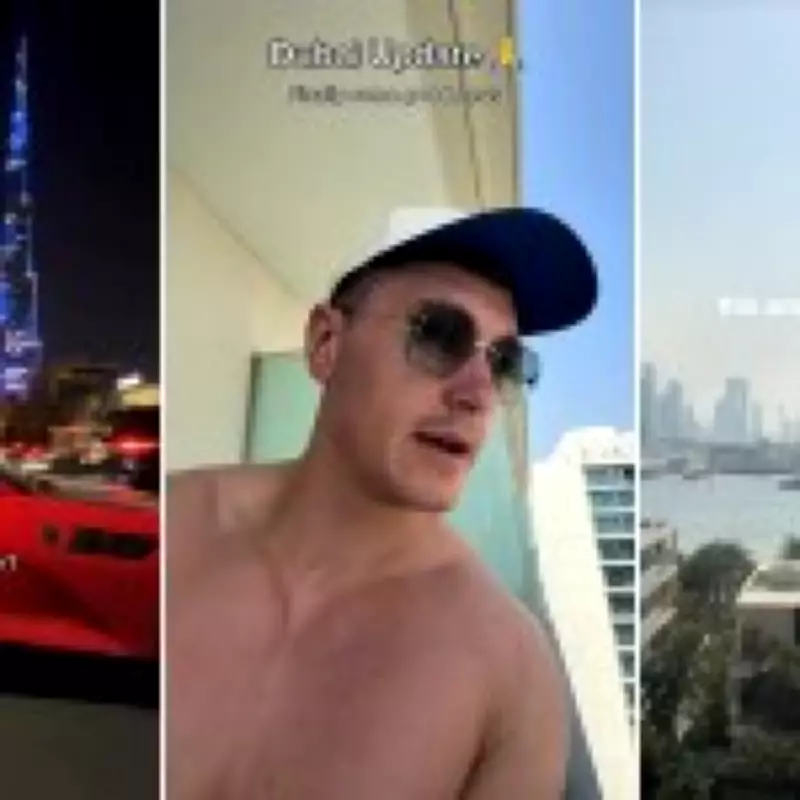
The initial moments of the conflict were documented by numerous social media influencers residing in or visiting Dubai. Content ranged from dramatic footage of missiles streaking across the night sky past the iconic skyline to personal testimonials from individuals taking shelter. Among them was Mike Babayan, a 23-year-old influencer living in the Burj Khalifa, who told his 201,000 followers he felt "stuck in the middle of WW3" during the initial attack.
However, the narrative quickly evolved. By midweek, Babayan and others shifted their messaging, emphasizing that daily life in Dubai was continuing with remarkable normalcy. "Streets are full, restaurants and cafes are packed, it's almost like nothing ever happened," Babayan reported, describing the atmosphere as feeling "just like another regular day."

A particularly striking trend emerged across platforms like Instagram and TikTok: numerous influencers began posting near-identical video responses to a common question. The videos typically start with a variation of "You live in Dubai. Aren't you scared?" followed by the confident reply, "No, because I know who protects us," while showing footage of Dubai's Crown Prince, Sheikh Mohammed bin Rashid Al Maktoum.
A Calculated Projection of Calm and Control
This coordinated messaging aligns with a broader strategy observed by media experts. Omar Al-Ghazzi, an associate professor of media at the London School of Economics, told Metro that the UAE leadership is deliberately "projecting a sense of normalcy for nationals and residents and sending a 'there is nothing to see here' message to the world." He noted the significant risk that Dubai could become "associated with conflict in the future," a perception influencers are actively working to counter by "flooding" social media with reassuring content.
The phenomenon represents what Al-Ghazzi termed "the Dubai version of 'keep calm and carry on.'" Some influencers even contrasted Dubai's perceived safety with crime concerns in Europe, reinforcing the city's marketed identity as a secure haven.
The Complex Reality Behind the Influencer Economy
This unified front exists within a specific context. The UAE maintains strict controls on freedom of expression, with laws criminalizing content that "contradicts official announcements" or spreads rumors, as warned by Dubai Police. Simultaneously, Dubai has cultivated its status as a global influencer hub. The professional network Creators HQ boasts nearly 2,500 members with a combined following of 2.45 billion, though creators must obtain licenses and operate within clear boundaries.
Dr. Zoe Hurley, an associate professor of media at the American University of Sharjah, challenges simplistic stereotypes of Dubai influencers. "The British imaginary of a Dubai influencer as a tax exile, surgically enhanced, drinking cocktails in the sun, is an Orientalist and classist stereotype," she stated. Many creators, she explains, work in fields like fitness, personal training, and property—occupations with insecure incomes and no safety nets. This economic reality pressures them to "maximize their earning potential by promoting everything they do on social media."
Dr. Hurley emphasized that not all influencers are downplaying the situation, but rather participating in a communal effort to project resilience.

Diverse Expatriate Perspectives and Long-Term Loyalty
The response extends beyond the stereotypical "influencer" demographic. Dr. Sreya Mitra, also an associate professor at the American University of Sharjah, observed similar patterns among South Asian expatriate influencers, who represent a large population in the UAE. Their content often involves fact-checking news and showcasing everyday life, like Ramadan night markets, while consistently "reaffirming their faith in the UAE government and leadership."
This loyalty, Dr. Mitra notes, is rooted in past experiences, such as the government's handling of the COVID-19 pandemic and the 2024 Dubai floods. It reveals how many expatriates "see themselves not just as temporary expatriates but UAE residents for whom this is their home."
Mike Babayan echoed this sentiment, expressing increased confidence in Dubai's safety following the defense against the missiles. Having lived there intermittently since 2020, he cited the city's security as a primary reason for his residence, affirming that "nothing really has changed" for him despite the attacks.
The coordinated response from Dubai's influencer community highlights a multifaceted effort to control the narrative, protect the city's valuable brand as a safe and stable global hub, and reassure both residents and the international community during a period of regional tension.