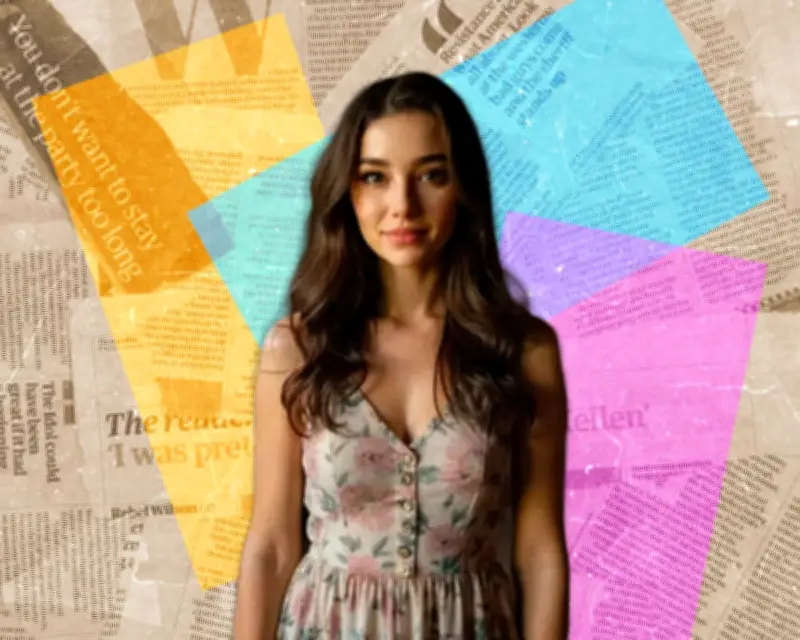
Tilly Norwood, an AI-generated character billed as the next Scarlett Johansson, has secured her first feature film role despite widespread criticism. The character, created by London-based studio Particle 6, will star in Misaligned, a coming-of-age comedy-drama set in the 'Tillyverse', a surreal digital world in the cloud. The film follows Norwood playing herself, cast into 'existential AI chaos' when a rogue bot convinces her to develop human desires, including shame.
Industry Reactions and Backlash
Trade publication Deadline reported the news with snarky air quotes, referring to Norwood as an AI 'actor'. The announcement has drawn sharp criticism from Hollywood actors. Emily Blunt called Norwood 'really scary', Sophie Turner posted 'no thanks', and Toni Collette commented with screaming emojis. However, Whoopi Goldberg responded with 'Bring it on' on The View. Actors' union Sag-Aftra has raised concerns that AI actors are generated from the work of professional performers without permission or compensation.
Particle 6's Vision and Hybrid Production
Particle 6 CEO and founder Eline van der Velden stated that the studio aims to produce 'hybrid' features using AI alongside 'substantial amounts of human craft, skill, judgment and time'. Van der Velden said: 'Our ambition with Tilly Norwood has always been to show the creative industry what is possible with AI at any one point in time.' The studio has retrained its 30-plus team in AI production, with Misaligned serving as a test case.
Norwood's Persona and Reception
In a recent interview with the New York Times Magazine, Norwood was described as polite, distant with a posh British accent, and displaying a world-weary attitude. She complained about journalists: 'They ask for honesty, then flinch when it arrives.' However, Norwood has struggled to gain traction on social media, with middling followings on YouTube, Instagram, and TikTok. Her pop song 'Take the Lead' has 430,000 views since March, but Billboard referred to Norwood as 'it'.
Labor and Ethical Concerns
Van der Velden has argued that AI actors could benefit performers by enabling digital avatars that are 'a bolder, more expressive version of themselves' and could serve as 'a more ethical alternative' for dangerous stunts. However, this stance has not appeased critics. Van der Velden has received hate mail and death threats but remains bemused by the backlash. The broader issues of labor rights, human creativity, and AI's role in undercutting both remain pressing, even if Norwood herself fails to gain acceptance.