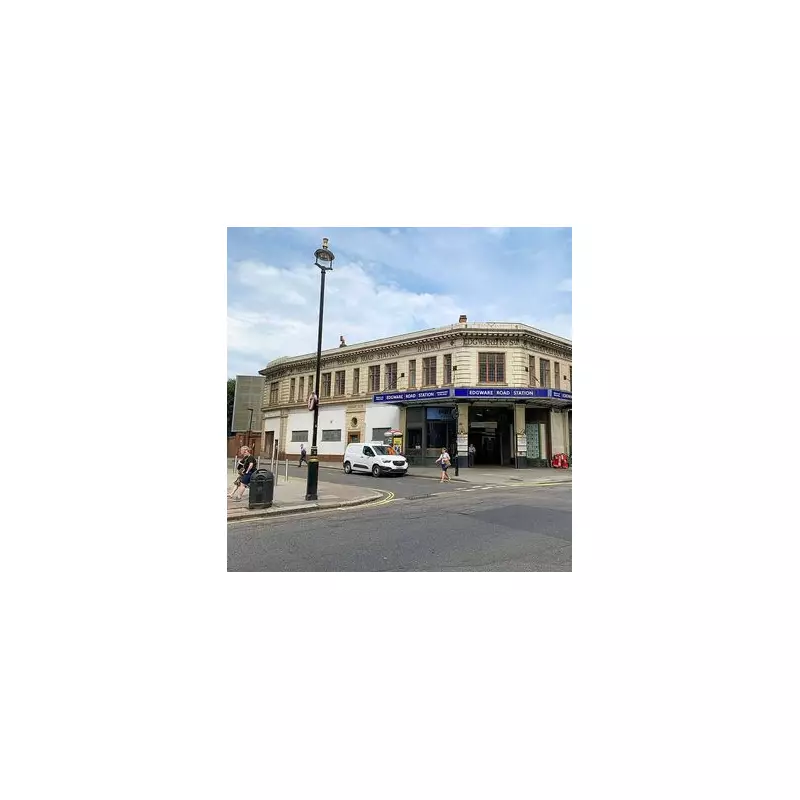
London's iconic Tube network, a marvel of Victorian engineering and modern expansion, harbours a quirky and persistent problem that regularly trips up both seasoned commuters and wide-eyed tourists. The issue? Stations that share identical names but are, in fact, separate entities, leading to missed connections and unnecessary detours.
The Edgware Road Conundrum
Perhaps the most infamous case lies in West London at Edgware Road. Here, two distinct Underground stations operate under the same banner. One serves the Bakerloo line, while its namesake, a brisk five-minute walk around the corner, is served by the Circle, District, and Hammersmith & City lines.
This setup creates a perfect storm of confusion. An unsuspecting traveller alighting from a Bakerloo line train, expecting a cross-platform interchange, instead finds themselves at the wrong station entirely. To reach the other Edgware Road station by Tube, one must board a train to Paddington and change there—a journey that highlights the absurdity of the situation.
Paddington and the Longest Walk
Speaking of Paddington, this major transport hub presents its own unique puzzle. It incorporates two separate London Underground stations within the mainline rail terminal. This design leads to what is arguably one of the longest internal walks between lines on the network.
However, the official title for the most protracted interchange in a single station goes to Bank-Monument, where switching lines can involve a labyrinthine 10-minute trek. The complexity at Paddington is compounded by its status as one of London's busiest stations, funnelling thousands of potentially bewildered passengers daily.
Other Problematic Pairs
Edgware Road is not alone in its duplicity. Hammersmith also boasts two different Tube stations on separate lines. Meanwhile, an Edgware station exists on the Northern line, though its location near Stanmore generally makes it less confusing than its central London counterparts.
The core issue raises a simple question: why do these duplicates persist? While historical development of the network is largely to blame, the ongoing hassle for users is significant. A straightforward renaming of one of each pair could eliminate countless daily errors, saving time and frustration.
For instance, a passenger travelling from Elephant and Castle on the Bakerloo line who realises they need to head eastbound on the Circle line at the other Edgware Road would face this exact predicament. The current naming convention turns a simple correction into a logistical headache.
As London's transport system continues to evolve, addressing these lingering anomalies could be a small but meaningful step towards a more intuitive and user-friendly network for everyone.