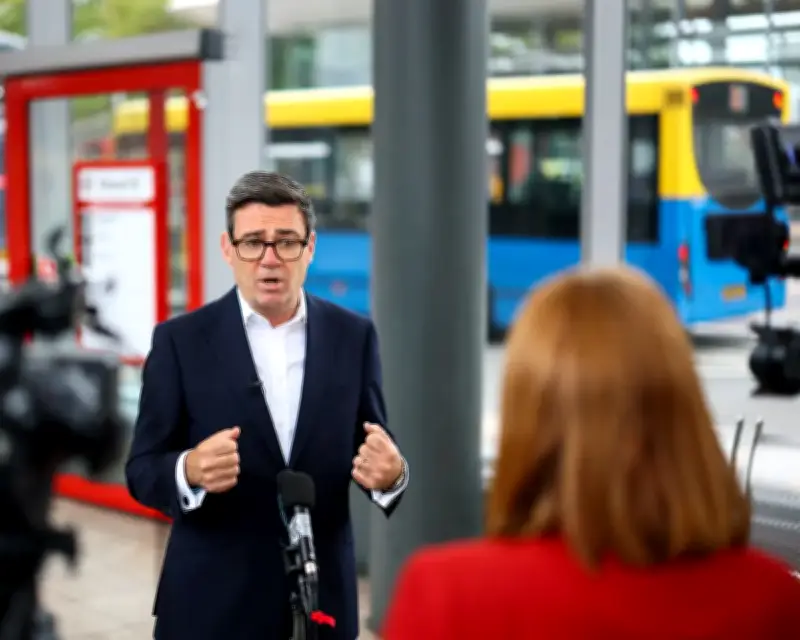
The West Midlands Combined Authority (WMCA) is set to take public control of the region's bus network, a move confirmed by the prime minister, Andy Burnham, which aims to protect thousands of jobs threatened by the potential exit of National Express's parent company. The deal, supported by £11.5 million in new government funding, will enable the WMCA to keep bus services running while it works towards a longer-term franchising model similar to London and Greater Manchester.
Government and local leaders join forces
Burnham described the move as “absolutely massive,” emphasizing that it would safeguard jobs and improve services. In a video posted on X, he stated: “Government and local leaders have joined forces to keep vital bus services running for millions of people across the West Midlands, protecting thousands of jobs and empowering local decision making to deliver better, more affordable, and more reliable bus services.” The government confirmed that the funding will support the WMCA in bringing the network under public control.
The decision follows the parent company behind National Express indicating it was leaving the market, which posed a direct threat to bus services and employment in the region. The partnership between the government and WMCA is designed to ensure continuity and stability for passengers and workers alike.
Long-term franchising ambition
The WMCA is pursuing a longer-term strategy to directly control bus services through franchising, a model already in place in London and Greater Manchester. Under this system, contractors are paid to run services on behalf of the local authority, allowing for greater oversight and accountability. This approach is expected to deliver more reliable and affordable services for the region's millions of bus users.
While the move has been welcomed by supporters, it has also drawn criticism. Shadow transport secretary Richard Holden questioned the decision, warning of potential costs to taxpayers. In a post on X, he wrote: “Buses in Manchester and London are franchised (ie owned by a private company but operated under a local authority brand.) It seems strange that the Government didn’t try and facilitate this or encourage another private operator to take over the enhanced partnership operation in the West Midlands but instead transfer c. £100m of liabilities to local taxpayers backed by The UK Govt & ultimately UK taxpayers.”
Impact on services and jobs
The immediate impact of the deal is the preservation of bus services that might otherwise have been cut, along with the protection of thousands of jobs in the region. The £11.5 million funding will provide a bridge while the WMCA develops its franchising plans, ensuring that passengers continue to have access to essential transport links.
Looking ahead, the WMCA will work with the government to implement a franchising framework, which will likely involve competitive tendering for contracts. This process is expected to bring long-term benefits, including improved service quality and cost efficiency. The move underscores a broader trend towards public control of bus networks in England, following similar actions in Greater Manchester.