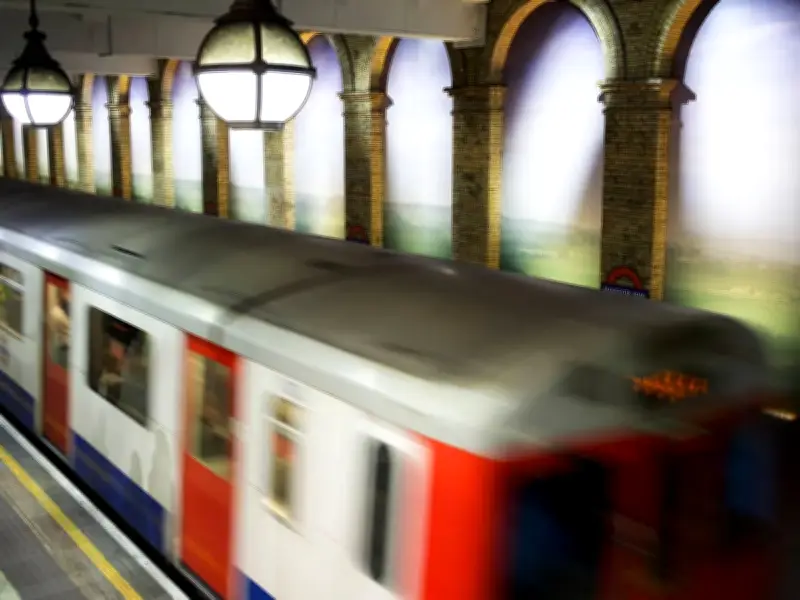
Gloucester Road Underground station, a junction for the District, Circle, and Piccadilly lines, is missing the standard interchange symbol on Transport for London's (TfL) Tube map, despite passengers being able to change lines there. The station lacks the white circle outlined in black that TfL uses to mark interchange stations, and it is not listed as an interchange on either the full map or the strip maps inside carriages.
Sharp-eyed commuters may notice this peculiarity when studying the network. While the Piccadilly line shows lines protruding from the Circle and District lines directly below the station name, no station names are given for those connections. This is in contrast to neighbouring South Kensington, which clearly displays the interchange circles.
TfL's Map Updates and Historical Omissions
TfL recently updated its Tube maps to recognise Turnham Green and Barons Court as interchange points, but Gloucester Road remains without this designation. Historical maps show that Turnham Green and Barons Court also once lacked the interchange indicator, raising the question of why they received the status update while Gloucester Road did not.
One explanation points to the awkward physical layout of the interchange at Gloucester Road. Passengers arriving on the Piccadilly line must walk to the far end of the platform, climb a significant flight of stairs, navigate multiple corridors, and then reach two large lifts or a rarely used extensive staircase to reach ground level.
Bottlenecks and Alternative Routes
Frequently, passengers wait while the lift descends carrying new groups heading to the substantially deeper Piccadilly line, causing bottlenecks and frustration for those in a hurry. To reduce pressure on this inefficient setup, TfL maps highlight nearby interchange points at South Kensington and Earls Court as alternative options.
However, this seems harsh on Gloucester Road when the map does include what TfL calls Out-of-Station Interchanges (OSIs). These denote stations where TfL allows passengers to switch between stations or different sections of the same station without being charged for two separate journeys, despite going through barriers to leave one station and enter another.
Out-of-Station Interchanges and Practical Impact
Hammersmith serves as a prime example, with two distinct stations—one for the Circle and Hammersmith and City lines, and another for the District and Piccadilly lines. Although situated on opposite sides of the road, switching between them costs nothing, provided passengers stick to the time limit.
The omission at Gloucester Road means that passengers unfamiliar with the station may not realise they can change lines there, potentially leading to longer journeys via South Kensington or Earls Court. TfL's decision appears to prioritise clarity and ease of use on the map, but it leaves a quirk that continues to puzzle regular Tube users.