The Voorhees Law of Traffic: Mathematical Proof Behind a Common Driving Phenomenon
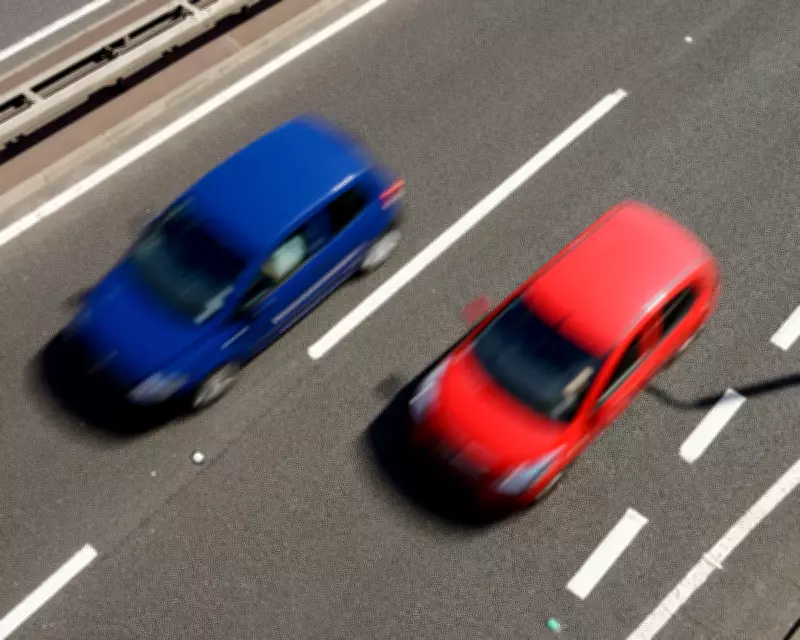
Have you ever experienced that frustrating moment when you overtake a slower vehicle, only to find them right behind you at the next red light? This common driving scenario, which feels almost inevitable to many motorists, has now been mathematically explained by a researcher from Dublin City University.
The Mathematical Model Behind Traffic Light Encounters
Dr. Conor Boland from Dublin City University has published his findings in the journal Royal Society Open Science, dubbing his discovery "The Voorhees Law of Traffic." The name pays homage to the horror film character Jason Voorhees from the Friday the 13th franchise, who famously walks slowly yet consistently catches his running victims.
"I always thought of him because he seems to just walk everywhere ... His victims are running away, they're sprinting, but he just catches them," Boland explained, drawing a parallel to how slower vehicles often catch up with faster ones at traffic-controlled intersections.
The research reveals that when two cars traveling at different speeds approach a traffic light, four possible outcomes can occur: the spacing between them can increase, remain constant, partially decrease, or be completely eliminated. These outcomes depend on several factors including the traffic light's color, its duration, the time advantage of the faster vehicle, and the complete traffic light cycle time.
Key Findings and Statistical Probabilities
Assuming traffic lights operate on fixed time cycles rather than sensors, and that vehicles travel on single-lane roads, Boland's mathematical model demonstrates that the average gains and losses in spacing between vehicles balance exactly. This means that, on average, one car's lead over another remains unchanged after passing through a traffic light.
"Recurrent encounters are known to be disproportionately salient in human perception, particularly when they follow an attempted separation or avoidance," Boland writes in his paper. Essentially, drivers are more likely to remember instances when a vehicle they overtook catches up with them, creating the illusion that this happens constantly.
However, the situation changes significantly when drivers encounter multiple independent traffic lights in succession, as commonly occurs in urban environments. In these scenarios, the statistical probability of the slower vehicle catching up at least once becomes nearly certain. This occurs because the probability of no catchup requires multiplying the individual probabilities for each traffic light, meaning more lights result in a dramatically reduced chance of maintaining separation.
Implications for Road Safety and Driver Behavior
Boland emphasizes that his findings have important implications for road safety, suggesting that aggressive speeding and overtaking may not provide the advantages drivers assume. "The results suggest the idea the slower car will inevitably catch up at the lights is something of an illusion," he notes, while acknowledging that in multi-light scenarios, catchups become statistically probable.
Kit Yates, Professor of Mathematical Biology and Public Engagement at the University of Bath, who was not involved in the research, welcomed the study. "It's something I, as a slower driver, often think about. Was it really worth it for that car that sped to overtake me? When I catch them up at the lights I smugly think, 'No, it wasn't.' So it's good that someone has sat down and modelled how and when this happens," he commented.
Yates did note some limitations in the study's assumptions, including that vehicles travel at constant speeds between lights without acceleration when lights turn green or deceleration when they turn red. However, he concluded: "But as the old adage goes, 'all models are wrong, but some are useful' and I think this one is definitely useful to explain why slower cars can often catch up with quicker ones."
The Psychological Aspect of Traffic Encounters
The research highlights how human perception plays a significant role in our experience of traffic patterns. Drivers tend to remember and emphasize instances where their overtaking maneuvers seem negated by traffic lights, while forgetting the many times they maintain their advantage. This cognitive bias contributes to the widespread belief that slower vehicles inevitably catch up, even when mathematical models show a more balanced reality.
Boland's work provides both a mathematical framework for understanding traffic flow dynamics and valuable insights into driver psychology. As urban traffic systems become increasingly complex, such research offers important perspectives on how infrastructure design, traffic management, and driver behavior interact to create our daily commuting experiences.