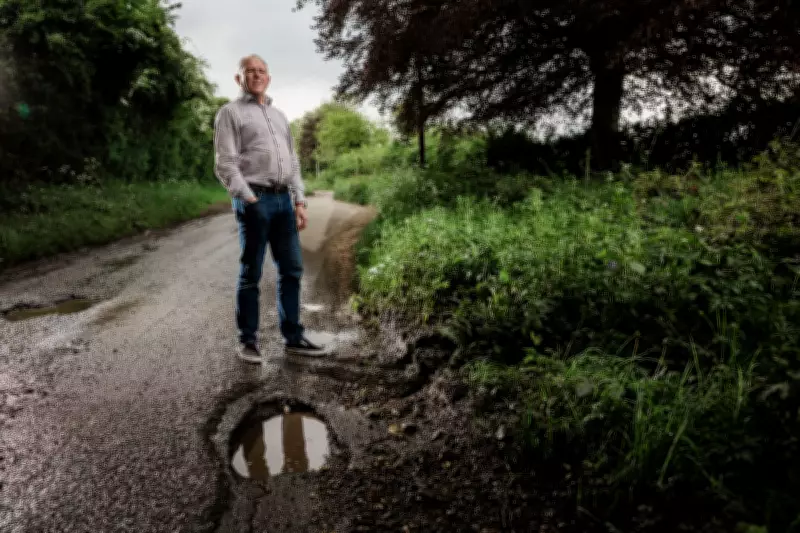
In St Albans crown court, Derek Bennett waited for his case to be called, his anger momentarily giving way to disbelief. 'I mean, there's rape and murder cases going on,' he says. 'I couldn't believe I was there, with this stupid subject.' The judge initially agreed, suggesting such issues were for magistrates. But Bennett, a 68-year-old construction consultant, had read the law carefully. Section 56 of the UK's Highways Act 1980 states that the 'highway authority or other person' responsible for a road must maintain it, and if it falls into 'disrepair', a member of the public may apply for a crown court order to fix it. Bennett was there about potholes.
Britain's roads are in a dire state. When Transport Secretary Heidi Alexander hit a pothole in Oxfordshire so deep that her car had to be towed, it struck a national chord. The RAC attended 225 pothole-related callouts a day in February, three times as many as the same period last year. Since 2021, pothole-related claims have risen by 90%. According to YouGov, the state of British roads was the number one issue for voters ahead of the May local elections. Pothole politics is not unique to the UK—after being elected mayor of New York, Zohran Mamdani launched a city-wide blitz, filling 100,000 potholes in his first 100 days—but in Britain, the roads have come to represent a deeper malaise.
The Rise of Pothole Vigilantes
Bennett has spent years watching the roads around his house in Berkhamsted deteriorate. He wrote to Hertfordshire County Council but was ignored. Most people would have left it there. Bennett is not most people. 'I've got an overdeveloped sense of justice,' he says drily. More than 53,000 people brought claims against local authorities in 2024 for damage caused by potholes: burst tyres, dinged alloys, wrecked suspensions. But Bennett was not seeking damages; he just wanted the potholes fixed. 'I've been muttering about them like everybody does. Then one day I thought: that's enough.'
Reports of 'pothole vigilantes' are spreading. Documentary maker Oobah Butler and musician Rod Stewart have filled defects using asphalt from DIY stores—well intended but legally dicey. Graffiti is common: one Manchester artist, known for highlighting potholes with obscene drawings, earned the nickname Wanksy. Hannah Clark of Staffordshire highlights potholes with colourful animal illustrations; Dave Fargher of Nottinghamshire uses toys to create tiny dioramas; Tim Webb of Orpington prefers to fill them with rubber ducks. New sports have emerged: teenager Ben Thornbury of Malmesbury has pioneered pothole bowling and pothole 'fishing'.
Perhaps the best-known pothole vigilante is Harry Smith-Haggett, whose TikTok account Pretty Potholes chronicles his travels around the country filling potholes with flowering plants. A landscaper and decorator, he started making videos in 2024 when he filled a hole in his own road in Horsham, West Sussex. 'If you use concrete or tarmac, that is putting a permanent structure in, which is obviously illegal,' he says. 'I thought, well, I'll put plants in and see what happens. And, coincidence, it got filled the next working day.' His videos have been viewed millions of times. Asked where the worst potholes are, his answer is immediate: 'Nothing compares to Birmingham.'
Arguably the original pothole vigilante is Mark Morrell, AKA Mr Pothole, who for 12 years campaigned for road repairs, founded National Pothole Day, and gave evidence to parliament before retiring last year to care for his disabled wife. Morrell still runs several Facebook groups, advising 300,000 members on how to file claims. 'I suppose I'm the elder statesman now,' he says. When he saw Bennett's case, he was delighted. 'Good luck to him.'
Bennett's Legal Victory
When his day in court arrived, Bennett chose to represent himself. 'This isn't rocket science,' he shrugs. He drove through several potholes on the way to the hearing. 'I bet the judge did, too,' he chuckles. 'I had a distinct impression he was a fellow motorist.' In the end, the council didn't even put up a fight. The judge issued a court order for the potholes to be repaired within 20 working days. Hertfordshire County Council said it was 'disappointed' by the ruling, and 'there are much quicker and simpler ways of letting us know about potholes'. Bennett points out that if his letters had been answered, the case would not have gone to court. But his victory was just the initial skirmish in a broader offensive.
What Exactly Is a Pothole?
Nobody can quite agree. Highways engineers deploy a rich vocabulary to describe road surface failures: rutting, ravelling, bleeding, shoving, plucking, crazing. But potholes are complicated. 'We would tend to call it a defect,' says Ian Lancaster, director of the Asphalt Industry Alliance. Experts agree on how they form: modern roads are subjected to constant onslaught from traffic weight, braking, shear forces, temperature shifts, sunlight, subsidence, and tree roots. Over time, asphalt weakens and water gets in. 'During the winter, water freezes, expands, opens up the cracks, and away we go,' Lancaster says. On a busy road, a small defect can grow into a dangerous one in hours. The recent spike is partly due to wetter and colder winters from climate change. 'The roads can be underwater for days or weeks,' Lancaster says. 'They are not designed to be underwater.'
Britain's road traffic has also shifted dramatically. There are twice as many cars as in 1990, and the average weight of a new car has doubled to nearly two tonnes, thanks to booming sales of SUVs and EVs. Though critics like to blame EVs, most experts agree they are only one factor. Another is commercial vehicles: a six-axle lorry can weigh up to 44 tonnes. 'A lot of local roads were never designed for the amount of traffic they're taking right now,' Lancaster says.
The way we build roads has changed too. For decades, British roads were built using hot rolled asphalt (HRA). In the 1990s, following France and Germany, highways authorities moved towards 'thin-course' surfaces like stone mastic asphalt (SMA), which are thinner and less noisy but less durable. 'Those new systems made it more susceptible to failure,' says Mike Hansford of the Road Surface Treatments Association. This might have been manageable if roads were regularly 'dressed', but after the financial crisis, many councils abandoned preventive treatments.
Inside a Pothole Repair Crew
Kye Cooper has lost count of how many potholes he's filled. His father and grandfather were in highway maintenance. Today he and his sister run East Herts Surfacing, repairing roads all over London and East Anglia. In Huntingdon, Cambridgeshire, the crew are repairing potholes for the council. The roads look like the nearby army barracks has misfired heavy ordnance. 'These are not too bad,' Cooper shrugs. 'Nazeing, Epping, Hoddesdon way, that's really bad for potholes. I'm talking craters.'
The crew cut out defects, scour holes with a mechanical sweeper, fill them with tack coat and hot asphalt, then roll and seal. 'It's not for the faint-hearted,' Cooper says, citing early starts, night shifts, and hot asphalt that can hit 140C. Many defects start from below: 'If the sub-base is correct, the top layer will be, too.' Junctions and car parks are particularly vulnerable. Business hasn't been easy: wars in Ukraine and Iran have pushed bitumen prices 'through the roof', plus rising staffing and diesel costs. 'People think there's millions to be earned in this game. But the councils ain't got no money. That's the truth of the matter.'
The Funding Crisis
Ninety-seven per cent of Britain's roads are controlled and funded by local authorities. Between 2010 and 2020, local government budgets fell sharply. The Conservatives slashed grants to local authorities by 40% in real terms. Facing bankruptcy, many councils moved funding from discretionary areas like highways into urgent ones like social care. The amount spent on maintaining local roads collapsed—more sharply than in almost any other OECD country. By 2023, the proportion of local roads receiving preventive maintenance each year dropped to just 2.4%. 'I have no doubt that has played a huge role in why our roads are in such a poor condition,' Hansford says.
Most local authorities now outsource highways maintenance to large infrastructure firms. Oxfordshire, where Alexander hit her lunar crater, has agreed an £840m, eight-year contract with M Group, which maintains 30,000 miles of British roads and is owned by private equity giant CVC Capital Partners. While there's nothing inherently wrong with such deals, they have rarely resulted in better roads. In 2019, Birmingham council ended a 25-year PFI contract with Amey early after accusing the contractor of ignoring defects to maximise profits. Last year, Cambridgeshire council was unhappy with M Group, which it pays £51m a year, because of the 'ridiculous' quality of its repairs. (M Group says it inspected the potholes and 'only one needed further work'.)
Botched repairs have become notorious. Drivers complain about 'patch and run'—subcontractors using bagged cold-mix asphalt as a temporary fix. 'That cold-lay stuff, that ain't really worth the bag it's in,' Cooper says. Once cured asphalt gets a crack, it's nearly impossible to keep water out. Utility companies dig up roads constantly; the rollout of fibre-optic broadband has contributed to a sharp spike in streetworks. 'They're cutting into it, trenches across it, putting pipes under it,' Cooper laments. 'It's weakening the integrity of the road.'
The government has introduced a new inspection regime, but the Pothole Partnership wants mandatory five-year warranties on repairs. 'You see it all the time: a spot of tarmac here, a spot of tarmac there,' says Edmund King, president of the AA. 'Within six months it's cracking up again.'
The Changing Definition of a Pothole
A common complaint is that crews repair one pothole while ignoring others. This is because austerity changed the meaning of a pothole. In 2016, the UK Road Liaison Group updated its codes of practice, citing a need for 'affordability'. Where once it advised fixing every pothole that reached 40mm deep, it now endorsed a 'risk-based approach'. A pothole on a residential street might not need repair as quickly as one on a major road. This saved costs and made it easier for councils to reject damage claims.
Which brings us to why nobody can agree what a pothole is: the definition is decided by the very local authorities whose job it is to fix them. 'There are 78 different definitions,' King says. A pothole in Gloucestershire must be 4cm deep to need repairing; in Hounslow, as much as 7.5cm. In Dorset, a defect must be 150mm wide; in Norfolk, twice that. 'A pothole in Manchester might not be a pothole in Preston. It's crazy.'
The consequences can be life-changing. According to freedom of information requests, 393 people were killed or injured in accidents involving road defects in 2024, 45% up on 2020. These include 87-year-old Beryl Barrett, who died on Christmas Day after tripping on an unrepaired pothole, and Andrew Freakley, a 43-year-old father killed when his motorcycle hit a pothole that had gone unrepaired for four months. For cyclists and motorcyclists, a pothole can mean a split-second choice between swerving into traffic or coming off. In 2021, cyclist Jennifer Dyer hit a defect and was thrown into the path of a van. A coroner found the cause of her death was a pothole 58mm deep—shallow enough for East Sussex to categorise it as 'low risk', by a single millimetre.
Bennett's Broader Campaign
Bennett is driving me around Berkhamsted in his Polestar—'My seismograph,' he jokes as the suspension shudders. Since the crown court verdict, he has filed more than two dozen new Section 56 claims, not just in Hertfordshire, but against Cambridgeshire, Buckinghamshire, and Central Bedfordshire councils. This time he's also fighting over deformities and missing road markings, in 'test cases' for the legal meaning of disrepair. At home, his wife Lizzie shrugs. 'He is a tenacious man.'
Just reporting potholes can be frustrating. Many councils allow the public to use FixMyStreet, FillThatHole, or an app called Stan, but Bennett says these are not enough. 'Very laudable, but the council has no obligation whatsoever to do anything about it,' he says. To demonstrate, he pulls up FixMyStreet and shows a pothole reported weeks ago; the council responded saying it's scheduled for repair but gave no deadline.
The reporting issue reveals another fact: not only does the government not know what a pothole is, it also doesn't know exactly how many there are or where. Although local authorities must report on road conditions for major roads, they don't have to for unclassified roads, which make up 62% of the network. In 2025, the National Audit Office found the Department for Transport faced 'significant gaps' in its knowledge of road conditions, and that although successive governments had introduced 12 different funds for pothole repairs, it had little idea how that money was being spent.
Technology could map every pothole and even catch defects before they form. In 2024, the Road Surface Treatments Association and 'roadscape intelligence' company Gaist used purpose-built inspection vehicles and found twice as many roads in poor condition as recorded in government figures. Gaist founder Steve Birdsall says part of the problem is that the government historically measured road conditions for motorways, not local roads. 'Essentially, for nearly 20 years we've been measuring the roads the wrong way.' Gaist now works with several local councils and recently scanned every road in Northern Ireland. 'We have about two thousand times more imagery than Netflix,' he says.
But councils have been slow to adopt innovations due to cost and fears over legal claims. One way an authority can avoid paying damages is by showing they were unaware of a defect—which would seem to incentivise not looking too closely. 'The number of times I've been at councils, and they've said, 'But if we've got a picture and know where they are, we've got to fix them—and that gives us an obligation we can't deal with,'' Birdsall says. 'There are definitely councils turning a blind eye to the condition of their network because they're afraid of the consequences.'
That isn't to say there isn't innovation. Several councils have invested in specialised machinery like the JCB Pothole Pro and the Dragon Patcher, which sprays hot asphalt and can repair defects five times faster. In March, the Labour government announced a new five-year investment plan including £7.3bn over four years for local road maintenance. But the Asphalt Industry Alliance estimates fixing the backlog will cost £18.62bn.
Campaigners have pushed for national definitions for potholes or increased road taxes on heavier cars to raise revenue. The Netherlands, France, and Switzerland, which rank among the top European countries for road quality, factor vehicle weight into road taxes. 'You could put another billion pounds in and frankly it won't make a difference,' King says. 'I think they've radically got to change the model.'
Under new funding rules, local authorities will have to report how their money is spent, including the number of potholes fixed. Many experts say that misses the point. 'Reporting the amount of potholes repaired is not a sign of success, it's a sign of neglect,' Morrell says. He recalls a conversation with a Conservative minister: 'He said, 'It's managed decline.' I said, 'A managed decline eventually becomes a complete failure.''
For Bennett, the political arguments are a distraction. Authorities already have a statutory duty to repair roads. 'This is a cold, clinical, legal issue,' he says. He has launched an Instagram account, @repairmyroad, dedicated to advising others on how to file Section 56 claims. 'If 0.1% of the population do this, we would have German standard roads within six months.' Should more courts rule in his favour, the cost could be enormous. But he says that's not his problem. He points to legal precedent, Wilkinson v City of York Council, which ruled 'lack of funds' is not an acceptable reason for authorities to fail to maintain roads. We pay road taxes, he explains, and councils take the public to court for not paying parking fines all the time. Why shouldn't we do the same in return?
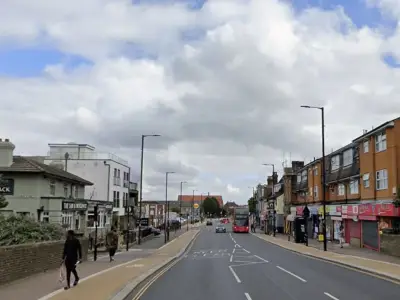
We pull over by a letter box and he jumps out to send another claim. 'I can't become the highways inspector,' he says. 'But I can become a thorn in their side.' We turn up London Road, one of the subjects of his court victory. Hertfordshire council has put up signs notifying that resurfacing will soon begin. But any sense of triumph has given way to grim reality. Bennett cites an asphalt industry report which found the average British road is now typically resurfaced once in 97 years. 'This is a once in a longlifetime opportunity,' he says, as the rutted and ravelling asphalt crunches beneath us. 'My children, possibly my grandchildren, might never see this road resurfaced again.'