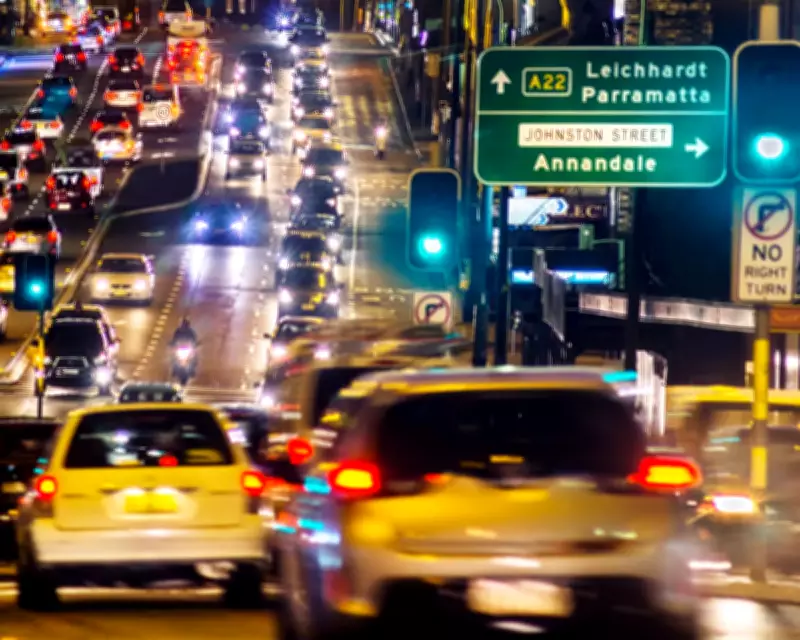
Despite a sharp increase in petrol prices across Australia, vehicle numbers on major arterial roads in Sydney and Melbourne have shown little to no decline, according to recent traffic data. This stability comes as political and union groups amplify calls for free or more affordable public transport to encourage drivers to switch modes and alleviate cost-of-living pressures.
Traffic and Transit Trends Defy Fuel Cost Surge
Weekly traffic data from New South Wales reveals minimal changes on key routes such as Parramatta Road and Pennant Hills Road from late February to late March. Similarly, in Melbourne, traffic on major freeways including the M1, M80, and West Gate Tunnel has held steady, even after accounting for partial road closures. Public transport usage has also remained largely unchanged, with Opal card tap-ons for buses and ferries in Sydney falling slightly in March compared to the previous year, while a brief spike in train usage earlier in the year has eased.
Political Push for Affordable Transit Solutions
In response to the ongoing fuel price crisis, the Senate recently considered a motion advocating for federal support to make public transport "free or affordable." Although backed by some crossbench senators, the motion was ultimately voted down, with major parties divided. At the state level, groups like Business NSW and the rail, tram, and bus union have urged for fare reductions to provide immediate relief to commuters. However, the NSW government has resisted these calls, citing that taxpayers already subsidize 75% of public transport costs.
Expert Insights on Long-Term Behavioral Shifts
Transport expert Geoffrey Clifton from the University of Sydney notes that households typically absorb short-term fuel price hikes but may begin altering their travel habits if costs remain elevated over time. He predicts a gradual shift towards alternatives such as public transport, electric vehicles, cycling, and walking. Supporting this trend, Lime reported a nearly 10% increase in e-bike trips in Sydney during early March, potentially indicating a move away from shorter car journeys.
Regional Variations in Transport Patterns
Across other Australian states, public transport usage shows mixed results. In Queensland, where fares are capped at 50 cents, a slight uptick in patronage was observed in mid-March, though officials caution it is too early to link this directly to fuel prices. Western Australia recorded a rise in public transport trips following new rail line openings and fare cuts, but traffic in Perth, including on the busy Kwinana Freeway, has remained consistent with yearly averages.
As petrol prices continue to climb, the debate over sustainable and affordable transport options intensifies, highlighting the need for long-term strategies to reduce reliance on private vehicles and mitigate economic impacts on Australian households.