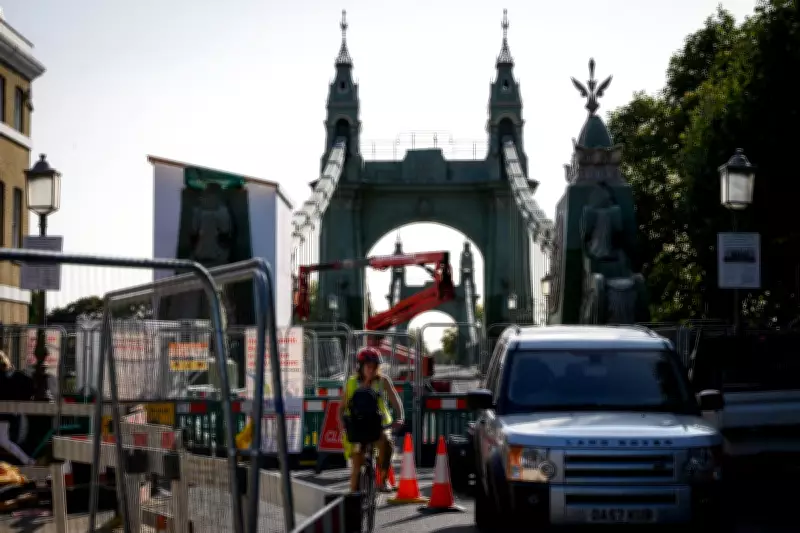
The prolonged closure of Hammersmith Bridge stands as a stark emblem of Britain's broader infrastructure decline, demanding urgent government intervention to jolt the nation out of a degrowth daydream. For seven years, this vital Thames crossing has been shut to motor traffic, creating a local nightmare and a national embarrassment that underscores systemic failures in maintenance and funding.
A Symbol of National Decline
Once a bustling artery, Hammersmith Bridge now languishes in a state of dilapidation, severing communities and disrupting daily life. People who once made quick trips across the river find themselves trapped in transport purgatory, with friendships strained and family visits reduced to occasional events. This situation mirrors a nation moving backwards, contrasting sharply with the Victorian era, when damaged bridges were swiftly replaced. Today, the financial burden seems insurmountable, with no entity willing or able to shoulder the estimated £250 million cost for replacement.
The Funding Conundrum
Legally, Hammersmith and Fulham council owns the bridge, but its resources are utterly inadequate for such a massive project. Moving up the chain, the Greater London Authority (GLA) appears a more plausible funder, given its historical ties and greater financial muscle. However, the GLA faces its own crises, with a backlog of capital renewals stretching to billions of pounds across aging assets like the Westway, where safety concerns have forced speed reductions.
Transport for London (TfL) is no saviour either; its annual investment falls £400 million short of the £1.2 billion needed to maintain current infrastructure, making it a watchlist for future embarrassing closures rather than a solution.
Broader Implications for London
Hammersmith Bridge is not an isolated case. Broadmead Road bridge in Redbridge closed indefinitely in July 2023 due to structural failures, highlighting a wider pattern of neglect. Councils across London lack the funds to rebuild such critical infrastructure, pointing to a systemic issue that transcends local boundaries.
Some might look to the City Bridge Foundation, an independent body managing five bridges including London Bridge, as a potential funder. However, demanding it take on Hammersmith Bridge would punish prudence and perpetuate a cycle of asset depletion, rather than addressing the root cause of underinvestment.
The Government's Role
The government hesitates to set a costly precedent by bailing out crumbling assets, fearing moral hazard. Yet, as this analysis shows, no other body can realistically fund Hammersmith Bridge, Broadmead Road bridge, or future infrastructure failures. If the government does not act, these structures will remain broken and eventually collapse, symbolising a deeper national malaise.
This crisis should serve as a sharp wake-up call, galvanising efforts to restore not just bridges but also Britain's commitment to growth and productivity. The sight of rundown Victorian infrastructure must jolt us from complacency, urging a renewed focus on investment and maintenance. While optimism persists for Britain and London, continued inaction signals a deliberate move toward impoverishment that must be halted.
Ultimately, solving this issue requires government leadership to fund a new bridge, reaffirming a dedication to progress over decline. Without such action, the degrowth daydream will only deepen, leaving communities severed and national pride further eroded.