Devon's Coastal Road Swept Away After Triple Storm Assault
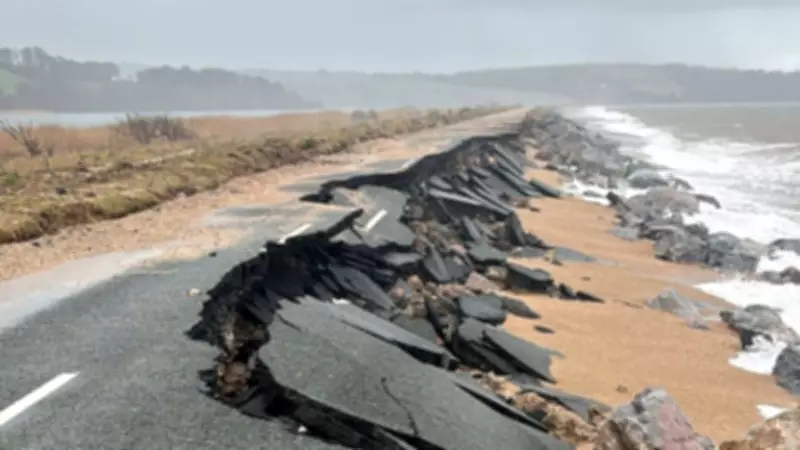
A vital coastal road in South West England has been completely destroyed after being battered by three consecutive named storms, with sections of the A379 in Devon collapsing into the sea overnight. The road, which connects the villages of Torcross and Slapton near Dartmouth, succumbed to the relentless forces of nature following heavy rainfall and powerful waves.
Triple Storm Onslaught Proves Fatal for Infrastructure
The destruction occurred after the area was hit by storms Goretti, Ingrid and Chandra throughout January, all of which brought torrential rain and severe flooding to many parts of the UK, particularly impacting the South West region. These weather events caused widespread travel disruption and overwhelmed existing sea defences, leaving the coastal infrastructure vulnerable.
Images from the scene reveal that substantial sections of the A379 roadway, along with a public car park, have completely disappeared into the sea. The damage represents a catastrophic failure of coastal protection measures in the face of increasingly extreme weather patterns.
Local Officials Sound Alarm Over Repair Costs and Climate Impact
Devon County Council has issued a stark warning that repairing the damaged A379 could cost tens of millions of pounds, a financial burden the local authority says it cannot shoulder alone. Council leader Julian Brazil described the situation as "devastating for the local community" and emphasised that their immediate priority is supporting families whose lives and livelihoods have been directly affected by the destruction.
Liberal Democrat MP Caroline Voaden, who represents South Devon, expressed grave concern about the situation, stating: "This is the news we've all been dreading." She reported that one of her team members on the ground witnessed the terrifying force of the waves shaking the remaining sections of road before its collapse.
Political Response Highlights Funding Disparities
The incident has sparked political debate about infrastructure funding priorities. Ms Voaden criticised what she perceives as inadequate government support for coastal communities, contrasting the situation with substantial investments in projects like Northern Powerhouse Rail. She argued that "protection measures are needed, but government support is simply not there" for areas vulnerable to climate change impacts.
Both Ms Voaden and Council leader Brazil were at Westminster on Tuesday, urgently seeking additional government funding for road repairs and coastal defences. Brazil emphasised that "the county can't afford to rebuild the road" without significant external assistance.
Historical Precedent and Future Concerns
This is not the first time this section of road has faced destruction from extreme weather. The A379 was previously washed away during Storm Emma in March 2018 - also known as the Beast from the East - and required extensive repairs before reopening later that year. The recurrence of such catastrophic damage raises serious questions about the long-term viability of coastal infrastructure in the face of climate change.
The destruction of the A379 serves as a stark reminder of the increasing vulnerability of coastal communities to extreme weather events, highlighting the urgent need for both immediate repair efforts and long-term strategic planning for climate resilience in vulnerable regions.