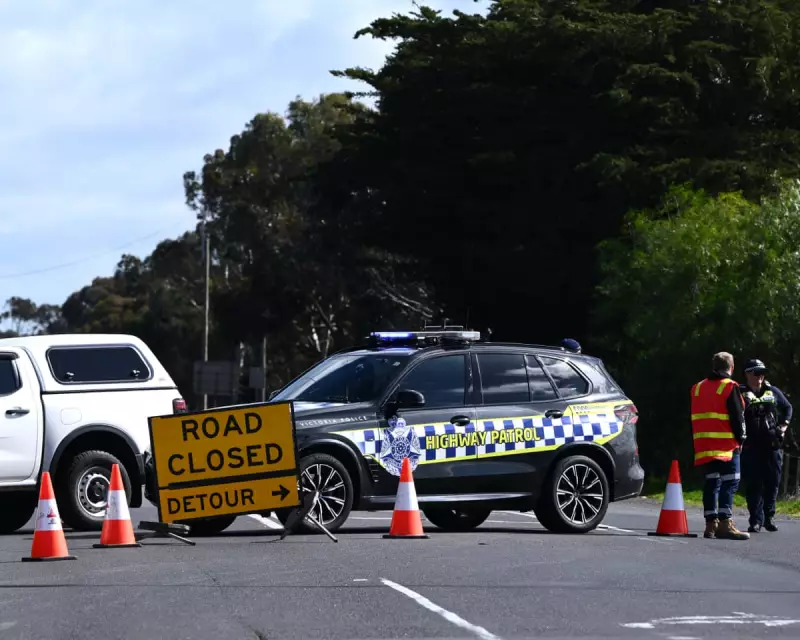
Australia has recorded a concerning rise in road fatalities for the year 2025, marking a significant setback for national safety targets. Preliminary data indicates that 1,323 people lost their lives on the nation's roads, representing an 8% increase from the 1,226 deaths reported in 2024.
A State-by-State Breakdown of the Tragedy
The rise was not uniform across the country, with some states bearing a heavier burden than others. New South Wales, the most populous state, saw fatalities climb to 352, up from 346 the previous year. Queensland experienced a more dramatic jump, with deaths rising from 299 to 331. Victoria also recorded an increase, moving from 294 to 310 lives lost.
Other states and territories showed a mixed picture. South Australia's toll decreased slightly to 93, while Tasmania's rose to 54. The Australian Capital Territory reported 20 deaths, and the Northern Territory, which consistently has the highest rate of road deaths per capita, recorded 63 fatalities.
Experts Point to Speed and Vehicle Safety
Road safety advocates and experts have reacted with alarm to the new figures. Harold Scruby, the chairman of the Pedestrian Council of Australia, described the statistics as "catastrophic" and a clear sign that current strategies are failing. He placed particular emphasis on the role of speed, arguing that lower speed limits are essential to reducing the severity of collisions.
Professor Matthew Baldock from the University of Adelaide's Centre for Automotive Safety Research echoed these concerns. He highlighted that the increasing popularity of larger, heavier vehicles like SUVs and utes poses a greater risk to other road users, including pedestrians and cyclists, in the event of a crash. "We have an increasing proportion of the vehicle fleet that is more aggressive in crashes with vulnerable road users," Baldock stated.
Calls for Urgent Policy Intervention
The rising toll has ignited calls for immediate and decisive action from both state and federal governments. Key demands from safety groups include:
- Mandating advanced safety technology in all new vehicles, such as autonomous emergency braking (AEB).
- Reviewing and reducing speed limits, particularly in urban areas where pedestrians and cyclists are present.
- Increasing investment in safer road infrastructure, including more separated cycleways and improved pedestrian crossings.
The federal government's commitment to the National Road Safety Strategy, which aims to reduce road deaths by 50% by 2030, is now under intense scrutiny. The 2025 results put that ambitious target further out of reach, suggesting a major policy recalibration is urgently required. As communities grieve the loss of over 1,300 individuals, the pressure is mounting on authorities to implement evidence-based measures that will reverse this deadly trend.