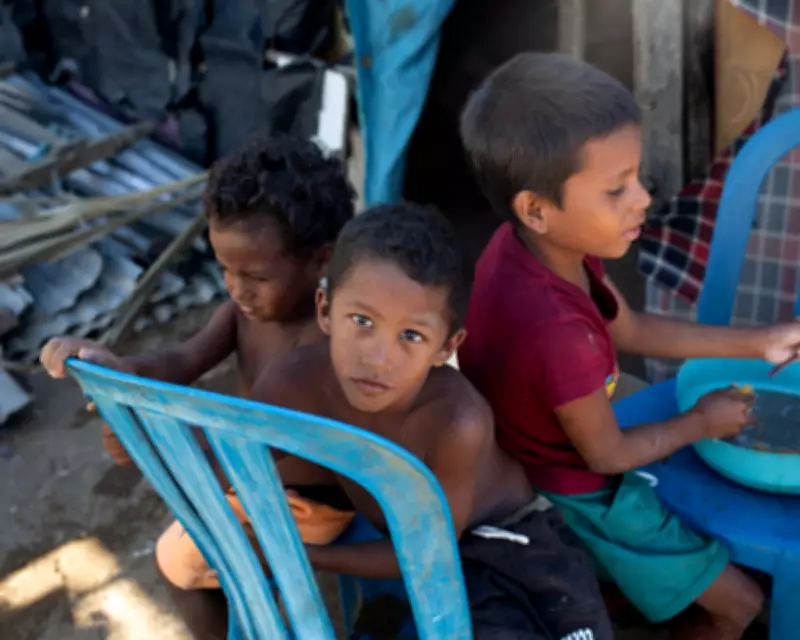
UNDP Issues Stark Warning on Global Poverty Crisis
The United Nations Development Programme has issued a dire assessment of the global economic situation, warning that the ongoing conflict involving Iran could push more than 32 million people worldwide into poverty. The agency describes this development as "development in reverse" that threatens to undo years of progress in international poverty reduction efforts.
Triple Shock to Global Economy
In a comprehensive report released amid uncertainty about a fragile ceasefire, the UNDP identifies what it calls a "triple shock" affecting the world economy. This combination of rising energy prices, increasing food costs, and weakening economic growth presents a formidable challenge to global stability and development.
Alexander De Croo, administrator of the UNDP and former prime minister of Belgium, expressed particular concern about the human impact of this economic turmoil. "A conflict like this is development in reverse," he stated. "Even if the war stops, and a ceasefire is obviously very welcome, the impact is already there. You will see an enduring impact, especially in the poorer countries."
"You push people back into poverty. That's the most heartbreaking element," De Croo emphasized. "The people being pushed into poverty are very often the people who used to be in poverty, got out of it, and are now being pushed back."
Energy Crisis and Food Security Threats
The economic fallout stems directly from the conflict's impact on global energy markets. Energy prices have surged dramatically in the six weeks since initial military actions, as Iran's closure of the Strait of Hormuz has severely restricted oil and gas supplies to the world economy.
This disruption has created a cascade effect with serious implications for global food security:
- Fertilizer supplies have been significantly affected
- Global shipping routes have been disrupted
- Developing nations face what experts describe as a "food security timebomb"
Even if sustainable peace can be achieved in the Middle East, the head of the International Monetary Fund has warned that the "scarring effects" from the conflict have already caused permanent damage to the global economic structure.
Disproportionate Impact on Developing Nations
The UNDP report reveals that developing countries will bear the brunt of this economic crisis. While wealthier nations possess greater capacity to cushion economic shocks, nations in the global south enter this crisis from a weaker starting position with already severe financial constraints.
The agency's analysis used the World Bank's upper-middle-income poverty line, defined as income below $8.30 per person per day. According to their projections:
- Half of the global poverty increase would concentrate in 37 net energy-importing countries
- Affected regions include the Gulf, Africa, Asia, and small island developing states
- The worst-case scenario could see 32.5 million people falling into poverty globally
Proposed Solutions and Funding Challenges
The UNDP calls for a coordinated global response to support countries hardest hit by the economic fallout. Their recommendations include:
- Targeted and temporary cash transfers to protect vulnerable households
- An estimated $6 billion in funding to neutralize shocks for those falling below the poverty line
- Temporary subsidies or vouchers for electricity or cooking gas as secondary interventions
De Croo emphasized the economic rationale for such interventions: "There is a positive economic payout for giving short-term cash transfers to avoid people getting back into poverty." However, the agency cautioned against blanket subsidies that would unnecessarily support wealthier households and prove financially unsustainable over time.
Broader Context of Declining Aid
This warning comes at a particularly challenging time for international development assistance. Western governments including the United States, Germany, France, and the United Kingdom have reduced their aid spending amid elevated borrowing and debt levels across advanced economies.
Recent figures from the Organisation for Economic Co-operation and Development reveal that countries in its development assistance committee cut aid spending by $174.3 billion in 2025, representing nearly a quarter reduction from 2024 levels.
De Croo acknowledged the pressures facing wealthy nations but warned of longer-term consequences from aid reductions. "Investments in development, to say it in military terms, they are the ultimate pre-emptive strike," he explained. "Why you do a pre-emptive strike? You do it to avoid a conflict starting. That is what development does."
"If you invest in poverty reduction, in strong institutions, in mitigating and adapting to climate change; these are elements that will help you to stabilise the world," he concluded, emphasizing the strategic importance of continued development investment despite current economic pressures.