The Glittering Facade of Milan's 2026 Winter Olympics
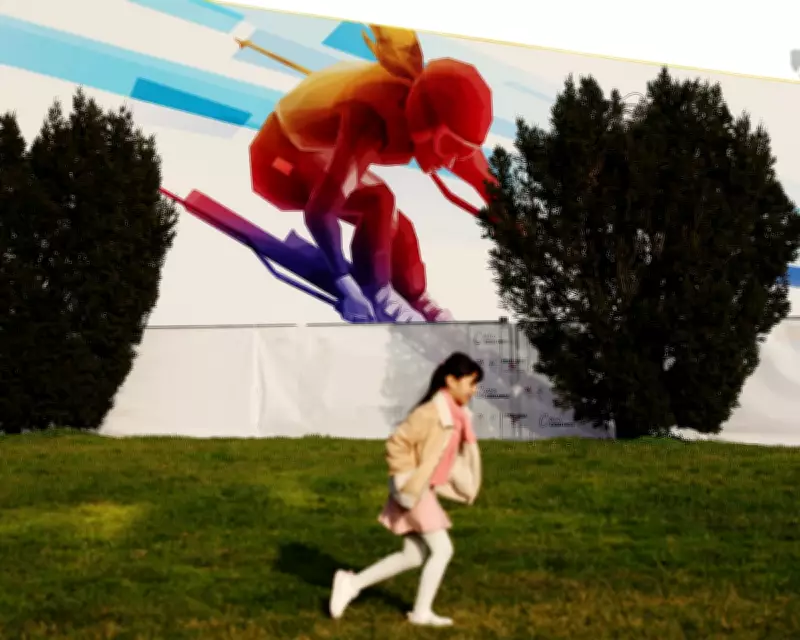
On February 1, 2026, a child dashed past artwork depicting an alpine ski athlete at Sforzesco Castle in Milan, a fleeting moment captured by photographer Sarah Stier. This image, while picturesque, belies the darker reality unfolding on the ground as Italy hosts the Winter Olympics. The Games, intended to showcase Milan's rich culture and architecture, have instead inundated the city with gaudy pavilions and rampant gentrification, turning public spaces into corporate playgrounds.
A City Transformed into a Corporate Mall
Since winning the bid in 2019, Milan's urban landscape has been marred by construction dust and saturated with corporate messaging. What began as a simple logo on a tram has escalated into a full-scale takeover of the public realm. From Piazza del Duomo to Sforzesco Castle, iconic spaces have been appropriated by flashy pavilions, staffed by dancing mascots, reducing Milan to a bizarre spectacle. On a bad day, the city feels less like a historic metropolis and more like an open-air shopping mall, stripped of its authentic charm.
The Opening Ceremony: A Melancholy Spectacle
The opening ceremony at San Siro stadium, a beloved brutalist structure slated for demolition, elicited mixed reactions. While many were excited for the long-awaited moment, the proceedings soon gave way to peculiar displays, such as bobble-headed puppets of composers like Rossini and Puccini dancing to Italo disco. This kitsch pop concert raised poignant questions: Was this worth the years of disruption, political repression, public inconvenience, relentless marketing, and unspecified millions in costs? Creative director Marco Balich aimed to blend Alpine imagery with Milanese modernity, but the result was a generic stitching of national stereotypes that failed to reflect Italy's pluralistic cultural frontiers.
Protests and Gentrification
Frustration has spilled into the streets, with thousands protesting against issues like ICE, Trump, and Israel, as well as the commodification of public spaces. Activists compare the economic philosophy behind Milano Cortina 2026 to the 2015 Expo, which promised urban salvation but delivered public waste and gentrification. In Porta Romana, home to the Olympic Village, property prices have soared to over triple the national average, pricing out workers and undermining Milan's ethos of social mobility.
Contrast with Turin's 2006 Legacy
Italy has proven it can host better Games, as seen in the 2006 Winter Olympics in Turin. There, organizers integrated the competition into the city's cultural fabric, with gallery openings, public debates, and collaborations with the theatre world prioritizing mass participation. Infrastructure like the city's first driverless metro left a lasting legacy for residents. In contrast, Milan's Olympics feel like a passing trade fair, lacking genuine intellectual hospitality or long-term benefits.
Alpine Communities Under Siege
In the mountains, where outdoor events are held, the extractive logic is even clearer. Residents of Cortina and Bormio report being sidelined, with local life scarred by unasked-for infrastructure expansions. Historic family-run businesses are forced to compete with sterile high-end establishments that will sit empty most of the year. In Bormio, snipers on mountain ridges and road checkpoints treat residents like suspects, overshadowing the community's hospitality.
The Ladin People: Erased from Their Heritage
Worst of all is the treatment of the Ladin people, an ancient ethnic minority of about 35,000 in the Dolomites. While organizers use their culture for promotional cartoons and folkloric ornaments, the community has no real representation on planning committees. In January, Ladin mayors from 17 towns accused organizers of cutting them out and rebranding their heritage without consent, with some leaders using the Games' visibility to demand semi-autonomous status.
Climate Crisis and Corporate Hypocrisy
A Cultural Olympiad exhibit, White Out, at Milan's Triennale explored the disappearance of snow in the Dolomites due to climate crisis. Yet, it was sponsored by fossil fuel giants like ENI, highlighting the surreal disconnect. Meanwhile, to the north, an ancient larch forest was felled for a €120 million bobsled track, a move that seems far from the minds of art-goers in Milan.
A Lost Opportunity for Italy
The Winter Olympics should celebrate humanity, culture, and sport, but these Games have left Italy with a glitzy performance that speaks to no real public. Milan, one of Europe's most culturally exciting cities, has had scant chance to share its genuine talent. The Dolomites, home to beautiful ecosystems, have been reduced to a luxury simulacrum, harming rural communities. As athletes dazzle with skill, it's a pity that organizers have tarnished the occasion by exploiting the very hospitality essential for a successful Games.