Olympic Neutrality Clash: Ukrainian Athlete Barred Over War Memorial Helmet
The Winter Olympics, often heralded as a global stage for unity and athletic excellence, have been overshadowed by a profound controversy involving the International Olympic Committee (IOC). This dispute centers on the delicate balance between political neutrality and personal expression in sports, casting a long shadow over the Games.
Heraskevych's Helmet of Memory Sparks Disqualification
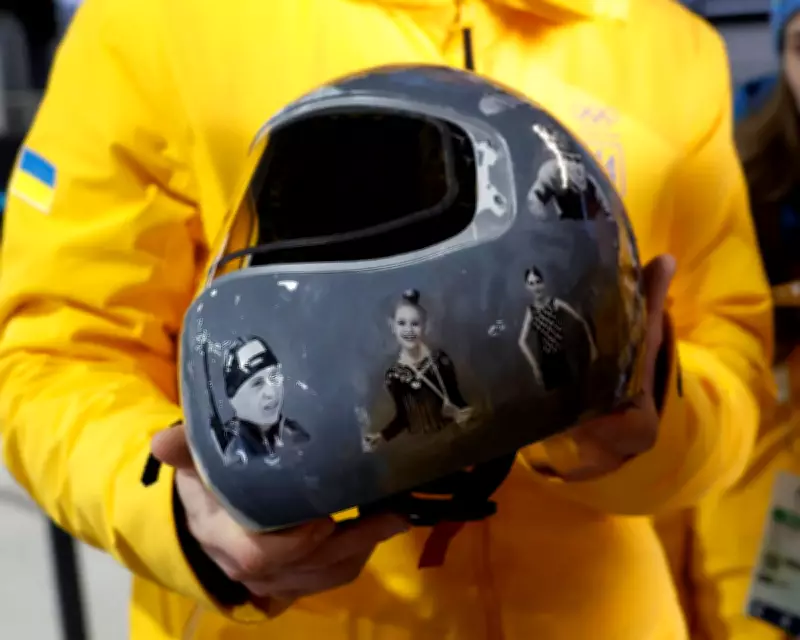
Ukrainian skeleton racer Vladyslav Heraskevych was barred from competing after he insisted on wearing a helmet adorned with images of 24 Ukrainians killed during Russia's invasion. He described it as a "helmet of memory," intended as an act of remembrance rather than a political statement. The IOC president, Kirsty Coventry, informed him of the disqualification just 21 minutes before his race, later speaking to the media in tears after failing to persuade him to change his mind.
Heraskevych emphasized the personal connection to those honored, stating, "Some of them were my friends." The helmet featured individuals such as teenage weightlifter Alina Perehudova, boxer Pavlo Ishchenko, and ice hockey player Oleksiy Loginov. Ukrainian artist Iryna Prots, who created the artwork, highlighted the lost potential: "Each pair of eyes could be seeing this world right now, could be fighting for their own medals, could be standing on their own pedestals."
Widespread Backlash and Support from Ukraine
Following Heraskevych's disqualification, support surged across Ukraine. Denys Shmyhal, the first deputy prime minister, condemned the decision as "a disgrace" and "moral surrender dressed up as 'neutrality'." President Volodymyr Zelenskyy awarded Heraskevych a state honour, arguing that the IOC's move contradicted the Olympic spirit and should help stop wars rather than aid aggressors.
In a show of solidarity, Ukraine's private sector contributed significantly. A co-founder of Monobank announced a prize of 1 million hryvnia (approximately £17,000) in recognition of Heraskevych's stance, underscoring the national sentiment against the IOC's ruling.
Broader Implications for Political Expression in Sports
The controversy extended beyond Heraskevych. Ukrainian short-track speed skater Oleh Handei revealed that he was ordered to tape over a quote from poet Lina Kostenko on his helmet, which read: "Where there is heroism, there can be no final defeat." Olympic officials deemed it linked to the war and in violation of neutrality rules, labeling it as "war propaganda." Handei complied to ensure he could still compete, but the incident highlighted the ongoing tension.
Earlier in the Games, the IOC blocked another symbol when Haiti's delegation arrived in uniforms designed by Stella Jean. The original design featured Toussaint Louverture, leader of the Haitian Revolution, on horseback. The IOC ruled the image violated political symbolism restrictions, forcing its removal and leaving only a red horse. Haitian officials, however, framed their presence as a powerful statement against erasure, with Ambassador Gandy Thomas noting, "Absence is the most dangerous form of erasing."
IOC's Dilemma Between Principle and Reality
The IOC finds itself caught between the Olympic Charter's demand for political neutrality and the reality that athletes carry the weight of their nations' histories, conflicts, and memories. This controversy raises tough questions about whether true neutrality is achievable in a world where sports and politics are inextricably linked.
As the Games continue, this incident serves as a poignant reminder of the challenges in balancing global unity with individual expression. The debate over Heraskevych's helmet and similar cases underscores the need for ongoing dialogue about the role of sports in addressing global issues while maintaining the Olympic ideals of peace and cooperation.