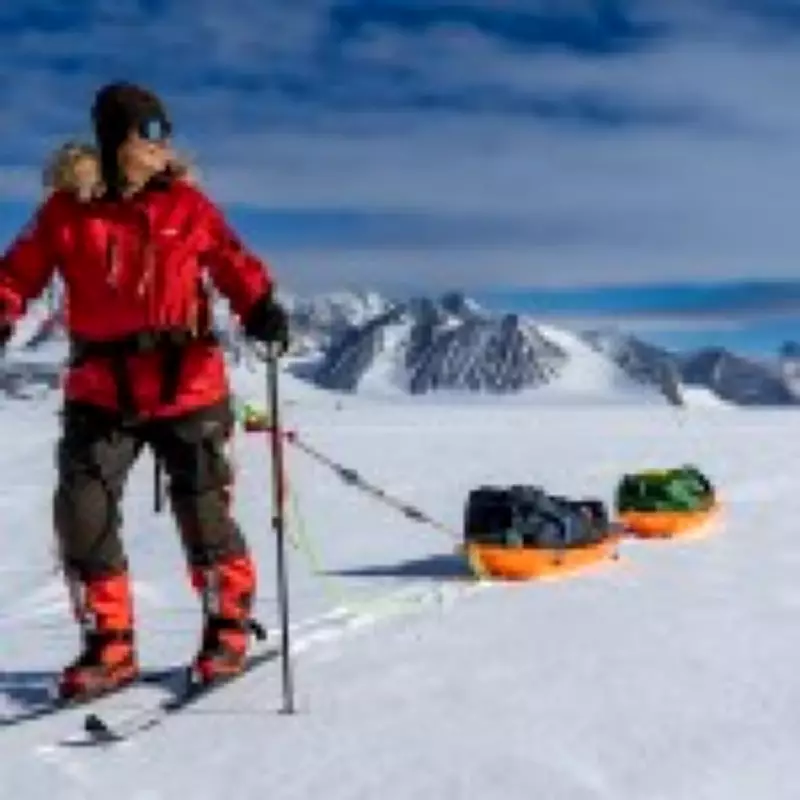
Solo South Pole Ski Expedition: 57 Days of Mental and Physical Endurance
Completely alone in the vast, desolate expanse of Antarctica, I felt utterly broken. It was day 45 of my epic challenge to become the first American woman to ski solo to the South Pole. I had been battered by relentless bad weather, including whiteouts and extreme winds, while my route cut through endless snow ridges, many towering over my 5-foot-5-inch frame. Every time I paused for a break, tears of frustration streamed down my face. Yet, in such harsh conditions, with temperatures plunging below -20°C, stopping for long was not an option—lingering risked severe frostbite or worse. Despite everything, compounded by extreme chafing and period-stained underwear, I kept moving, hauling my 250-pound sled behind me, step by brutal step.
From Novice to Polar Explorer: Overcoming Fear
You might assume I am an experienced skier with countless seasons under my belt. However, just three years before this expedition, I could barely ski. I had never attempted cross-country skiing or anything on this monumental scale. I am not a professional Arctic explorer who abandons daily life for remote destinations; I am a single 36-year-old living in leafy Massachusetts, USA. The idea to ski to the South Pole first took root when I read about Preet Chandi, the first woman of color to ski solo and unsupported to the Pole. What struck me was not just her achievement but that she did not know how to ski when she committed to it. At the time, neither did I. I could not stop wondering: if she could learn, why couldn't I? I realized it was not a lack of skill holding me back but fear—fear of failing, of committing to something so vast I might not survive. That did not feel like a good enough excuse, so I decided to try.
Like any sensible aspiring polar explorer, I began by Googling 'polar expedition training,' which led me to Polar Explorers, a US-based company, and one of their training trips. Nervously, I told the guides I was considering skiing solo to the South Pole, half-expecting laughter. Instead, they said, 'You can absolutely do it. You'll have to train for it—but you can do it.' At that point, I had no choice but to go all in. When I shared my goal with family and friends, it seemed so unimaginable and distant that they were not overly worried. But as the expedition approached, they began to grasp its magnitude, feeling both proud and terrified.
Rigorous Training and Financial Struggles
Transforming a wild idea into reality took about three years. Physically, I trained five to six days a week for over two years, running, lifting weights, and dragging two massive tires across beaches and forests to simulate pulling a sled—sometimes for up to five hours at a time. I used the same harness I would wear in Antarctica, forcing my body to adapt early. My coach, Jon Fearne of E3 Coach, specializes in endurance training and emphasized consistency above all else: show up, even when success seems uncertain. Training took me to Nepal, Massachusetts, Greenland, Norway, and Minnesota, where I fell through the ice—a terrifying experience that taught me I could survive my worst fears.
In the year leading up to Antarctica, I intentionally gained around 11 kilograms (25 pounds), building muscle and fat to endure the inevitable calorie deficit. During the expedition, I consumed about 5,000 calories daily but burned closer to 7,000. I finished 11 kilograms lighter yet still healthy, which I believe played a crucial role in my physical resilience. However, the biggest hurdle was not physical—it was financial. The training and expedition cost over $120,000 (£95,000). Without a major sponsor, the final months were intensely stressful. I drained my savings and once had a full-blown panic attack on my brother's kitchen floor over food, weights, and logistics, a far cry from glamorous explorer energy.
The Grueling Journey: Isolation and Unexpected Challenges
Finally, in November 2025, I flew to the Union Glacier in Antarctica, approximately 700 miles from the South Pole. After a tearful, stomach-dropping 20-minute flight from camp to the middle of nowhere—technically the edge of the continental land mass—I watched the plane take off, leaving me alone on the ice. I waited for a wave of fear, but it never came. And so, the journey began. I sent daily messages to family and friends via my Garmin device, and my mum wrote handwritten letters that I carried the entire way, providing a lifeline of support.
Within the first week, I celebrated Thanksgiving with a dehydrated meal. All my food and equipment were pulled in a sled behind me, and I melted snow on a small camping stove for water and cooking. I even named my sleds after a meal I constantly fantasized about: Roast Chicken and Green Beans—a ridiculous detail that helped pull me forward. To pass the time, I talked aloud to 'Auntie Arctica,' the vast emptiness around me, once spending five hours recounting my entire relationship history, starting with my grade six boyfriend.
Within two weeks, I developed 'polar thigh,' a cold injury that begins as a rash and can lead to lesions or even skin grafts. Thankfully, I was prepared with dressings and warm clothing. Every week, I had a phone call with a doctor for medical advice. Days 20 to 30, which included my birthday, were the hardest mentally, with endless whiteouts and no horizon, skiing all day without seeing more than a few centimeters ahead. My morale plummeted, so I forced myself to include one positive thing in daily updates to avoid worrying my mum, which unexpectedly lifted my spirits.
I also got my period during the two-month expedition, with only two pairs of underwear. Faced with a polar version of Would You Rather—wear bloody underwear for 30 days or put back on dirty underwear worn for a month—I chose the bloody ones. I used a menstrual cup, changing it daily in my tent's vestibule, with everything freezing solid by morning. Not glamorous, but effective. In the snowy wilderness, every item matters because each ounce must be pulled. If I had to choose one essential, it would be my sleeping bag—a cocoon of warmth and safety in a hostile world.
Triumph and Reflection: The Power of Perseverance
The highest moments came near the end. In the final week, I could feel people thinking about me—friends, family, my expedition team, and thousands of strangers following online. In the hours before reaching the Pole, there was a unique, intoxicating feeling: knowing success was imminent but not yet achieved. That suspended moment of striving is something I wish I could bottle. Was it the hardest thing I have ever done? Without question, physically and mentally. Skiing every day for nearly two months messes with your head; you do not get to quit—you just keep putting one ski in front of the other, even while crying.
What I learned is that there is a well of strength inside me that I still have not found the bottom of. I am not a professional athlete, and I did not look like an explorer. I just started—imperfectly, scared, one step at a time. Now, I am writing a book about this experience, and it all began with not knowing how to ski and deciding that fear was not a good enough reason not to try.