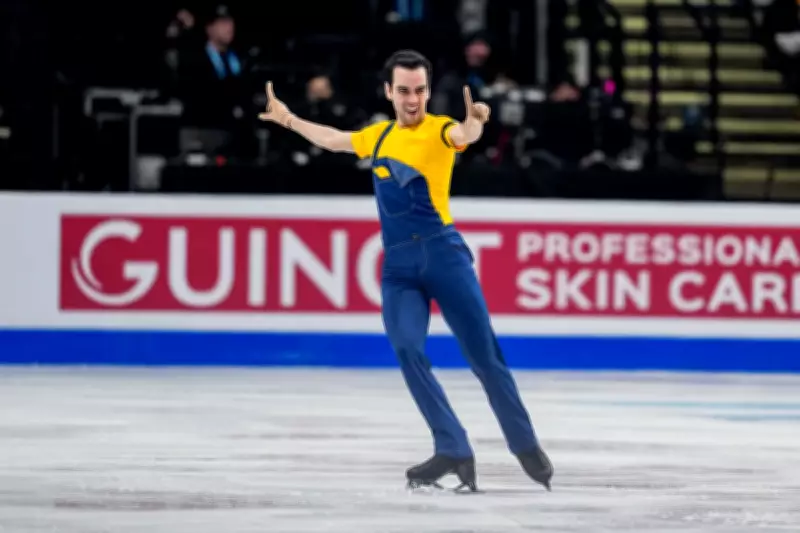
Spanish figure skater Tomàs-Llorenç Guarino Sabaté faces a dramatic last-minute upheaval to his Olympic preparations, as a copyright dispute has forced him to abandon his planned short program music from the Minions franchise. The six-time national champion from Barcelona, set to make his Olympic debut in the men's singles event at the Milano Cortina Winter Games, received the devastating news late last week that his routine would not be cleared for Olympic use.
A Season's Work Thrown Into Chaos
Guarino Sabaté had submitted the music through the International Skating Union's recommended rights-clearance process months ago and had performed the program successfully throughout the 2025-26 season, including at last month's European championships in Sheffield. The 26-year-old athlete now faces the daunting task of adapting or replacing choreography he has refined for months, in a sport where musical timing and muscle memory are fundamentally intertwined.
"Finding this out so close to the biggest competition of my life was incredibly disappointing," Guarino Sabaté revealed in a social media post. "Nevertheless, I will face this challenge head-on and do everything I can to make the best of the situation."
The Signature Routine That Won't Be Seen
The routine had become something of a signature for the Spanish skater, built around music from the popular animated film franchise. He regularly performed wearing a yellow shirt and blue overalls reminiscent of the Minions characters, embracing a playful, crowd-friendly style designed to demonstrate that men's figure skating can balance technical difficulty with humour and personality.
Rights to the Minions property are controlled by Illumination and parent studio Universal Pictures. While the specific licensing hurdle that blocked Olympic clearance remains unclear, this incident highlights the increasingly complex landscape of music licensing in figure skating, particularly as the sport has shifted toward contemporary popular music.
A Systemic Problem Across Artistic Sports
Colin Smith, ISU director-general, described the situation to the Guardian as a structural problem within the music industry rather than something skating can easily solve independently. "It's a complex issue, frankly, because the music industry has no common clearance platform," Smith explained. "There are multiple buckets of rights, and within those buckets the clearance process isn't done on a single platform."
Smith, who previously oversaw Fifa World Cup tournament operations, revealed he has held direct discussions with major rights-holders about creating a more workable system, arguing that the sport's global profile should make cooperation attractive. "I've had direct conversations with one of the big publishing and music companies, and they fully agree it's a strange situation that there isn't a facilitated process," he said.
Not an Isolated Incident
This controversy fits into a broader pattern across figure skating, where even elite Olympic athletes have found their music choices subject to late-stage legal or financial complications. Canadian ice dancers Marie-Jade Lauriault and Romain Le Gac learned late last year that two Prince songs planned for their 1990s-themed rhythm dance could not be cleared for Olympic use, despite being approved for the rest of the season.
At the Beijing Olympics in 2022, American pairs champions Alexa Knierim and Brandon Frazier faced a copyright lawsuit tied to their use of a cover version of House of the Rising Sun. The case was later settled privately for an undisclosed sum understood to be around $1.4 million, highlighting the significant legal and financial risks tied to music selection at the sport's highest level.
The Practical Consequences for Athletes
Outside Olympic seasons, clearance costs can still derail programs. Canadian pairs skaters Deanna Stellato-Dudek and Maxime Deschamps abandoned plans to use a cover of a Phil Collins track after being quoted a licensing fee in the tens of thousands of dollars. These cases collectively demonstrate how music rights - once a secondary consideration in figure skating - have become a substantial logistical and financial challenge that athletes must navigate alongside their training and competition demands.
Smith suggested that a broader, cross-sport approach may be necessary, involving Olympic organisers and other music-driven judged disciplines. "Absolutely, it's not just figure skating," he said when asked whether the ISU could coordinate with sports such as gymnastics and artistic swimming that face similar issues. "We are one of the largest in terms of the Winter Olympics, and we are working with the IOC as well, together with the music industry, to find a solution."
The Immediate Challenge for Guarino Sabaté
The timing leaves the Spanish skater with severely limited options. Skaters typically spend months building choreography that matches specific musical phrasing and emotional beats. Switching music days before competition often means simplifying elements, adjusting step sequences, or reverting to older programs. One potential fallback could involve returning to music he used in previous seasons, though even that carries complications if similar artists or tracks require new clearance.
The men's singles event is scheduled to begin on 10 February at the Milano Ice Skating Arena, leaving minimal time for rehearsal under competition conditions. Despite the significant setback, Guarino Sabaté remains determined to compete regardless of the final music choice.
"I promise to step on the ice with everything I have and deliver programs that both you and I can be proud of," he told his supporters, thanking fans for their encouragement throughout the season.
The ISU confirmed it is monitoring Guarino Sabaté's situation but declined to provide details about the specific dispute. In a statement to the Guardian, the governing body acknowledged that "copyright clearances can represent a challenge for all artistic sports" while emphasising their continued work with rights clearance stakeholders to ensure that "thrilling performances can be accompanied by stirring music."