Cheating Allegations Ignite Fiery Olympic Curling Showdown Between Canada and Sweden
In a dramatic and contentious round-robin curling match at the Winter Olympics, Canada emerged victorious over Sweden with an 8-6 score, but the win was overshadowed by intense accusations of cheating and a frosty atmosphere between the rival teams. The clash saw both sides leveling claims of rule violations, leading to heated exchanges and a temporary halt in play as officials were called to intervene.
Early Tensions and Official Intervention
The trouble began early in the game when Sweden alleged that Canadian curlers were improperly touching the stone after release, prompting a request for officials to monitor further incidents. In a tit-for-tat response, Canada asked for the same scrutiny on Sweden's deliveries, setting the stage for a confrontational environment. The game was paused as umpires were stationed at the hog line to observe deliveries for three ends following the initial complaint.
Heated Exchange Between Players
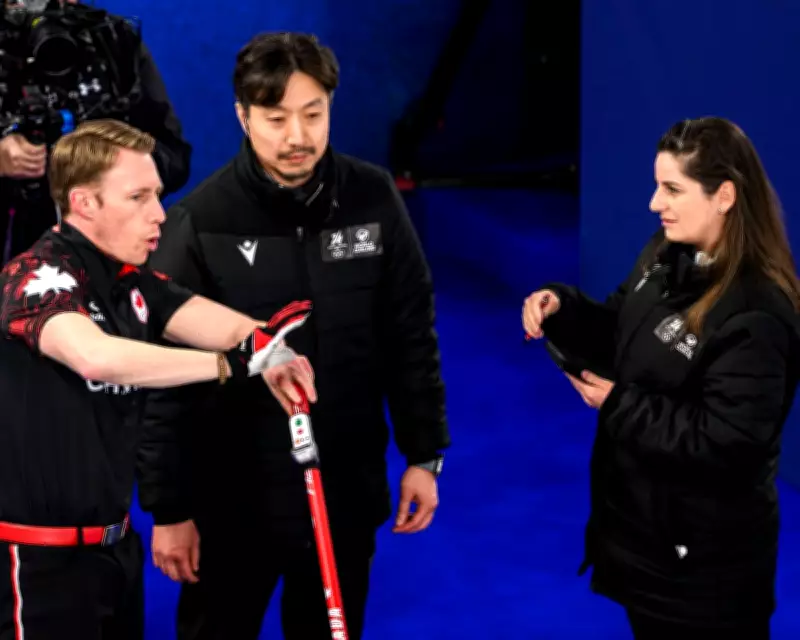
After Sweden scored two points in the penultimate end, narrowing Canada's lead to 7-6, tensions boiled over between the teams' thirds, Marc Kennedy of Canada and Oskar Eriksson of Sweden. Eriksson accused Kennedy of repeatedly touching the stone, threatening to show him a replay as evidence. Kennedy's blunt retort was to tell his counterpart to "fuck off," highlighting the raw emotions on display.
In post-match comments, Kennedy defended his reaction, stating, "It's good. It's sport. It's the Olympics. Both teams are trying to win. Oskar was accusing us of cheating. I didn't like it. I've been curling professionally for 25 years." He added, "There's hog line devices on there. I don't know. And he's still accusing us of cheating. I didn't like it. So I told him where to stick it. Because we're the wrong team to do that to. So I don't care."
Technological Controversy and Rule Disputes
World Curling has introduced electronic handles on the stones for these Games, which flash red if players maintain contact beyond the hog line—the point where curlers must release the stone. Each handle is equipped with a touch sensor that interacts with a magnetic strip in the ice. However, Eriksson argued that Kennedy was touching the stone itself, not the sensor-equipped handle, meaning the red lights did not activate.
Eriksson explained, "It was obviously not a red light, but some players are touching the rock according to us. And that's not allowed... We told the officials. They came out and they misread the rules, sadly. Because they thought double touching any part of the rock is OK. And then they found out that was wrong. You can only touch the electronic part of the handle."
Post-Match Reactions and Friendship Strains
Swedish skip Niklas Edin expressed disappointment over the altercation, noting the long-standing friendships between the players. "We're all super good friends out there," Edin said. "We've known them for 20 years. And [rule violations have] happened many times before, so it's just sad that it gets to heated discussions on the ice instead of just curling, according to the rulebooks, but it's what it is."
Kennedy speculated that Sweden's frustration might stem from their 0-2 start in the title defence, with losses to Great Britain and Italy prior to this match. "He might have been upset that he was losing," Kennedy added. "He might be upset that they're 0-2, grasping for straws. I just told him again. I said I have a ton of respect for him as a player. I've never said a bad word about Oskar Eriksson. I don't really know what he's trying to get out of it. And yeah, onward. But I'm not going to stand there and take cheating lightly."
Official Statement and Outcome
In a statement, World Curling confirmed that umpires monitored the hog line for three ends after the issue was raised, but found no violations or retouches of the stone during the observation period. Despite the controversy, Canada's victory stands, adding another chapter to the intense rivalry in Olympic curling.