Canada's Olympic Hockey Heartbreak: Did Three-on-Three Overtime Ruin the Final?
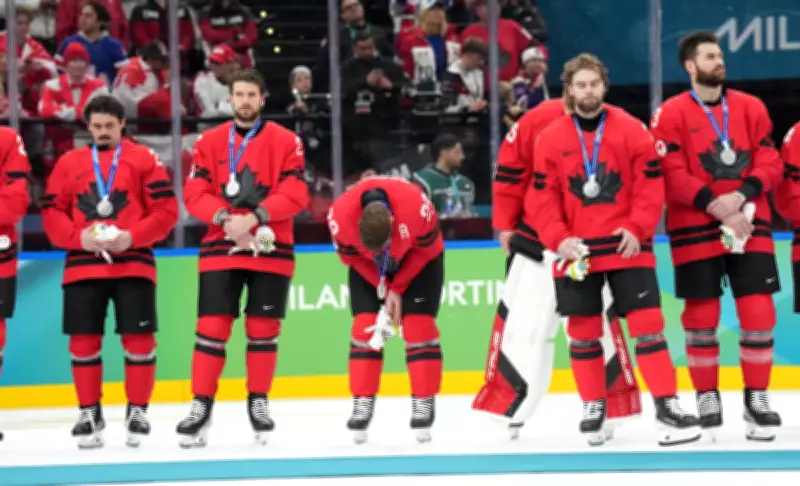
Two Olympic finals against the United States, two strong performances, and two sudden-death losses. Canada is so over overtime. The men's and women's hockey teams both suffered heartbreaking defeats in Milan, with the US clinching gold in both matches through a controversial three-on-three golden-goal format. This has ignited a fierce debate over whether the rule change, designed to end games quickly, undermines the integrity of international hockey's most prestigious contests.
The Misrule on Ice: A Format Under Fire
Forty-six years after the Miracle on Ice, the US celebrated with assists from what some call the Misrule on Ice. After Megan Keller's overtime winner broke Canadian resistance in the women's final, the US men followed with a 2-1 victory on Sunday, securing their first gold since 1980. The rules dictated that after regulation time in these knife-edge finals, teams must switch to a three-on-three format, drastically altering the game's dynamics. Critics argue this turns high-stakes clashes into a coin toss rather than a true climax.
Canada's men dominated play on Sunday, outshooting the US 42-28, but nerves crept in, notably when Nathan MacKinnon missed an open net in the third period. Overtime, however, proved cruel. Jack Hughes scored just 101 seconds into the extra frame, catching a weary Canadian team off guard. While Canada benefited from overtime earlier in the tournament, with Mitch Marner scoring a winner against Czechia, the format's impact on gold medal games is now under scrutiny.
Coach Cooper's Critique: Hockey's Not Hockey Anymore
Canada coach Jon Cooper did not blame the overtime rules for the loss, stating his players knew the rules, but he questioned the spectacle. "You take four players off the ice, now hockey's not hockey any more. There's a reason overtime and shootouts are in play – it's all TV-driven to end games, so it's not a long time. There's a reason why it's not in the Stanley Cup Final or playoffs," Cooper told reporters. His comments reflect a broader sentiment that the format prioritizes television ratings over fair competition.
An Edmonton Journal writer fumed after the women's final, "Whoever dreamed up playing three-on-three in overtime to decide a gold medal hockey game in the Olympics should be stacked into a bobsleigh and pushed down a ski jump." Virtually no one defends the rule, which debases the contest into quasi-random pinball, punishing teams for not finishing in 60 minutes. Unlike soccer, hockey is inherently exciting with no ties, making such drastic changes unnecessary.
The Fairness Debate: Is Overtime Just a Lottery?
When overtime is settled by a single shot after minimal play, it lacks context to determine fairness. The goal becomes a lightning bolt, leaving neutrals feeling cheated. Canada's dominance in regulation was rendered irrelevant by the rebooted format. MacKinnon told reporters, "You be the judge of who was the better team today," treating the result with disdain. Three-on-three may work in NHL regular seasons, but for Olympic gold, it feels extreme. Notably, NHL playoffs use five-on-five overtime.
In 2010, Canada beat the US in overtime with a Sidney Crosby goal under a four-on-four format, seen as a more reasonable compromise. Alternatives include starting with five-on-five, then switching to four-on-four, and finally three-on-three if needed. Regardless, the aftermath of these matches should focus on the game itself, not rule controversies. As the debate rages, one thing is clear: Canada's Olympic hockey dreams were dashed by a format many believe has no place in gold medal games.