Ireland's Dominant Performance Exposes England's Fragility in Six Nations Clash
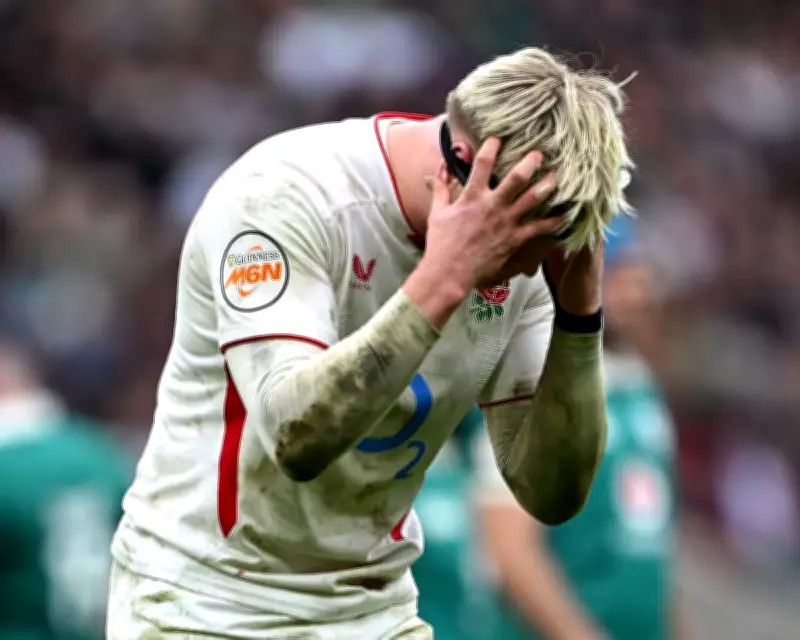
England's recent rugby resurgence came to a crushing halt at Twickenham as Ireland delivered a masterclass performance, securing a record-breaking 42-21 victory that left the home side's ambitions in tatters. The match revealed significant vulnerabilities in Steve Borthwick's squad, with Ireland's experienced players systematically dismantling England's youthful optimism.
The Unraveling of England's Winning Streak
England entered the match with confidence following a 12-match winning run, but Ireland's tactical superiority quickly became apparent. The Irish side, led by the exceptional Jamison Gibson-Park, demonstrated that experience and composure can overcome youthful exuberance. Henry Pollock, representing England's brash future, found himself overshadowed by Ireland's Caelan Doris, highlighting the gap between potential and proven performance.
The match statistics tell a sobering story: England committed numerous handling errors, missed crucial lineouts, and suffered from poor decision-making at critical moments. Freddie Steward and Ellis Genge both contributed to England's downfall with uncharacteristic mistakes, while George Ford's failure to find touch from penalties proved particularly costly.

Ireland's Clinical Execution
Ireland's victory was built on disciplined, authoritative rugby that exposed England's defensive weaknesses. Gibson-Park opened the scoring with a clever tapped penalty and dart for the corner, setting the tone for Ireland's dominant performance. Subsequent tries from Rob Baloucoune and Dan Sheehan demonstrated Ireland's ability to capitalize on England's errors, particularly during periods when England players were in the sin bin.
The Irish side showed remarkable improvement from their previous performances, suggesting they may be emerging from what many considered a transitional phase. Their ability to control the game's tempo and exploit England's defensive lapses proved decisive, with the bonus-point try early in the second half effectively ending England's comeback hopes.
England's Confidence Crisis
Perhaps most concerning for England supporters was the team's apparent loss of confidence and authority. The panache that had characterized their recent performances vanished, replaced by hesitant, error-prone rugby. Set-piece failures, handling errors, and poor decision-making combined to create a perfect storm of underperformance.
Steve Borthwick now faces significant challenges in rebuilding his squad's confidence and addressing the tactical deficiencies exposed by Ireland. While calls for radical changes may be premature, the comprehensive nature of this defeat suggests fundamental issues require attention. The coming weeks will test Borthwick's coaching credentials and his ability to restore England's competitive edge.
Looking Ahead in the Six Nations
Ireland's victory revitalizes their Six Nations campaign, putting them in strong contention for the championship. The performance suggests they remain serious contenders despite earlier concerns about their form. For England, the defeat represents more than just a lost match—it raises questions about the team's development trajectory and their ability to compete with rugby's elite sides.
The match serves as a stark reminder that sustained success requires more than winning streaks; it demands consistency, adaptability, and the ability to perform under pressure against quality opposition. England's bubble has burst spectacularly, and how they respond will define their season and potentially Borthwick's tenure as head coach.