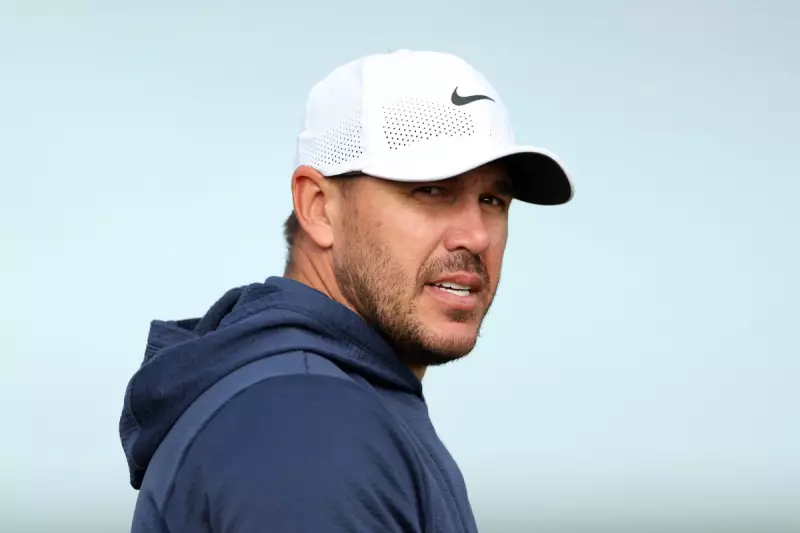
The return of five-time major champion Brooks Koepka to the PGA Tour has dramatically shifted the landscape of professional golf, putting the established circuit and the Saudi-backed LIV Golf firmly back on a collision course.
A Stark Reversal from Truce to Tension
This week, the PGA Tour confirmed it had accepted Koepka's application to rejoin its ranks. More significantly, it opened a pathway for other high-profile LIV Golf defectors, including Bryson DeChambeau, Jon Rahm, and Cameron Smith, to follow suit if they apply by a 2 February deadline. This move is widely interpreted as a direct challenge to LIV Golf, coming after a period of truce and protracted merger discussions.
Former European Ryder Cup captain Paul McGinley was quick to highlight the implications. "I don't see the Brooks Koepka situation as surprising as many do," the Irishman stated on social media. "It highlights how much pro golf is now prioritised as a business and a platform for members second. It also confirms that the relationship between the PGA Tour and LIV is on a path of competition, not alignment."
The Cost of Coming Back
Koepka's return follows months of speculation about an early exit from his lucrative LIV Golf contract. As part of the agreement to rejoin the PGA Tour, the major winner has agreed to forego benefits worth an eight-figure sum and has donated $5 million to charity. His comeback is facilitated through the PGA Tour's new Returning Member Programme, created specifically for this scenario.
The timing is particularly pointed, with the application window closing just two days before LIV Golf's 2026 season opener in Riyadh. This sets the stage for an immediate and public showdown between the two tours.
Peace Deal Stalls as Old Rivalries Resurface
The framework peace agreement between the PGA Tour and LIV Golf, brokered in the summer of 2023, was designed to end costly litigation and pool commercial assets, with the Saudi Public Investment Fund (PIF) investing in a new joint venture. While it halted lawsuits, the deal has stalled amid antitrust concerns, despite political promises of resolution.
During this stalemate, the tours have pursued divergent strategies. The PGA Tour has undergone significant reform, shedding its charitable status to attract outside investment and giving players more power and money. Meanwhile, LIV Golf, fronted by Greg Norman and backed by $2 billion from the PIF, has struggled to build momentum beyond its initial splash.
The recent rhetoric has turned increasingly hostile. Last month, LIV Golf chief executive Scott O'Neil made an unflattering comparison, likening his tour to Formula 1 and the PGA Tour to Indycar. Koepka's defection back to the traditional tour is therefore seen not just as a player transfer, but as a symbolic rejection that threatens to unravel the fragile peace and return golf to a state of open, costly rivalry.