While the footballing world focuses on the 2026 FIFA World Cup hosted by the United States, Canada, and Mexico, the US Men's National Team (USMNT) is already casting its gaze further ahead. Manager Mauricio Pochettino has outlined a vision that extends to the 2030 tournament, suggesting the current generation's greatest success may still be four years beyond their home-soil showcase.
Building a Legacy Beyond 2026
Following a 2-1 victory over Australia in Colorado to conclude the October international window, Pochettino emphasised his responsibility to construct a lasting foundation. "It's not only to think in 2026, it's to think after," the former Tottenham boss stated. He spoke of creating a core group of players who embody the team's culture and values, a group capable of carrying the programme forward to the 2030 finals in a stronger position.
This perspective challenges the prevailing notion that 2026 represents the ultimate peak for this USMNT cohort. While the tournament on home soil is a monumental target, the age profile of the squad's key figures suggests their competitive window could remain wide open. Landon Donovan, a USMNT icon, agrees, telling the Guardian that there is no reason why the core, led by Christian Pulisic, cannot compete at the highest level when they are 30 or 31.
The Prime Age of a Golden Generation
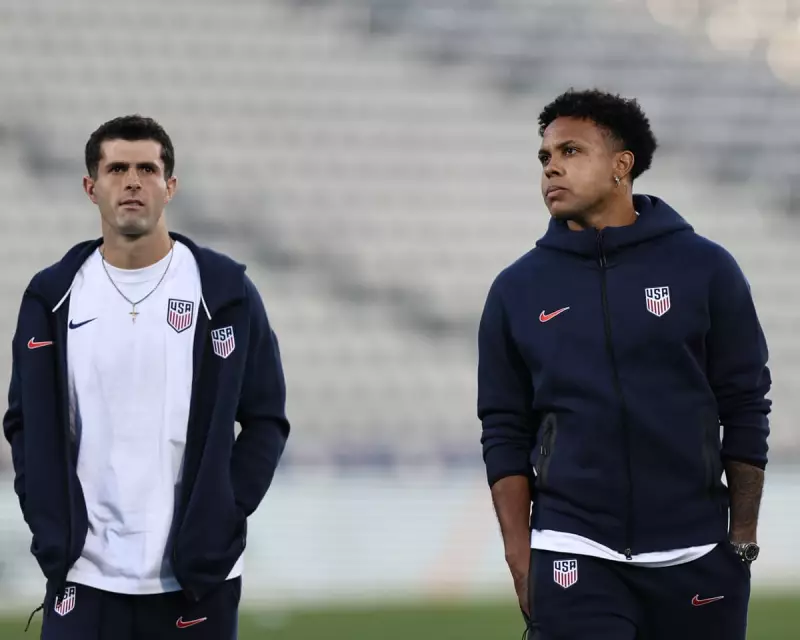
A closer look at the squad's timeline is revealing. When the 2030 World Cup kicks off, pivotal figures like Christian Pulisic and Weston McKennie will be 31 (both turning 32 later that year). Tyler Adams will also be 31, while Chris Richards and Tim Weah will be 30. Creative force Gio Reyna will be just 27, entering his absolute peak.
This aligns with the model of experienced international success. Former USMNT manager Gregg Berhalter pointed to Croatia as a prime example. "When you think about Croatia performing well at World Cups, they usually have older teams," Berhalter noted, referencing their 2018 final and 2022 semi-final appearances, which came after several tournaments of building cohesion. The US core, which made its major tournament debut in Qatar, will have invaluable experience from the 2026 campaign to draw upon in 2030.
Full-back Antonee Robinson reflected on the learning curve from Qatar, acknowledging the young team's need to master the subtle art of game management. "Managing the game... comes with experience that four years on from the last tournament, is going to be huge," Robinson said.
New Blood and Future Challenges
This veteran core could be complemented by today's most exciting prospects. Pochettino has identified the wing as a position needing depth, but the future looks bright. Philadelphia Union's Cavan Sullivan, who is set to join Manchester City, and Borussia Dortmund's Mathis Albert impressed at the recent Under-17 World Cup. In defence, 19-year-old Noahkai Banks is already a Bundesliga starter for FC Augsburg and earned a senior call-up in September.
However, Berhalter cautioned that this progression is not automatic. "The two things that need to be happening at the same time are team development and individual development," he explained. Each player must continue to progress at a high level in their club careers to justify a third World Cup cycle together.
Former striker Charlie Davies framed the challenge as one of enduring hunger and resilience. He highlighted the relentless grind of European football and posed the question of how long players like Weston McKennie—who faces constant transfer speculation—will want to push themselves in that environment. "At what point do you go, 'I've had enough of this'?" Davies asked, while acknowledging the impressive drive required to prove oneself year after year.
This dynamic is further complicated by the growing allure of Major League Soccer (MLS), which could tempt established stars home with significant contracts and a less pressured lifestyle. Davies noted that as players age and start families, these considerations become powerful. Yet, the dream of a third World Cup remains a potent motivator.
As Pochettino builds his project, the narrative for US soccer is expanding. The 2026 World Cup is a crucial milestone, but it may serve as the launchpad rather than the final destination for a talented generation aiming to make its deepest mark on the global stage in 2030.