VAR Decision Clarifies Leeds United's Controversial Equaliser Against Chelsea
Stamford Bridge witnessed significant controversy on Tuesday evening as Leeds United's second goal against Chelsea sparked heated debate among supporters and pundits alike. The Premier League clash saw the visitors equalise in contentious circumstances, with Chelsea fans left furious that the effort wasn't disallowed for an apparent handball in the build-up.
Match Context and Chelsea's Early Dominance
The evening had begun promisingly for the home side, with Chelsea establishing what appeared to be a commanding position. Liam Rosenior's team looked comfortable against a Leeds United side that has shown impressive form in recent weeks. The breakthrough came after 24 minutes when Joao Pedro demonstrated excellent anticipation to latch onto Cole Palmer's precise through ball, giving Chelsea a deserved lead.
Chelsea's advantage doubled shortly after the interval when Palmer continued his excellent goalscoring form. The midfielder confidently converted from the penalty spot after Leeds United defender Jaka Bijol needlessly brought down Pedro in the area. With just thirty minutes remaining and a two-goal cushion, Chelsea seemed poised to secure all three points.
Leeds United's Dramatic Comeback
Daniel Farke's tactical intervention proved crucial as he introduced Noah Okafor from the substitutes' bench. The 25-year-old Swiss international immediately impacted the game, injecting energy and unpredictability into Leeds United's attacking play. The visitors found their way back into the contest when Moises Caicedo's overeager challenge brought down Jayden Bogle in the penalty area, with Lukas Nmecha calmly converting the resulting spot-kick.
The momentum had clearly shifted, and Leeds United continued to press for an equaliser. Bogle again proved instrumental in the 73rd minute, causing problems for Chelsea defender Josh Acheampong in the penalty area. As the Chelsea full-back attempted to deal with the threat, both players ended on the turf following a coming together, with goalkeeper Robert Sanchez also attempting to intervene.
The Controversial Equalising Goal
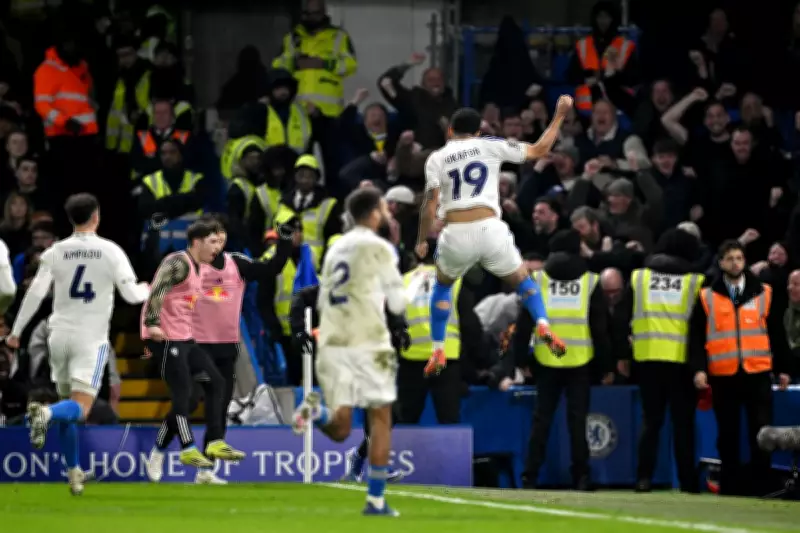
In the ensuing chaos, the ball broke kindly for Okafor, who had the simplest of tasks to tap home from close range. Chelsea players immediately surrounded referee Robert Jones, appealing for a foul with two of their defenders on the ground. The official allowed the goal to stand initially, prompting the Video Assistant Referee system to review the incident.
During the VAR check, replays shown on the stadium screens appeared to indicate the ball might have struck Bogle's arm in the build-up to the goal. This prompted cheers from Chelsea supporters who were confident the technology would intervene to disallow the equaliser. However, after thorough examination, VAR officials determined there was insufficient evidence to overturn the on-field decision.
Official Explanation and Aftermath
Referee Robert Jones did not even visit the pitchside monitor to review the incident himself, instead accepting VAR's assessment that no clear error had occurred. The Premier League's official Match Centre account on social media platform X later provided clarification, stating: "The referee's call of goal to Leeds United was checked and confirmed by VAR – with there deemed to be no handball offence by Bogle in the build-up."
This explanation confirmed that officials judged any potential contact with Bogle's arm to be either accidental or not constituting a clear handball offence under current Premier League regulations. The decision proved crucial to the final outcome, with the match ending in a 2-2 draw that felt like two points dropped for Chelsea but represented an impressive comeback for Leeds United.
The controversy highlights ongoing debates about VAR implementation and handball interpretations in English football. While Chelsea supporters felt aggrieved by the decision, the officials' explanation provides clarity about why the goal was allowed to stand despite the apparent contact with Bogle's arm during the chaotic sequence in the penalty area.