
The Vanishing Striker: Why Premier League's No 9 Role Faces Extinction
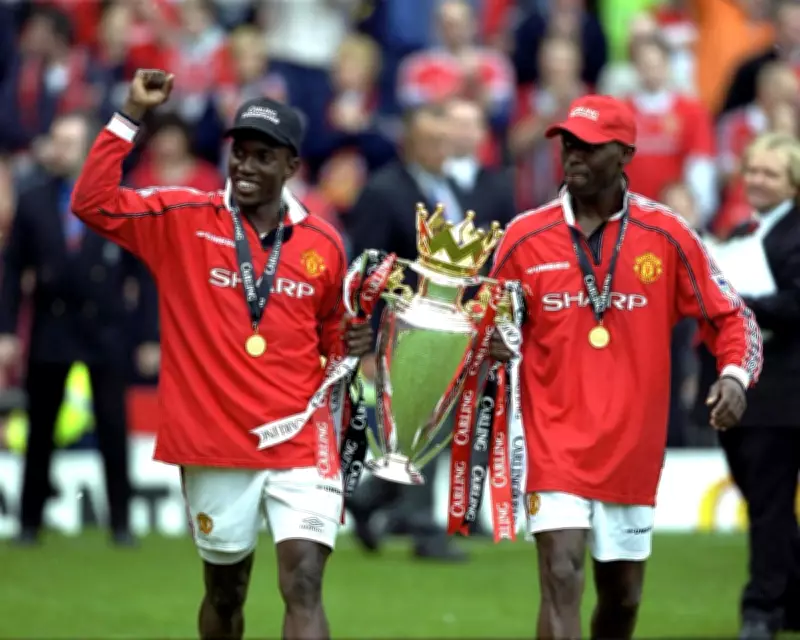
In the summer of 1998, Dwight Yorke arrived at Manchester United, barely acquainted with Andy Cole. Yet, the partnership they forged became legendary, culminating in 53 combined goals during the 1998-99 treble-winning season. Yorke shared the Premier League Golden Boot with 18 goals, while Cole finished just one behind. That year, the top 10 scorers were all strikers, a stark contrast to today's football landscape.
The Statistical Decline of Traditional Centre-Forwards
Opta data highlights a dramatic shift. Two decades ago, strikers accounted for 41.6% of Premier League goals, scoring 387 out of 931. This season, that figure has plummeted to 25.9%, with only 291 of 845 goals coming from traditional No 9s. The decline is further evidenced by hat-trick statistics: between 2007 and 2012, centre-forwards recorded 10 or more hat-tricks in four out of five seasons, but this threshold has been surpassed only once in the past nine seasons.
Training methods have evolved, with finishing drills becoming infrequent as possession-based tactics dominate. René Meulensteen, who worked under Sir Alex Ferguson at Manchester United from 2007 to 2013, recalls dedicating 15-30 minutes daily to striker-specific finishing work. Today, training is more generalised, prioritising strength and conditioning over specialised skills.
England's Striker Crisis Beyond Harry Kane
The shortage of elite strikers is acutely felt in the England squad. Beyond Harry Kane, who turns 33 shortly after the World Cup, options are limited. Dominic Solanke, with three league goals in an injury-hit season, and Dominic Calvert-Lewin, with 10, were given opportunities but failed to impress. Ollie Watkins, with nine league goals, is next in line.
Since his debut in 2015, Kane has contributed 78 goals and 19 assists, involved in 32% of England's goals. Without him in recent friendlies, England managed only one goal against Uruguay, scored by a defender, and drew a blank against Japan. His potential injury or retirement exposes a concerning lack of succession planning.
Tactical Shifts and the Redefinition of the No 9 Role
Emile Heskey, a traditional centre-forward with 62 England caps, attributes the decline to tactical changes. "It's no longer a sexy position," he says, noting that possession-based systems often relegate strikers to creating space for others rather than scoring. The redefinition began with José Mourinho's 4-2-3-1 formation at Chelsea in 2004 and intensified under Pep Guardiola, who popularised the false 9 role with Lionel Messi at Barcelona.
Even Erling Haaland, a modern outlier, has adapted to Guardiola's system at Manchester City. Youth academies now mirror first-team formations, often fixed by executives, reducing opportunities for developing traditional strike partnerships. Dean Whitehouse, who spent 23 years in Manchester United's academy, warns that tactical overloads sanitise buildup play, hindering the development of "real No 9 predators."
Hope for a Revival of the Striker Breed
Despite the current predicament, there is optimism for a revival. Gareth Southgate's advocacy for smaller-sided games at youth levels, initiated in 2011 as the FA's head of youth development, aimed to nurture technical players who might otherwise be overlooked. This suggests that with aligned efforts from the FA and Premier League academies, change is possible.
Whitehouse believes success breeds imitation: "As soon as people start playing with a paired strike force and success comes from that, then everybody wants to jump on board." Specialised training practices could then foster a new generation of prolific No 9s, ensuring the role's resurgence in football's evolving tactics.