
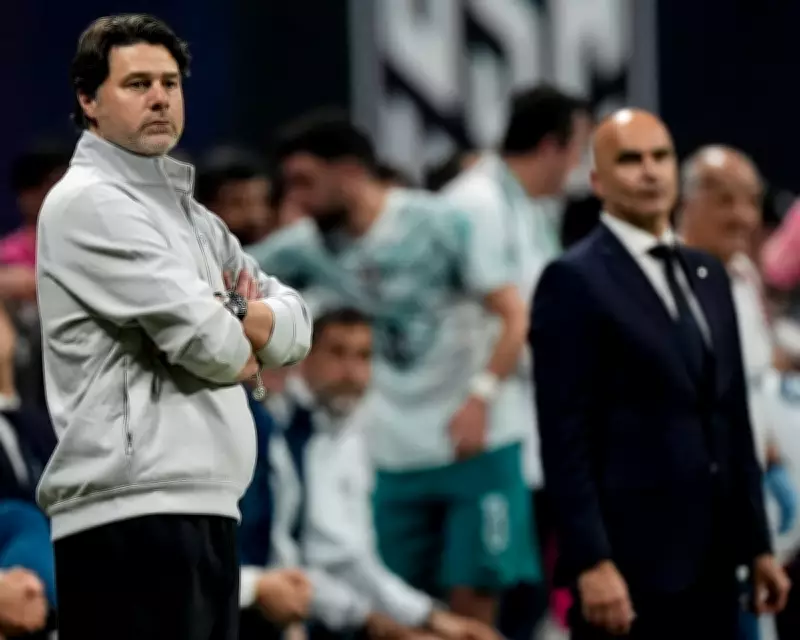
USMNT's World Cup Preparations Marred by Tactical Confusion and Defeats
The United States men's national soccer team's final international window before the World Cup has concluded, leaving more questions than answers for coach Mauricio Pochettino and his squad. What many anticipated would be a clarifying period has instead revealed significant tactical uncertainty and performance concerns as the tournament co-hosts prepare for their opening match on June 11.
Portugal Victory Highlights US Deficiencies
Portugal's comfortable 2-0 victory over the United States in Atlanta on Tuesday served as a sobering reality check for American supporters. Portuguese coach Roberto Martínez, while diplomatically avoiding direct criticism of the US team, emphasized that "the magic starts" when the World Cup begins, suggesting everything could change under tournament pressure. His comments, however, did little to mask the evident gap in quality between the two sides during the match.
Pochettino described both the Portugal defeat and Saturday's 5-2 loss to Belgium as games decided by "small details" where momentary mistakes were punished. Yet the nature of these losses—particularly the second-half collapse against Belgium—has raised serious concerns about the team's defensive organization and tactical discipline against elite opposition.
Pochettino's Mixed Messages and Tactical Experiments
The US coach delivered a series of contradictory statements following the matches, oscillating between sobering realism and forced optimism. He acknowledged the talent disparity between his squad and top international teams, noting that while Belgium and Portugal have players ranked among the world's top 100, "I think we don't have [any]." Yet he simultaneously expressed increased positivity about his team's readiness, declaring "I am more positive now than before" despite the negative results.
More concerning than the mixed messaging has been Pochettino's tactical experimentation during this crucial preparation phase. After the US found success with a back-three system last autumn, the coach switched to a back-four against Belgium, only to revert to three center-backs against Portugal. This represents the fourth different tactical formation utilized over the past three international windows, creating uncertainty about the team's fundamental identity.
Questionable Personnel Decisions and Emerging Concerns
Perhaps the most puzzling decision came against Portugal, where Pochettino deployed Christian Pulisic as a center-forward for the first time in the winger's 84 international appearances. While the move generated some dangerous opportunities in the first half, Pulisic's natural instincts as a winger limited his effectiveness in the role, particularly as Portugal adjusted their defensive approach after halftime.
The window did reveal some positive developments, including promising midfield combinations featuring Weston McKennie and Malik Tillman, and improved defensive performances from Chris Richards and Auston Trusty compared to their counterparts in the Belgium match. New York City FC goalkeeper Matt Freese also solidified his position atop the depth chart with composed performances.
Mounting Questions as World Cup Approaches
Despite these limited positives, the international break has multiplied concerns about the US team's readiness. Fundamental questions remain unanswered: What is Pochettino's preferred formation and tactical approach? Who comprises the most balanced midfield combination? Can this team defend effectively against long-range threats, having conceded multiple goals from distance during the window?
Most worryingly, the matches provided little evidence to suggest the US is prepared for a deep World Cup run. The team's struggles contrast sharply with regional rival Mexico, which earned draws against the same opponents despite missing several key players due to injury. The US now faces one of the tournament's toughest groups, with Turkey—which claimed the final spot in their group on Tuesday—likely viewing the Americans as vulnerable following their March performances.
Legacy-Defining Opportunity Amidst Uncertainty
World Cups inevitably define the legacies of players and coaches, particularly when the tournament occurs on home soil. Pochettino estimates that 35 to 40 players remain in contention for his final 26-man squad, with intense evaluation continuing in the coming weeks. The coach plans to bring only his selected squad for the final tune-up friendlies against Senegal and Germany, providing limited opportunities for players to demonstrate their readiness.
As the World Cup spotlight prepares to shine on American soccer, the USMNT faces the daunting task of transforming tactical experiments and hard lessons into cohesive, competitive performances. With the tournament's opening match rapidly approaching, time is running out for Pochettino to establish clarity and confidence within a squad that appears increasingly uncertain about its identity and capabilities.