
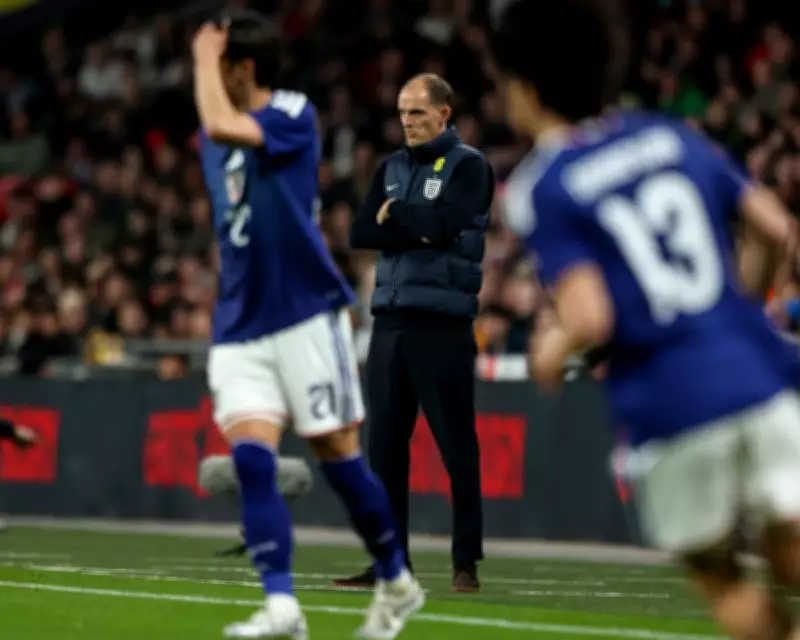
Tuchel's Calculated Gamble on Player Workload
England head coach Thomas Tuchel remains steadfast in his conviction that carefully managing player minutes during a congested club season will ultimately yield dividends at the 2026 World Cup. This philosophy comes under scrutiny following England's underwhelming performances in recent international friendlies against Uruguay and Japan.
The Broken International Window
Tuchel's meticulously crafted plans unraveled dramatically during what he describes as a "complicated" international camp. With only three days to prepare a completely new squad against Uruguay, followed by significant player withdrawals for the Japan match, the coach found himself navigating what he termed "a hiding to nothing."
The injury crisis proved particularly debilitating, with key figures including John Stones, Reece James, Jude Bellingham, Declan Rice, Bukayo Saka, Jordan Henderson, and captain Harry Kane all unavailable for selection at various points. This left England without their established leadership core during crucial preparation matches.
Load Management Philosophy
Tuchel's approach centers on what he calls "load management" - a conscious effort to avoid pushing players too hard during international breaks that fall at pivotal moments in the domestic calendar. The German tactician is acutely aware of the physical toll exacted by modern football schedules.
"I knew before how complicated this camp can be because I know the level of fatigue that the players are in, the level of minutes they've played," Tuchel explained, emphasizing his long-term perspective.
Experimental Formations and Personnel
With his preferred players unavailable, Tuchel experimented with tactical setups that yielded mixed results. Against Japan, he deployed a 4-2-4 formation featuring Cole Palmer and Phil Foden as twin attacking midfielders, an approach that failed to generate sufficient offensive threat.
The England manager took full responsibility for these tactical decisions, stating: "I'm responsible for changing the structure because I wanted to get us a bit more security. I take responsibility for that."
Contrasting Reactions to Disappointment
Notably, Tuchel's response to these setbacks differed markedly from his reaction to similar disappointments in June. Following underwhelming performances against Andorra and Senegal earlier this year, the coach publicly questioned player attitude and energy levels.
This time, however, he offered only support and understanding, recognizing the physical and mental fatigue affecting his squad. Tuchel observed clear signs of exhaustion among players who have endured grueling club schedules.
The World Cup Perspective
Despite the immediate disappointment, Tuchel maintains an unwavering focus on the ultimate prize. "We will not start doubting," he declared. "I knew we will have a tough exam. Sometimes it is better to have a tough exam than another win and we're not so 100% sure."
The England manager believes that by not overextending players during challenging international windows, he is preserving their physical and mental resources for the World Cup tournament itself. This strategic patience, he argues, will prove its worth when England's full-strength squad assembles for the global competition.
Selection Questions Linger
While most established players retain their positions, questions surround certain squad members. Phil Foden's place appears less certain following these friendlies, though Tuchel stopped short of definitive statements about World Cup selection.
Bright spots emerged in the form of James Garner's composed performances and Harry Maguire's moments of quality, though the latter remains behind other central defensive options in Tuchel's estimation.
Maintaining the Dream
Tuchel concluded with characteristic determination: "We will not let go of our dream, not let go of the question: 'Why not?'" His message to critics and supporters alike emphasizes process over immediate results, with the 2026 World Cup serving as the ultimate validation of his management approach.