Tottenham Hotspur's Relegation Reality Check
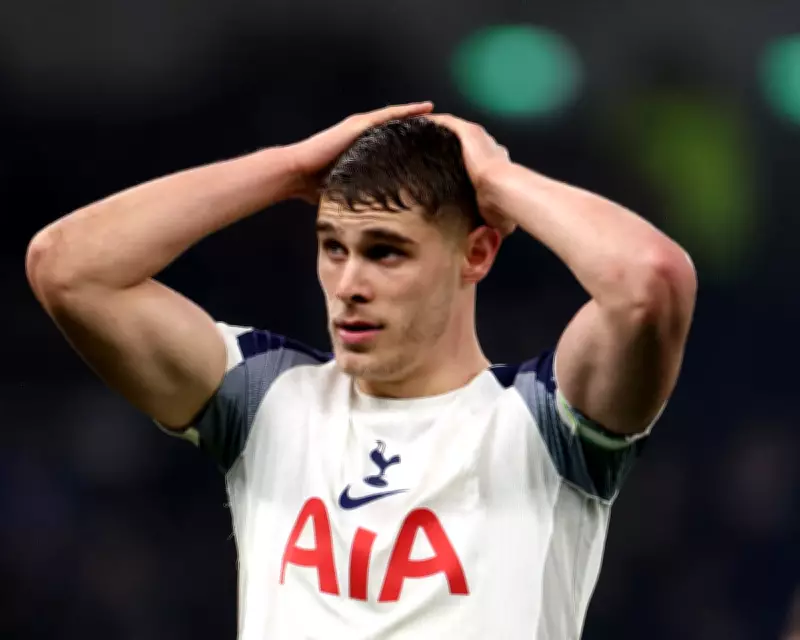
Tottenham Hotspur find themselves in a precarious position that few could have predicted at the start of the season. Following Tuesday's defeat to Newcastle United, Thomas Frank's side now sit just five points above the Premier League's relegation zone, with a daunting North London derby against league leaders Arsenal looming this Sunday.
A Worrying Run of Form
The statistics make for grim reading for Spurs supporters. Since the beginning of November, Tottenham have managed just two victories in seventeen matches – a run of form that would typically see any team embroiled in a serious relegation battle. While last season's seventeenth-place finish was considered a nadir for the club, this campaign threatens to plunge them even deeper into crisis.
Several factors have contributed to Tottenham's struggles. Significant injuries to key players have disrupted squad consistency, while Champions League commitments have placed additional strain on an already stretched squad. Interestingly, their European campaign has shown flashes of promise – finishing fourth in their group stage, positioned between European giants Barcelona and Liverpool – but domestic form tells a different story entirely.
Historical Context and Current Reality
Based on their current trajectory, Tottenham are projected to finish with approximately 38 points this season – identical to last year's total. However, the safety net that existed last season has disappeared. While three historically poor teams provided a cushion previously, this season's relegation-threatened sides – West Ham United, Nottingham Forest, and Leeds United – are demonstrating considerably more fight and resilience.
The potential relegation of Tottenham Hotspur would represent an unprecedented event in Premier League history. Unlike Newcastle United's previous demotions, Spurs enter this battle with the ninth-highest revenue in world football and while competing in the Champions League. The sheer scale of such a downfall would be unparalleled in English football's modern era.
Cristiano Ronaldo's Saudi Standoff
Meanwhile, in Saudi Arabia, Cristiano Ronaldo's future with Al-Nassr appears increasingly uncertain. The Portuguese superstar has reportedly been earning approximately $650,000 daily while not playing or training for his club, having initiated a two-week strike to express his dissatisfaction with the team's management.
Changing Landscape of Saudi Football
Recent reports suggest Ronaldo's strike may be ending, with the forward expected to return to Al-Nassr's squad imminently. However, his discontent highlights broader changes within the Saudi Pro League's structure and ambitions.
The Saudi Public Investment Fund currently holds a 75% stake in four major clubs – Al-Ahli, Al-Hilal, Al-Ittihad, and Al-Nassr – but aims to transition all clubs to private ownership by 2030. This strategic shift is designed to stimulate the country's private sector through football investment, and evidence suggests prioritisation among clubs has already begun.
Karim Benzema's transfer from Al-Ittihad to Al-Hilal exemplifies this redistribution of assets, as does Al-Hilal's $80 million January spending spree compared to Al-Nassr's reliance on free transfers. These developments indicate Al-Nassr may no longer occupy the marquee position within Saudi football's evolving hierarchy.
Diego Simeone's Atlético Madrid Crossroads
In Spain, Diego Simeone faces mounting pressure at Atlético Madrid following a week of contrasting fortunes. While his team demolished Real Betis 5-0 to reach the Copa del Rey semi-finals, they subsequently lost to the same opponents days later – a result that encapsulated growing concerns about Simeone's long-term future at the club.
A Familiar Cycle Repeating
Atlético Madrid have experienced this pattern repeatedly in recent seasons. Simeone promises tactical evolution toward more expansive, attacking football, the club invests in offensive talent, only for the manager to revert to his defensive principles shortly thereafter. This cycle has become increasingly frustrating for supporters and club hierarchy alike.
With Atlético now thirteen points adrift in La Liga's title race, Thursday's Copa del Rey semi-final first leg against Barcelona represents a crucial opportunity to demonstrate they can still compete with Spain's elite. New owners Apollo Global Management may be questioning how much longer they can persist with Simeone's approach, particularly as parallels emerge with Arsène Wenger's final years at Arsenal – another legendary manager struggling to adapt to football's modern demands.
Simeone has faced pressure before and responded emphatically, but this current situation feels distinctly different. As Tottenham battle relegation, Ronaldo contemplates his Saudi future, and Simeone faces his greatest managerial challenge, football's landscape continues to shift in unexpected directions.