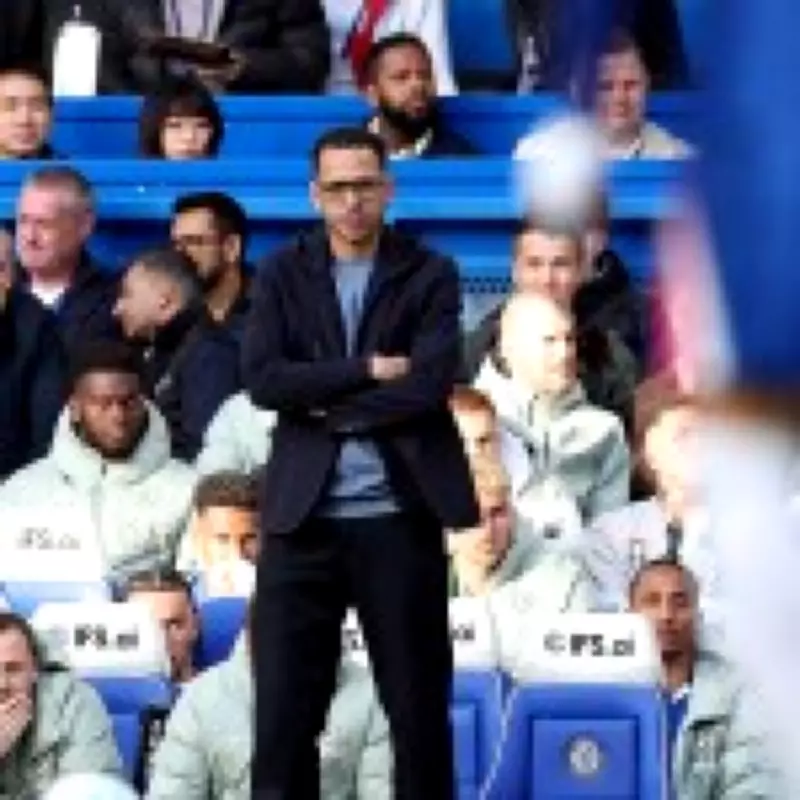
Chelsea Manager Accepts Full Responsibility for Team's Collapse
Liam Rosenior has publicly declared himself accountable for Chelsea's concerning pattern of collapse following their comprehensive 3-0 defeat to Manchester City at Stamford Bridge. The Blues suffered their third consecutive Premier League loss on Sunday afternoon, with Pep Guardiola's side delivering a devastating second-half performance that exposed Chelsea's mental fragility.
Champions League Hopes Dangling by a Thread
Chelsea's aspirations for Champions League qualification remain mathematically possible but increasingly precarious. The west London club currently occupies sixth position in the Premier League table, trailing Liverpool in fifth by four crucial points. Meanwhile, Brentford and Everton lurk just one point behind, creating intense pressure from below during the season's final stretch.
This defeat represents merely the latest in a series of concerning results for Rosenior's squad. Recent weeks have witnessed a 3-0 loss at Everton, coupled with heavy Champions League defeats to Paris Saint-Germain (3-0 and 5-2). The pattern has become unmistakable: Chelsea demonstrate competitive resilience before crumbling decisively once conceding.
Seventeen Minutes of Second-Half Carnage
The match appeared evenly balanced at halftime with neither side breaking the deadlock. However, Manchester City emerged from the interval with renewed intensity, dismantling Chelsea's resistance with three goals in just seventeen minutes. Nico O'Reilly opened the scoring before Jeremy Doku completed the rout, exposing Chelsea's vulnerability when facing adversity.
Rosenior offered a frank assessment to Sky Sports immediately following the match: "Not good enough in the second half. We didn't start the half well, we had moments to clear the box and didn't. We had the moment to keep the ball and didn't. They were camped in our half for the first five minutes, where we concede a goal."
Manager Identifies Recurring Psychological Issue
The Chelsea boss pinpointed a psychological pattern that has plagued his team throughout recent weeks: "Then it's a similar story for the past month now in terms of dealing with setbacks. When you go a goal down against a team as good as this, what you have to do for the next five minutes is stay in the game."
Rosenior emphasized his personal accountability for this recurring issue: "I'm accountable. This is a group that something we have to improve at. It starts on the training pitch, your habits and values. We've already spoken about these things. I can't say there was a lack of effort, especially in the first half. There was a lack of confidence in the second half, we started losing the ball more easily."
Immediate Solutions Required for Critical Period
During his post-match press conference, Rosenior was unequivocal about the urgency required to address Chelsea's fragility. When questioned about whether solutions could be implemented before season's end, the manager responded decisively: "I have to, I have to. Right now we're still in the race for the Champions League, we still have the possibility to win the FA Cup. I have to change it now."
He further clarified his managerial philosophy: "I'm not a manager that hides behind maybe needing to do something with other players in the transfer market. I have to change it now, that's why I'm here. It's something we have to address because its happened too many times where we've been in games with top teams. First half I thought we were very, very good today, same against PSG for 75 minutes, but we concede and the cards start to fold."
Guardiola's Satisfaction Contrasts with Chelsea's Despair
While Rosenior confronted Chelsea's deficiencies, Pep Guardiola expressed satisfaction with Manchester City's performance, which keeps their Premier League title defense alive. The victory at Stamford Bridge reduces Arsenal's lead at the summit to six points, with City holding a game in hand and hosting the Gunners at the Etihad Stadium next weekend.
Guardiola told Sky Sports: "I was happy. Winning away in a Premier League ground like Stamford Bridge, the fans are happy. We are happier. Second half was a thousand times much better. It was not bad the first half, but some players were not as they were meant to be. We attacked a little bit on the left side, but the right side they just played to our threat. The second half was better on both sides."
Chelsea now face a critical period where Rosenior must translate his acceptance of responsibility into tangible improvements on the pitch. With Champions League qualification and FA Cup success still theoretically achievable, the coming weeks will determine whether Chelsea can overcome their psychological barriers or succumb to a season of unfulfilled potential.