
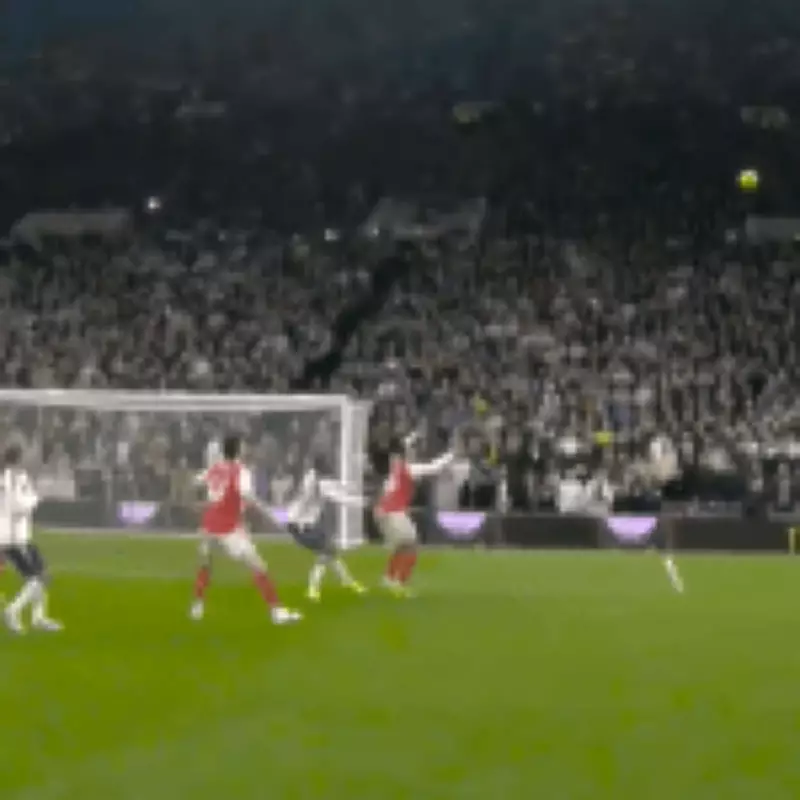
Referee Breaks Silence on Decision to Rule Out Spurs Goal Against Arsenal
Referee Peter Bankes has publicly defended his controversial call to disallow what Randal Kolo Muani believed was an equalising goal in last weekend's intense North London derby. The match saw Arsenal secure a commanding 4-1 victory, revitalising their title aspirations, but the outcome might have shifted dramatically if the French international's strike had been permitted to stand.
Bankes' Justification on Mic'd Up Show
During an appearance on the Mic'd Up show, Bankes detailed his reasoning to host Michael Owen. 'I'm in the position I'd expect to be in for a cross coming in from the right-hand side,' he stated. 'I see two hands from the Tottenham player into the back of the Arsenal player. That is going to be my main focus, once you see two hands in live play it looks like a push, a clear push.'
Bankes explained that he delayed blowing the whistle to allow play to continue, making his final decision only after the ball entered the net. This approach enabled the Video Assistant Referee (VAR) to review the incident for any potential errors. 'On the field it looked a very, very clear offence,' he asserted, maintaining his stance even after viewing replays from alternative angles. 'Different speeds can make things look different. In slow motion things look different to how they can live. I get one look at it and was more than happy that two hands on the back had enough impact and was an offence.'
Mixed Reactions and Criticism
Despite Bankes' confidence, his explanation has failed to appease many Tottenham supporters and football analysts. The disallowed goal has drawn comparisons to a similar incident earlier this season, where Hugo Ekitike's header for Spurs was allowed despite apparent pushing on Cristian Romero, highlighting perceived inconsistencies in officiating.
Former England manager Sam Allardyce was particularly vocal in his criticism, labelling the decision as a 'massive error' on the Tippy Tappy Football podcast. 'Spurs may not have gone on to get any points from the game, but if they were to have made it 2-2, who knows whether Arsenal's nerves would have frayed again?' he questioned. Allardyce also argued that Arsenal defender Gabriel should have been booked for simulation, adding, 'How many times do we see a ball come into the box from corners where there's pushing and shoving – almost grievous bodily harm – and the referee allows a goal to stand?'
He concluded with strong condemnation, stating, 'It was an outrageously bad decision and really, really poor from the referee – and even poorer from VAR to allow the decision to stand.' This sentiment echoes broader frustrations within the football community regarding the application of VAR and refereeing standards in high-stakes matches.
Broader Implications for the Season
The controversy comes at a critical juncture in the Premier League season, with Tottenham's relegation fears intensifying and Arsenal's title hopes hanging in the balance. Discussions on social media and sports platforms have amplified, with fans debating the impact of such decisions on league standings and team morale.
As the football world continues to dissect the incident, the spotlight remains on officiating consistency and the role of technology in the sport. Bankes' remarks underscore the challenges referees face in making split-second judgments, but they also fuel ongoing debates about fairness and transparency in professional football.