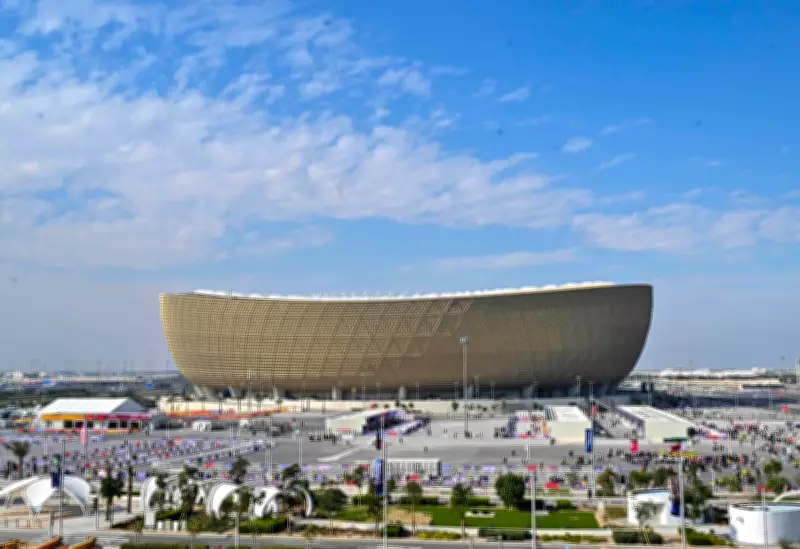
The iconic Lusail Stadium in Qatar, which famously hosted the thrilling 2022 FIFA World Cup final between Argentina and France, stands as a testament to the nation's ambitious sporting infrastructure. This legacy is now being leveraged in a bold push for an even greater prize: hosting the Olympic Games.
Strategic Media Rights Acquisition Strengthens Qatar's Position
Qatar's campaign to host the 2036 Olympic Games has received a significant and strategic boost. The state-owned broadcaster, beIN Sports, has successfully concluded a major media rights deal for the 2028 Summer Olympics in Los Angeles. It is understood that beIN has secured the exclusive broadcasting rights for the LA 2028 Games across the entire Middle East and North Africa (MENA) region.
The contract was formally signed in recent days at the Winter Games in Milan Cortina by International Olympic Committee President, Kirsty Coventry, and beIN's influential Chairman, Nasser al-Khelaifi. This agreement deepens beIN's longstanding relationship with the Olympic movement, having first acquired rights in 2015 and recently securing a last-minute deal to broadcast the Milan Cortina Winter Games on its streaming platform, TOD.
Leveraging Influence and Existing Infrastructure
While Nasser al-Khelaifi is not a formal member of the Qatar Olympic Committee driving the 2036 bid, and beIN has no official promotional role, his position is highly influential. As President of Paris Saint‑Germain and a board member of the sovereign wealth fund Qatar Investment Authority, al-Khelaifi's strong relations with IOC President Coventry and other committee members could prove invaluable in the behind-the-scenes diplomacy of the bidding process.
Qatar officially entered into "continuous dialogue" with the IOC last year regarding a 2036 bid. The nation's pitch is expected to heavily emphasise sustainability, both financial and environmental. A key selling point is that an estimated 95% of the required venues are already constructed, forming a direct legacy from hosting the 2022 FIFA World Cup. This includes not only stadiums like Lusail but also supporting infrastructure such as Doha's new metro system and the globally connected Hamad International Airport.
A Heavyweight Contest: Qatar vs. India's Ahmedabad
The race for the 2036 Olympics is shaping up to be a major geopolitical contest. Qatar's primary competitor is expected to be Ahmedabad, India, the home city of Prime Minister Narendra Modi. While Qatar aims to become the first Arab nation to host the Olympics, India's bid carries formidable political weight, backed by the ruling BJP party.
Furthermore, India's bid benefits from the insider advocacy of Nita Ambani, an IOC member since 2017, who has been actively lobbying for an Indian Games since the Paris 2024 cycle. Reports suggest the projected cost for an Ahmedabad Olympics could reach a record $7.5 billion, significantly higher than LA 2028's $5 billion budget, potentially making Qatar's ready-built, cost-effective model more attractive to the IOC.
Challenges and Controversies on the Path to 2036
A Qatari Olympics would not be without significant controversy. The nation's stance on LGBTQ+ rights and its limited history in promoting female sport present substantial hurdles. Qatar did not send any women athletes to the Olympics until London 2012, and its female representation remains minimal. The bid will need to convincingly address these human rights and inclusivity concerns to gain broad international support.
Despite these challenges, Qatar's combination of existing world-class venues, proven mega-event hosting capability from the World Cup, and now strengthened media and diplomatic ties through deals like beIN's LA 2028 rights, positions it as a serious and well-resourced contender in the evolving battle to host the 2036 Summer Games.