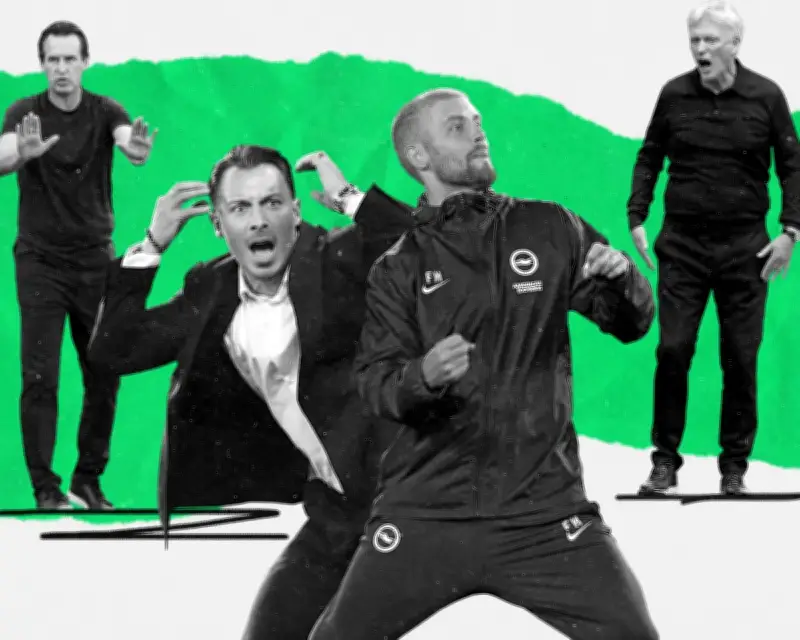
The Premier League currently has only four managers aged 50 or over, the lowest number in the past 20 years, according to data from the league. Among them, David Moyes at 63 is the oldest, followed by Unai Emery at 54, Oliver Glasner at 52, and Régis Le Bris at 50. Most top-flight managers are in their 40s, with the youngest being Matthias Jaissle at 38 and Fabian Hürzeler at 33.
This shift marks a significant change from the era when managers were typically older, ashen-faced figures with grey hair and years of playing experience. Today, many are trim, sprightly individuals in T-shirts, convinced that analytics can explain the world.
From players to career coaches
The trend toward younger managers stems from two interconnected developments. At the turn of the century, it was unusual for a manager not to have played the game at a reasonable level, meaning they started their managerial careers in their mid-thirties. That route remains common: Andoni Iraola, Michael Carrick, Gary O'Neil, and Álvaro Arbeloa all followed it.
However, there is now a recognition, to use Arrigo Sacchi's phrase, that a jockey does not need first to have been a horse. Coaching is regarded as a job in its own right, requiring a different skillset to playing. Hürzeler came through the youth systems at Bayern Munich, Hoffenheim, and 1860 Munich but, aged 22, partly due to an ankle injury, decided to focus on coaching. Jaissle was a member of the Hoffenheim side that won promotion to the Bundesliga before knee and achilles tendon injuries ended his playing career at 26. This early switch into coaching is particularly common in Germany, with Thomas Tuchel and Julian Nagelsmann having similar stories.
The exhausting reality of modern management
The decline in older managers also reflects the exhausting nature of the job. At Ipswich, Kieran McKenna would have his coaches present their plans to him at 6am, altering anything he felt wasn't right. The plan would be sent to staff to set up pitches and drills, and McKenna would check everything was laid out properly, down to where players should stand and where water bottles would be placed. During sessions, he walked between units, offering advice and amendments. After sessions, coaches watched them back and reported on improvements before planning the next day's drills.
During 11 v 11 practice games, McKenna was the only one who coached. Over his five years at Ipswich, no drill was ever repeated in exactly the same form, to avoid staleness. After a third promotion in five seasons, he felt exhausted and needed a break rather than taking on an uneven fight in the Premier League.
Pressure and the drift to international football
Modern managers run a team of coaches and analysts that probably outnumbers the players with whom they have direct contact. They cannot simply ignore the board until they need money for a signing but must manage up to whatever structure of sporting directors exists above them. Often they have little autonomy, although the success of Mikel Arteta, who has a more traditional role and seems to micromanage everything at Arsenal, may change that. They are liable to be sacked after a month of poor form, with enormous pressure and a minute margin for error.
This may explain why so many top managers are drifting into international football. Management is commonly said to be a drug, but perhaps that fix is more palatable when delivered in five doses spread over a season, plus a major tournament every other year, rather than in the relentless drudgery of the club game. Carlo Ancelotti took his break from the club game at 66, Jürgen Klopp at 56, and Tuchel at 50. None have shown great desire to return to the remorselessness of the league. The Premier League may be the greatest stage in management, with the best salaries, but it is an exhausting and capricious world that requires extraordinary reserves of energy, physical and mental. It is no theatre for old men.