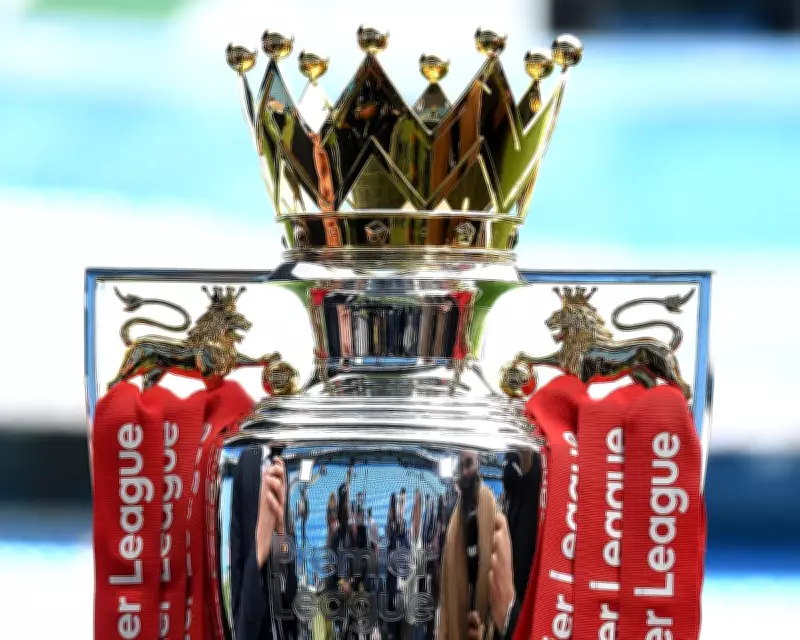
The Premier League's operational expenditures and legal fees have surged dramatically over the last five years, creating a tense backdrop for clubs already grappling with financial strains. This increase comes as clubs voice mounting dissatisfaction with the costs associated with the Independent Football Regulator (IFR), coupled with ambiguity regarding individual financial contributions.
Escalating Budget and Club Concerns
Premier League and English Football League (EFL) clubs have repeatedly sought updates on the IFR's operating budget, which is believed to have risen substantially from the initial annual projection of £10 million under the previous government. Their frustrations have been compounded by limited responses from the regulator. Concerns intensified recently with the IFR's appointment of the US-based Boston Consulting Group, a move communicated to clubs last week. One club executive highlighted that Boston is among the priciest management consultancies in the market, fueling fears of spiraling expenses.
Financial Burden and Levy Uncertainty
Currently funded by the government through the Department for Culture, Media and Sport, the IFR's central support is set to expire at the start of the 2027-28 season. At that point, clubs will be required to cover the costs via a levy. When the football governance bill was introduced two years ago by the Conservative government, the budget was estimated at £100 million over a decade, but clubs have not received any updates since. The IFR has confirmed that its operating costs will be met by a levy imposed on the 116 clubs across the top five men's divisions, from the Premier League to the National League. However, the exact structure of this levy remains undisclosed, leaving clubs in the dark about their financial obligations.
There is a general acknowledgment that Premier League clubs will shoulder the majority of the financial burden, but it is unclear whether all 20 clubs will face identical levies or if those participating in competitions like the Champions League will be required to pay more. The IFR plans to conduct a public consultation this year, engaging with clubs and stakeholders to determine the levy methodology, which will consider each club's financial circumstances.
Historical Opposition and Rising League Costs
Premier League clubs originally opposed the establishment of the IFR, which was first recommended by Dame Tracey Crouch's fan-led review in 2021. The ongoing uncertainty over costs represents the latest source of irritation for these clubs. This discontent is set against a backdrop of increasing administrative expenses within the Premier League itself. Over the past five years, the league's operational costs, shared equally among clubs, have risen by 30%. Legal costs, in particular, have skyrocketed due to prosecutions of clubs like Manchester City, Everton, Nottingham Forest, and Leicester for alleged rule breaches. These legal expenses increased by 325% from £11.3 million in 2022-23 to £48.1 million in 2023-24, before slightly decreasing to £44.6 million last season.
Regulator's Response and Future Steps
David Kogan, the IFR chair, and Richard Monks, the chief executive, faced intense questioning from clubs at recent meetings, including the Premier League's shareholders' gathering and the EFL's AGM, without providing definitive answers. The IFR board is currently developing and reviewing the budget, with a spokesperson stating: "The IFR exists to improve the financial sustainability of clubs, the resilience of the leagues and to protect the game's rich heritage for fans. We are in the process of setting our budget and will be proportionate and cost effective in our approach and will communicate this with clubs at the earliest opportunity."
As Premier League clubs posted combined operating losses of £1.65 billion in the 2024-25 season, the additional financial commitment to the IFR, though expected to be a small fraction of their revenues, adds to their challenges. The issue of rising costs has become a significant point of contention, especially for clubs dealing with profitability and sustainability rule breaches, highlighting broader tensions in football governance and finance.