
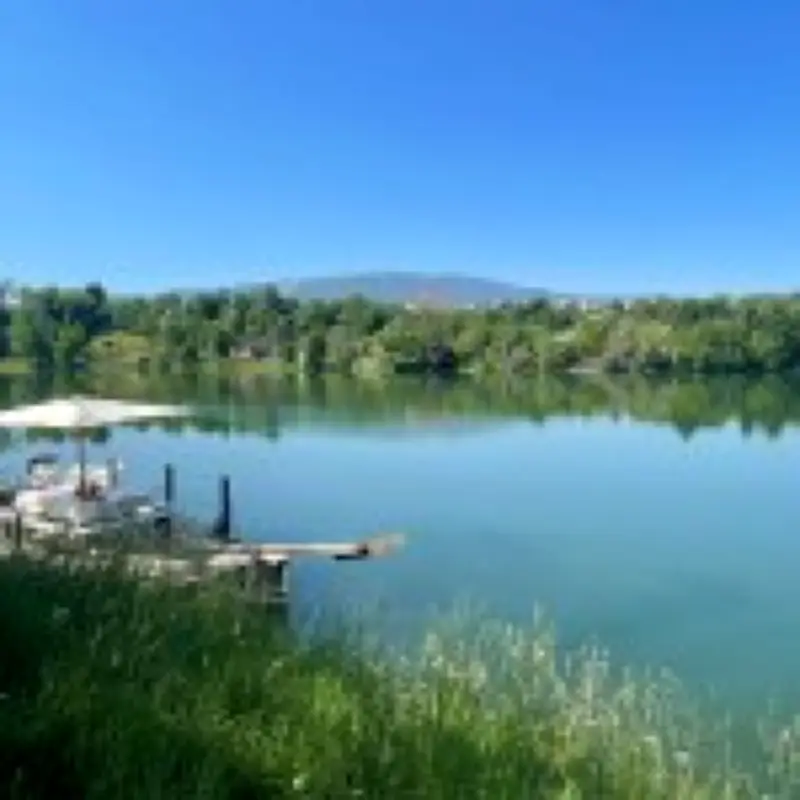
Drifting down the Drava River, wine in one hand and a slice of freshly made Slovenian cheesecake in the other, I can’t remember the last time I felt this relaxed. Birdsong provides the soundtrack as we glide past wild, tree-lined banks that give way to pastel-coloured restaurants hugging the cobbled waterfront. ‘If you fancy something a bit more upbeat,’ our raft guide tells us, ‘we also host techno raves on these rafts.’ Thankfully, that’s not on today’s agenda. Travelling with a friend, and with four boys aged five and under between us back home, we’re hoping to find somewhere we can relax.
Tucked between Italy, Austria, Hungary and Croatia, Slovenia is one of Europe’s most overlooked destinations. Just a two-hour flight from the UK, it’s a country of snow-capped Alpine peaks, emerald rivers and vineyard-covered hills. Its compact size means you can cross from mountains to coastline in little more than an hour. It’s also the birthplace of Melania Trump and, rather charmingly, the only country in the world with the word ‘love’ hidden in its name (sLOVEnia). And, while most visitors head straight for Ljubljana or Lake Bled, an hour east of the capital is Maribor. Less polished, perhaps, but richer in character. It feels like a city people actually live in, rather than one performing for tourists. Compact enough to explore on foot, it’s known locally as ‘the fifteen-minute city’, with everything falling within easy reach.
Europe’s New Wine Capital
Recently crowned Europe’s Wine Capital for 2026, Maribor sits at the heart of the Štajerska region, surrounded by rolling vineyards, medieval towns and thermal spas. The landscape has that sun-warmed, unhurried quality you pay a premium for elsewhere in Europe. Think Tuscany, without the crowds, or price tag. Comfortable hotels start from around €90 per night. In Maribor, wine isn’t simply part of the culture. It is woven into the city’s identity, and never far away…
While other wine regions boast prestigious labels, Maribor’s wine story begins with a vine that bore fruit as Shakespeare wrote his plays. The Old Vine House is home to the world’s oldest producing vine: a 450-year-old Žametovka that has survived wars, fires and political upheaval, yet still bears fruit each year. A short walk away, hidden deep beneath the city streets, is the Vinag 1847 Wine Cellar. Stretching more than 2km beneath the old town, its labyrinth of tunnels is lined with giant oak barrels. Our guide tells of a time when restaurants above secretly ran pipes directly into the barrels below, siphoning off wine so gradually it could go unnoticed for years. Today, the wine still flows. Cellar tours, tastings and vineyard visits are available at every turn, with a glass often costing little more than €3, it’s hard not to relax into the rhythm of it all.
Surrounding Countryside
The surrounding countryside is as much a draw as the city itself. A short drive from Maribor lies Ptuj, Slovenia’s oldest town, where we hurtle up winding roads towards a hilltop castle in a golf buggy while cyclists steadily pedal their way to the summit alongside us. I feel exhausted just looking at them. It’s a scene that sums up life here. People are active. Cyclists are everywhere, hiking trails criss-cross the surrounding hills and locals swim in the Drava throughout the summer. People don’t just live alongside nature. They embrace it at every turn. The coffee is also good. Really good. Even better when it’s served with a view stretching across a sea of terracotta rooftops, the river winding through the city below and mountains rising on the horizon.
Beyond the city, mornings are spent exploring the imposing castles of Ormož and Borl, whose history stretches back centuries, or climbing the 54 metres to the top of Ptuj’s bell tower. Standing directly beneath the bell as it chimes is a surprisingly exhilarating experience. All that climbing works up an appetite and leisurely lunches are another thing Slovenians do very well. At Glavinic, a father-and-son-run restaurant set on an organic farm surrounded by vineyards, beautifully prepared produce is served in a setting that manages to feel both glamorous and completely relaxed. It’s the sort of place where a quick lunch effortlessly turns into a flowing afternoon in the sunshine. Lunch arrives in the form of a vast slow-roasted pork knuckle, the meat so tender it falls apart at the touch of a fork, alongside golden roast potatoes and vegetables fresh from the surrounding countryside.
Slovenian Cuisine
Slovenian cuisine reflects the country’s position at the crossroads of Central Europe, with influences from Austria, Italy, Hungary and the Balkans. Menus are filled with cured meats, handmade dumplings, hearty stews, local cheeses and freshwater fish, all designed to pair with the region’s endless wines. For those reluctant to leave Glavinic, there are rooms and self-contained apartments overlooking a natural swimming pool, making it an ideal base for couples and families keen to explore the region at a slower pace.
It’s not just lunch that’s a family affair. Dinner takes us to the Familija Estate, a winery run by three generations of the same family. We begin with generous platters of organic cheeses and home-cured salamis produced on the farm itself, alongside tomatoes still warm from the sunshine and wines made just metres from our table. Throughout our stay, this is something we encounter time and again: families working side by side, taking enormous pride in what they produce and eager to share it with visitors.
Family-Friendly Activities
Don’t be fooled, though: Maribor isn’t just a destination for hungry and thirsty grown-ups. Families are just as well catered for. A converted monastery is home to one of Europe’s largest puppet theatre venues, where elaborate productions unfold beneath centuries-old vaulted ceilings. Along the waterfront, regular pottery workshops invite both adults and children to try their hand at the wheel under the guidance of skilled local artists. For a deeper understanding of the city, the National Liberation Museum offers an engaging look at Maribor’s past, covering everything from wartime history to the city’s skateboarding culture. Unlike many museums, it actively encourages younger visitors to get involved. A nice touch. One room is dedicated to hands-on exploration, allowing children to touch and interact with objects that would normally sit behind glass.
As our raft glides back towards the city, I think about everything we’ve packed into three days. I’ve drunk wine beneath a 450-year-old vine, climbed medieval bell towers and castles, floated down a river on a wooden raft and eaten enough homemade Slovenian food to seriously test my waistband. In all honesty, you could have dropped two mums briefly escaping the chaos of home almost anywhere and we’d have found a way to enjoy ourselves. But Maribor really surprised us, delivering on every front. It isn’t trying to compete with Europe’s better-known city breaks. What it offers instead is something increasingly difficult to find: excellent food and wine, rich history, beautiful scenery and enough space to enjoy it all at your own pace, all without breaking the bank.
Getting to Maribor
EasyJet and British Airways fly direct from London to Ljubljana from around £90 return. The journey takes 2 hours 15 minutes. Alternatively, you could fly from London to Zagreb and travel on from there. Prices start from £40 return. From Ljubljana Airport, it takes around 1 hour 30 minutes to drive to Maribor. Shared shuttle transfers start from €15-€25. From Zagreb Airport, allow around 1 hour 15 minutes. Shared shuttles start from around €30. Trains from Ljubljana to Maribor take around 2 hours with fares from around €13.
Slovenia’s second city? Technically. Second best? Not even close.