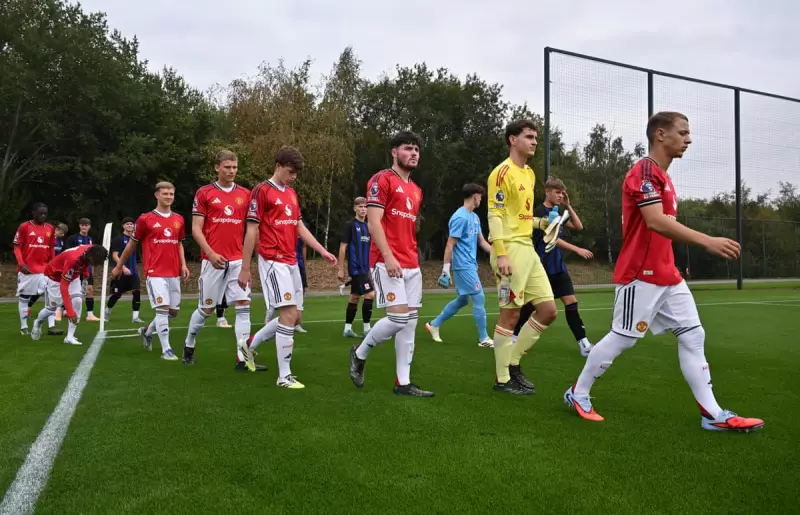
Manchester United's renowned youth academy, long celebrated as one of football's most productive talent factories, is facing unprecedented turmoil under Sir Jim Ratcliffe's new leadership regime.
Ratcliffe's Damning Assessment
Sir Jim Ratcliffe has delivered a stark verdict on Manchester United's academy, declaring that standards have "really slipped" in recent years. The billionaire's public criticism has sent shockwaves through Carrington, where staff dedicated to developing the next generation of stars are grappling with the implications of his assessment.
The club's proud heritage of youth development, which includes producing global superstars and maintaining an 88-year streak of including homegrown players in every matchday squad, now faces its greatest challenge in decades.
Staff Exodus and Infrastructure Concerns
A mass exodus of experienced academy personnel has created significant instability within the department. The departure of long-time academy leader Nick Cox to Everton in September triggered a wave of exits that has left the youth setup in flux.
The casualty list makes for sobering reading: under-18s coach Adam Lawrence joined Newcastle, David Horseman left for Arsenal just three months after his appointment, Paul McShane moved to Huddersfield, David Hughes became Newport head coach, and Simon Wiles now oversees Liverpool's under-18s.
Compounding the staffing crisis are infrastructure issues that have left academy personnel working from prefabricated structures situated in the players' car park, despite £50 million being invested in first-team facility upgrades. Ratcliffe has since clarified that his "slipping standards" comment referred specifically to these physical facilities rather than coaching quality.
Cultural Shifts and Financial Constraints
The atmosphere within the academy has been further strained by cost-cutting measures, including the removal of free staff lunches and requirements for personnel to wash their own training kits. More significantly, United are struggling to compete financially for both staff and young talent against Premier League rivals.
In one telling example, a physiotherapist turned down a role because they could earn more in an equivalent position at another club. This financial disadvantage extends to recruiting the most promising young players, where United find themselves outgunned by competitors with deeper pockets.
Wayne Rooney's recent comments about the club's cultural decline, though unwelcome among senior figures, were regarded by some as shrewd analysis. "I see staff losing jobs, people walking out of jobs," Rooney observed, highlighting concerns shared by many connected to the academy.
Bright Spots Amid the Gloom
Despite the challenges, there are reasons for optimism within the youth setup. The emergence of Kobbie Mainoo and the anticipated first-team debut of highly-rated 18-year-old Shea Lacey provide hope for the future.
Lacey, viewed as possessing a similar skill set to Phil Foden, has already trained with England's senior squad and earned a place on the bench against Everton. Meanwhile, 15-year-old JJ Gabriel, described as "highly sought-after," has been training with the first team.
Goalkeeper Radek Vitek, currently on loan at Bristol City, is regarded as having potential to become United's future number one, though there was frustration that he didn't feature during pre-season.
The appointment of Steve Torpey as new academy director, an ally of football director Jason Wilcox from their Manchester City days, signals a clear strategic direction. However, replicating City's successful blueprint must be balanced against preserving United's unique identity and heritage.
As Ratcliffe himself noted, "You need the academy to be producing talent all the time. It helps you financially." For Manchester United's troubled academy, that financial imperative now comes with added urgency and scrutiny.