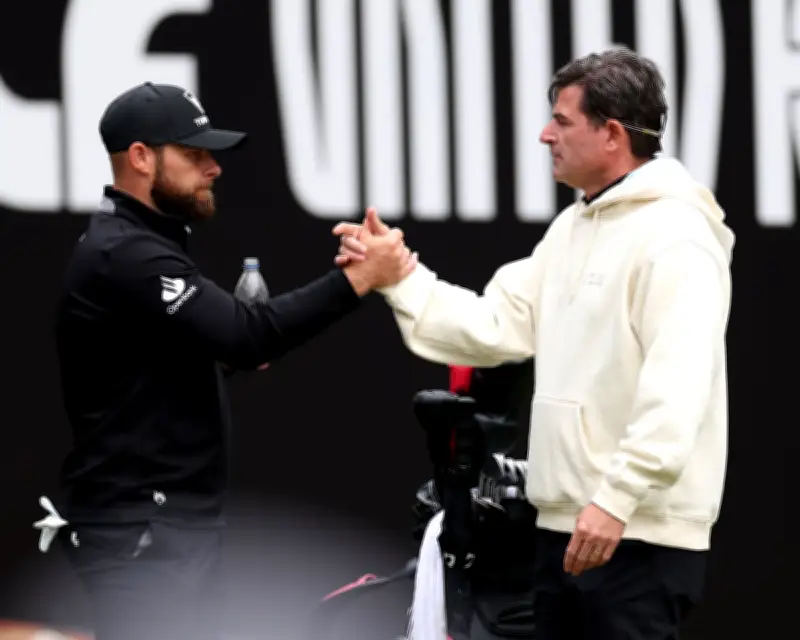
LIV Golf has secured a "lead investor" to safeguard its existence until 2030, although the agreement is unlikely to prevent a batch of high-profile players departing by the end of this year. Scott O'Neil, LIV's chief executive, announced basic plans for the "next generation" of the tour on Wednesday while refusing to disclose the new funders of the business. After the withdrawal of backing from Saudi Arabia's Public Investment Fund, O'Neil has been engaged in a race against time to save his business.
Lead investor signs term sheet
"We're very fortunate that a lead investor has signed a term sheet approved by our board, which will carry and fund LIV going forward," O'Neil said. "It's very good news for us. At this point we are keeping the details of the deal, the investor, and much of what you might want to know in this second phase out of the media." It is expected that this scenario could crystallise by the end of August, including with precise detail of who will play on LIV in 2027.
Asked whether conclusion of the deal will protect the 2027 season, O'Neil said: "And 28 and 29 and 30." He insisted the investor is one "of weight". This commitment extends the tour's financial runway well beyond the current uncertainty, but the structure of the new deal signals a significant shift in how LIV will operate.
New format and financial restructuring
LIV's current format involves 14 events per year and prize funds of $30m per tournament, split between individual and team prizes. Players have contracts with LIV linked to those terms. The business has lost huge sums, meaning an estimated $5bn of Saudi money was essential. From 2027, the plan is understood to involve a core of 10 events worth $10m each. Players will be given the majority of equity in the business, a move designed to align incentives and retain talent.
This restructuring represents a dramatic reduction in prize money per event, from $30m to $10m, which could affect player satisfaction. However, the equity stake offers a long-term ownership opportunity that was absent under the previous Saudi-backed model. The unnamed investor's identity remains a mystery, but O'Neil's confidence suggests a substantial financial backer.
Star players' futures in question
While generally LIV golfers have not spoken in public about potential pathways back towards the PGA Tour – partly because of contractual commitments – there is a widespread belief the change in circumstances overseen through necessity by O'Neil will trigger huge change. LIV coaxed golfers, often for hundreds of millions of dollars, from the PGA Tour from the point of its formation in 2021. The new investment structure may not be enough to keep the biggest names.
Asked directly on the futures of Bryson DeChambeau and Jon Rahm, LIV's two star turns, O'Neil said: "I have all the time in the world for Jon Rahm and Bryson DeChambeau. I think I'd be remiss in saying they're not only two of the biggest, best golfers on the planet, but I think they're some of the biggest stars in sports, let alone golf. [I] would certainly love them to come along for the ride and journey because they carry maybe more weight than anybody in the game and I have a lot of time for that."
"I think we have enough support from enough players, and we have such an interesting format and global format, I think we'll do quite well in getting the right stars for this game." Despite this optimism, DeChambeau's scenario is complicated by perceived mutual indifference between him and the PGA Tour, plus the Californian's floating of switching towards YouTube golf. Cameron Smith, Tyrrell Hatton and Dustin Johnson are other key names whose choice of upcoming playing domain will prove intriguing.
Implications for the golf landscape
The new investor could reshape the competitive balance in professional golf. If top players leave, LIV's appeal may diminish, but the equity model could attract new talent seeking ownership. The tour's global format and reduced schedule might appeal to players weary of the PGA Tour's demands. However, the uncertainty surrounding star players remains a critical issue.
As the August deadline approaches, all eyes will be on the official announcement of the investor and the 2027 player roster. The decision of DeChambeau, Rahm, and others will determine whether LIV can sustain its momentum or become a secondary tour. For now, O'Neil's leadership and the new financial backing provide a lifeline, but the future of LIV Golf hangs in the balance.