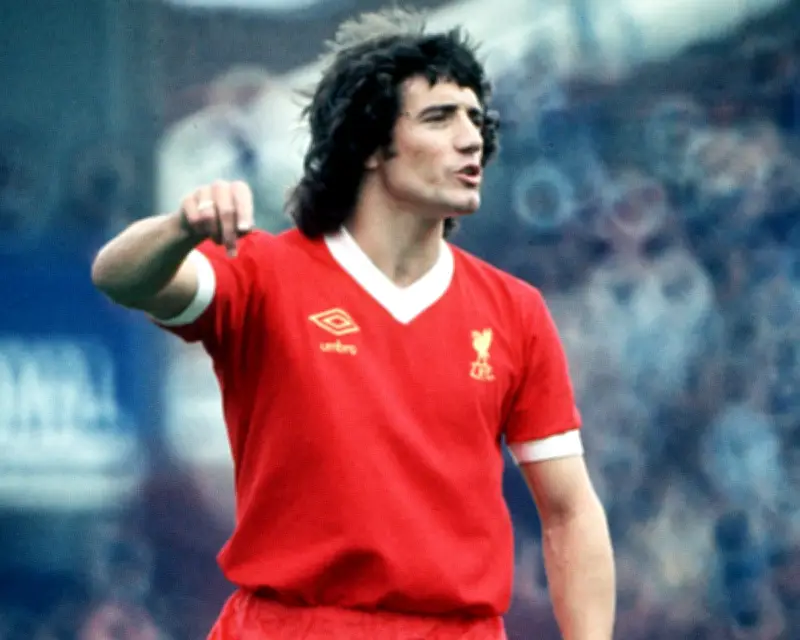
Kevin Keegan, the only British player to win the Ballon d'Or twice, has died aged 75. He was the star of Liverpool's first European Cup-winning team, a messianic figure at Newcastle United as a player and coach, and captained and managed the England men's national team. Yet, as Keegan ruefully reflected, he will principally be remembered by many for an emotional outburst that precipitated Newcastle's historic failure in a Premier League title race.
'I'd love it' rant and the modern game
Keegan's 'I'd love it' rant in April 1996, directed at Alex Ferguson, became a meme before the modern meaning of the word and social media existed. It is frequently played on Sky Sports and tops polls as the most memorable moment in Premier League history. Keegan wrote in his autobiography: 'Strangers shout 'love it' to me from car windows... When I go to charity events I am often asked to sign photographs showing me in that classic pose.' The outburst foreshadowed an era where digital clips and personality narratives dominate football coverage.
However, reducing Keegan's life to emotional explosions—such as his punch-up with Leeds United's Billy Bremner in the 1974 Charity Shield—would obscure his extraordinary achievements. He was arguably the most charismatic modern English footballer, more eloquent than David Beckham and Paul Gascoigne, and more passionate than Bobby Moore. He had a rare gift for inspiring players.
Early life and rise to stardom
Keegan was born in Armthorpe, Doncaster, to Doris and Joe, a war veteran Durham miner. His upbringing was humble: 'Our bath was an old zinc tub and the toilet was at the foot of the garden,' he recalled. He credited Sister Mary Oliver, the nun who ran his Catholic primary school football team, as a mentor as important as Bill Shankly. Doncaster Rovers rejected him, and he started work at Peglers Brass Works at 16. A Scunthorpe scout spotted him playing for a pub team, leading to a trial at the Third Division club.
Despite impressing at Scunthorpe, it was a shock when Shankly took him to Liverpool. Shankly told him: 'You're not just a great player – you're one of the great players!' Keegan scored on his Liverpool debut and was never dropped. He inherited Shankly's motivational skills and became a pioneering player, negotiating release clauses at Liverpool and Hamburg, allowing him to control his moves.
Liverpool and European glory
At Liverpool, Keegan won three league titles, two Uefa Cups, an FA Cup, and the European Cup in 1977. He then left for Hamburg, quadrupling his salary. Hamburg was not an initial success; jealous teammates held meetings to get him kicked out. At Christmas 1977, frustrated with physical treatment, Keegan punched Lübeck defender Erhard Press, knocking him out and receiving an eight-week ban. Yet a year later, he won his first Ballon d'Or and led Hamburg to their first Bundesliga title since 1960. He was nicknamed 'Mighty Mouse' for his strength.
Keegan's finale at Hamburg was a European Cup final defeat to Nottingham Forest. He was just 29 years old. He then joined Southampton, propelling them to a top-six finish and European qualification. In 1982, he joined Newcastle United in the Second Division, a move that cost him his England career. Manager Bobby Robson did not pick second-tier players, and Keegan learned from the press he had been 'dumped'. He felt 'betrayed, hurt and humiliated'.
Newcastle revival and management
Newcastle were promoted as champions in 1983-84, and Keegan retired from playing at 33. He returned in 1992 to save Newcastle from relegation to the third tier. He built a dynasty, winning promotion to the Premier League as champions and finishing third and sixth. In 1995-96, Newcastle established a 12-point lead by January, but a crucial defeat to Manchester United and Ferguson's psychological barbs saw their form disintegrate. Keegan's 'I'd love it' rant followed, and United won the title by four points.
Keegan quit Newcastle soon after, outraged by an ultimatum from a city banker. He later managed Fulham, leading them from the third tier to promotion. He became England manager in 1999 but resigned after a humiliating Euro 2000 group-stage exit and a defeat to Germany at Wembley. He said the job was beyond his abilities. He then managed Manchester City, getting them promoted to the Premier League as champions with 99 points. His final comeback at Newcastle under Mike Ashley lasted just eight months, ending in a bitter constructive dismissal claim.
Keegan's cancer was revealed in May 2026 during speaking engagements. He died at 75, leaving a legacy as a pioneer, superstar, and the most charismatic modern English footballer. Football, as he observed, had given him everything except a happy ending.