The tide of goodwill surrounding England's national football team should be overwhelming as they prepare for the World Cup in North America. With eight consecutive victories, no goals conceded, and an impressive 22 goals from 11 different scorers, Gareth Southgate's squad represents one of the most exciting English generations in decades.
The Bellingham Paradox: Excellence Versus Attitude
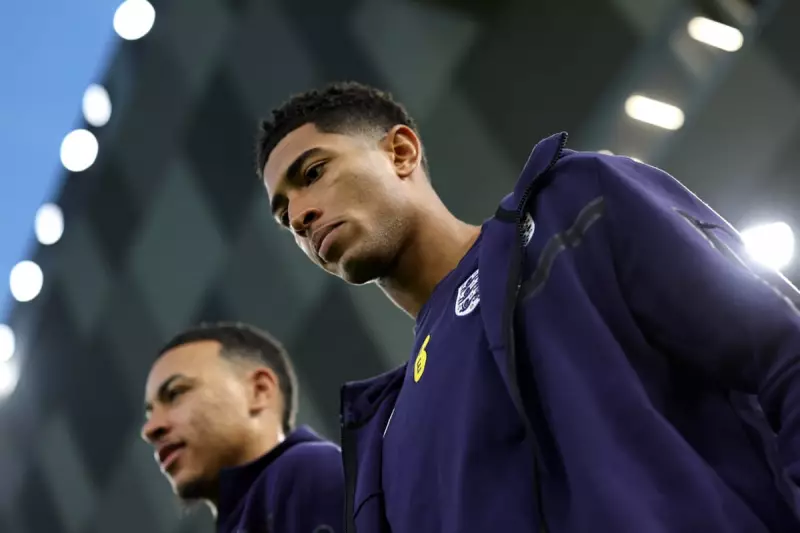
Yet somehow, amidst this footballing renaissance, Jude Bellingham finds himself under intense scrutiny. The Real Madrid midfielder, who scored one of the most memorable goals in England history at Euro 2024 and has dominated La Liga clásicos, faces criticism that increasingly focuses not on his undeniable talent but on perceived attitude problems.
Ian Wright recently articulated what many have suspected, suggesting on The Overlap that certain media figures hate that they can't get to him. The Arsenal legend pointed toward a timeworn double standard that seems to apply particularly to Black footballers, where personality is celebrated until it becomes too assertive.
Understanding Bellingham's Otherness
Bellingham's journey has always defied convention. At just 17, he turned down Manchester United despite a personal pitch from Sir Alex Ferguson, Bryan Robson, Eric Cantona, and then-manager Ole Gunnar Solskjær. He knew what he wanted, Solskjær would later recall, describing him as the most mature 17-year-old he'd ever met.
This calculated career path took him to Borussia Dortmund for guaranteed minutes and later to Real Madrid for silverware. His success has been spectacular: winning goals in three of five La Liga clásicos and crucial equalisers like his recent strike against Elche. Yet his absence from the Premier League seems to have created a disconnect with parts of the English football establishment.
Bellingham has never played in England's top flight, making him somewhat unfamiliar territory for media that thrives on tribal club discourse. His media approach borders on hostility, understandable given his family's harassment during the last European Championship.
Connecting the Dots of Unconscious Bias
The criticism often takes subtle forms: whispers about him being a bad teammate without specific examples or named sources. As Wright highlighted, the language used and treatment received echoes patterns seen with other Black players before him.
This doesn't mean Bellingham should be immune from legitimate football criticism. If he plays poorly, he deserves assessment like any other player. But when commentary shifts from performance to intangible issues of character and behaviour, it warrants examination of potential unconscious bias.
Consider this: if folk hero Dan Burn scored a World Cup winning goal and shouted who else? down the camera, would the reaction be the same? The differential treatment of Black public figures often disguises itself as criticism of specific actions rather than the person themselves.
A Team Deserving Better
The real tragedy is that this England squad represents something special. With Bellingham, Morgan Rogers, Cole Palmer, and Phil Foden competing for positions, the depth of talent is extraordinary. The team has built an established system and shows healthy competition throughout the squad.
Yet the media narrative seems predetermined, establishing potential scapegoats should England falter. This pattern has repeated for generations, from John Barnes to Raheem Sterling, Marcus Rashford to Jess Carter. Now Bellingham finds himself in the crosshairs.
As the team heads to North America on this wave of success, the focus should remain on their footballing achievements rather than manufactured controversies. The question remains whether the media environment will allow that to happen, or if unconscious biases will continue to shape the narrative around one of England's brightest talents.