
Mexican Officials Address Safety Concerns Ahead of FIFA World Cup Hosting Duties
Senior ministers in Mexico have moved to reassure international football fans about security ahead of the upcoming FIFA World Cup, despite recent cartel-related violence in one of the tournament's host regions. The statements come following a wave of unrest in Jalisco province triggered by the killing of notorious drug lord Nemesio Oseguera Cervantes, known as "El Mencho," in February.
Tourism Minister Presents Statistical Safety Argument
Michelle Fridman, Secretary of Tourism for Jalisco, has strongly contested international perceptions that the region poses safety risks for World Cup visitors. "When people ask me if Jalisco is safe, I can tell you Jalisco is as safe as any other destination," Fridman told City AM. "Does that mean that I can sign a document that nothing's going to ever happen? No, I don't think I can do that. But I don't think London, Paris or New York can do that either."
The minister presented compelling statistical evidence to support her claims: "What I can tell you is that if we go by the numbers, the safety numbers of Jalisco are even better than destinations like New York – the homicide rate in Jalisco is three times lower than the homicide rate in New York. So I just think we have a pretty unfair coverage of what has been going on in Mexico."
World Cup Preparations and Venue Details
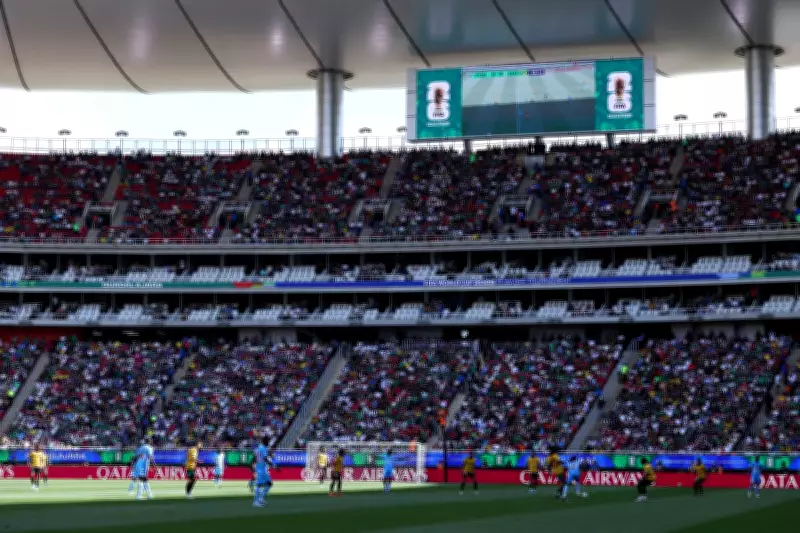
The 50,000-capacity Estadio Guadalajara in Jalisco will serve as a crucial venue during the 2026 FIFA World Cup, which Mexico is co-hosting alongside the United States and Canada. The stadium is scheduled to host:
- Mexico's opening match against South Korea
- Group stage games featuring Czechia, Colombia, and Uruguay
- Additional matches with the Democratic Republic of the Congo and Spain
Fridman emphasized that recent qualifying tournaments in Guadalajara proceeded without incident, demonstrating the region's capability to manage major sporting events. She anticipates a significant tourism boost from the World Cup influx, building on Jalisco's existing popularity with international visitors.
Addressing Political Complications and Welcoming Policy
When questioned about potential complications involving teams that might face restrictions entering the United States, particularly regarding Iran's scheduled matches in Los Angeles and Seattle, Fridman maintained Mexico's open-door policy while deferring to FIFA's authority. "I don't know technically how that works when it's about the World Cup and FIFA," she acknowledged. "I think that's something only FIFA can say."
However, she reinforced Mexico's welcoming stance: "What I can tell you is Mexico will always be open to receive anyone – we've shown that policy of being a welcoming country. I can tell you about tourists, maybe not about games; we're open to receive everyone."
Countering North American Safety Perceptions
With concerns circulating about U.S. visa policies and internal deportation measures potentially affecting fan attendance, some commentators have suggested Canada might be the only truly safe co-host for the upcoming tournament. Fridman directly challenged this narrative while acknowledging Mexico's complex security landscape.
"I'm not denying there are situations happening in Mexico," she concluded, "but there are in every part of the world. And what I can tell you is Mexico is friendly, it's open, it's a kind destination with kind people. People feel at home when they visit Jalisco and that's not going to change."
The minister's comments represent a concerted effort to reshape international perceptions ahead of the global football spectacle, positioning Jalisco as both statistically safer than major Western cities and culturally prepared to welcome diverse international visitors during the 2026 FIFA World Cup.