As England's men scatter for the Hundred, ready to pull on new colours, ingratiate themselves with their new paymasters and use the word “exciting” repeatedly, the management above them could be forgiven for letting out a sigh of relief.
Not that everything is shipshape going into their month-long recess. Far from it. Test cricket is king in this country, No 1 across all age groups and demographics – as per Richard Gould, chief executive of the England and Wales Cricket Board, in his Ashes review in March – and in that regard the first half of the season still goes down as a bit of a shambles.
Test team in turmoil
The 2-1 defeat by New Zealand forced the removal of Brendon McCullum from one half of his role as head coach, while a strung out Ben Stokes threw himself overboard into retirement and was last seen playing for Durham against Northumberland in front of 300 people at Allendale Cricket Club. Three Tests on from Gould and Rob Key insisting the status quo with just a bit more rigour was the way forward, the team have no coach, no captain.
White-ball success
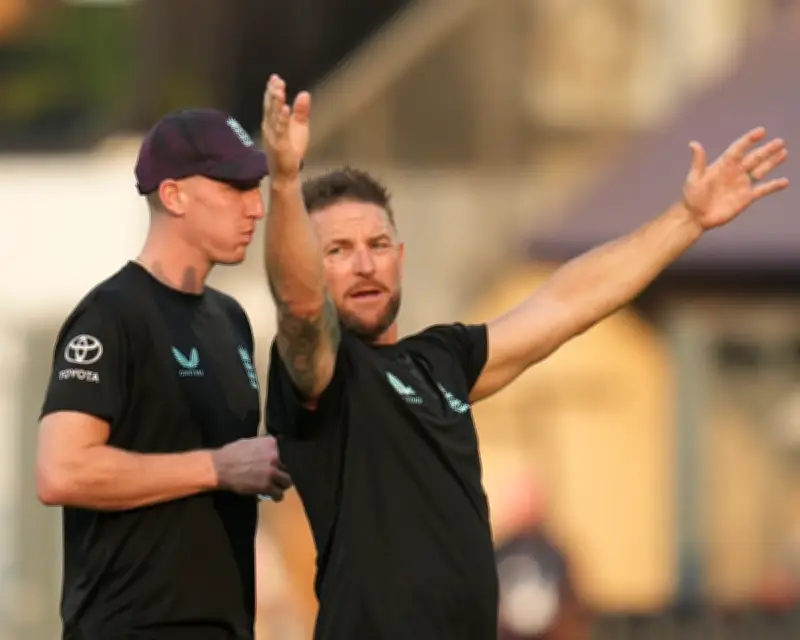
But the T20 and ODI series victories, against an India side at No 1 in the rankings for both, should not to be sniffed at. McCullum’s retention for the limited-over teams was not universally popular but over the past year he and Harry Brook really do seem to have struck upon something as a leadership pairing.
India admittedly chose to reset their world champion T20 side and a one-sided 4-0 defeat showed they swung the pendulum too far. But England’s 2-1 victory in the one-dayers displayed some serious gumption from 1-0 down, the wins in Cardiff and Lord’s equally hard fought but achieved in wildly contrasting conditions.
Cardiff was a low-scoring dog-fight that owed plenty to the enduring class of Joe Root, whereas Lord’s was a high-scoring gunfight on an unusually flat pitch. That England found a way in both – even if Jasprit Bumrah’s absence from the series decider was a bonus – said a lot about the variety they have cultivated.
Brook's leadership
For all that England are playing catch-up before the 2027 World Cup after a few years of 50-over neglect, Brook leads a side with bases covered. His batting lineup has touch players, power players, and left-right combinations. Brook also had eight varied bowling options at Lord’s: three quicks, wrist-spin, a left-arm angle, two better than part-time off-spinners and Jacob Bethell tweaking it the other way.
Brook’s use of Bethell in particular goes back to the chemistry struck with McCullum, having run off the field mid-innings for advice and been told that a spinner driving the ball into the surface à la Ravindra Jadeja was the play. The wicket this produced of Rohit Sharma on 138 was game-changing.
Divide risk
Although, this is where things get tricky and we circle back to the strange place that England find themselves. Because for all that white-ball success has mildly offset the anger caused by the Test team’s further nosedive, it risks baking in a divide that may be hard to square when the vacancies for Test coach and captain are filled.
Right now, England seemingly have only two options for captain. One is Root, who would be doing it out of a sense of duty rather than any desire, and the other is Brook himself. Neither is ideal, while both would need strong guidance on tactics and leadership from the new coach: Root because he did previously – and never quite received it – and Brook because everything would be new to him.
In an ideal world, Stokes would have held the role until the 2027 Ashes, by which time Brook’s education as vice-captain would have been greater and he could slide across post-World Cup. This is far from an ideal world, however, and for all that his early appointment would invite questions about his maturity on and off the field, a personal view is that he is the correct, forward-looking choice.
Coaching conundrum
But as well as the burden that a three-format captaincy would place on Brook, can doing this under two separate coaches work in practice? Whoever is tasked with nursing Brook through the early stages of the Test role, they will need a strong alignment with McCullum so as not to overwhelm him with conflicting methods.
Andy Flower, the leading coach in the world, turned down the vacancy last week citing an incompatibility with the two franchise teams to which he is contracted. But for all that they probably are incompatible – both the logistics and the message it would send – one wonders whether he also spotted these limitations.
Attractive though the job is, candidates will look at the setup and surely clock that no one bar Stokes – the one player any coach would want – has left the building. Essentially, the person being asked to put out the fire still raging from that failed Ashes campaign also needs to fit in with the people who caused it.
Review and missteps
All of which goes back to that tour review in March, the upshot of which was to keep everyone in situ, hire Marcus North as a selector (not head selector, tellingly), flood training with extra coaching bodies, and offer a nod to county cricket by arranging quarterly meetings with domestic coaches and picking the in-form Emilio Gay. Oh, and Ollie Robinson came back for one Test.
Had more fundamental change come about back then – including an approach for Flower with the promise of a far blanker canvas – there is a chance Stokes might have been reinvigorated at the start of the summer, rather than triggered by walking back into an environment in which he had stopped believing.
Who knows, perhaps Gould and Key will find the ideal candidate to make this split-screen approach work. As good as the two white-ball series wins were, and as much as the next month will be about some fun, disposable, content-generation cricket, they can ill afford another mis-step in the format that is still No 1.